

Climate change is amplifying extreme weather conditions across southern Africa. Dry seasons are getting hotter and drier, while rains are becoming heavier and more concentrated. This means greater swings between production surplus and scarcity for rural communities that make their living from the land.
I’m a scientist who studies the complex interactions of social and ecological processes, and the impacts of decisions about managing natural resources. In a recent study, my co-authors and I sought to understand how changing rainfall patterns might interact with patterns in people’s wealth in southern Africa – specifically, Botswana, Eswatini, Lesotho, Mozambique, Namibia, South Africa and Zimbabwe.
We looked at how rainfall might be affected under three fossil fuel emissions scenarios, and how that rainfall might affect the livestock that pastoralist communities can keep. Livestock rearing is practised on 43% of the land in Africa and in many places is the only way to make a living.
Read more:
How Kenya’s pastoralists are coping with changes in weather patterns
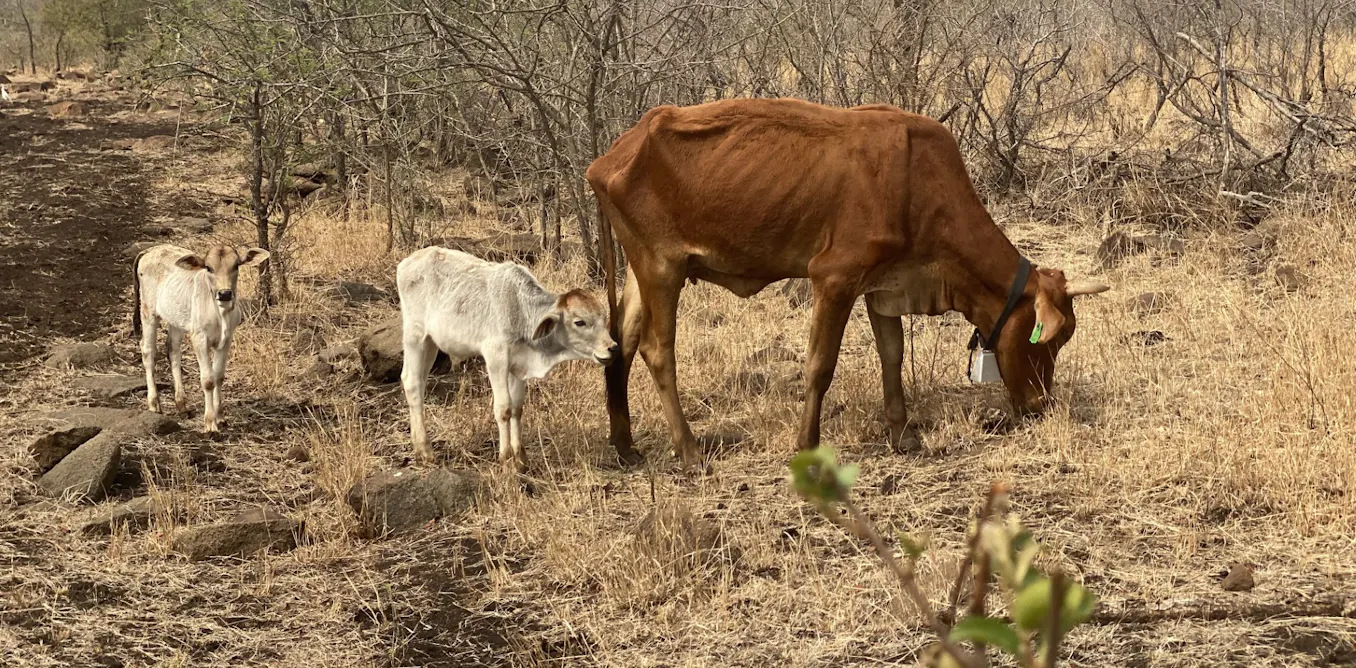
Pastoralists rely on wet-season rains to grow fodder for their cattle, sheep and goats for the remainder of the year. Herds can act something like a bank account, where animals are kept and sold for cash as needed.
The difference is that selling animals is not as easy as making a cash withdrawal. Pastoralists must make decisions about buying or selling animals depending on how much rain they expect and when. And the value of animals decreases during droughts when they may have lost weight and many people attempt to sell animals simultaneously. Demand, transport and disease also complicate an individual’s ability to respond to drought conditions.
Photo: Matt Clark
In our study, we created a computer simulation using observed and projected data about rainfall, livestock numbers and community wellbeing across the southern African landscape. By putting these pieces together and simulating pastoralist decisions to buy and sell animals in response to swings in rainfall, we found that climate change is likely to dramatically affect economic conditions across the region.
We found that increasing drought severity is likely to reduce the total number of livestock the landscape can support and therefore reduce individuals’ total wealth. These effects, however, are not equally distributed.
Wealthier livestock owners can afford supplemental feed for their animals and can then, with every drought, own a greater share of the total number of animals on the land. Climate change would then amplify existing inequalities in society.
We also showed that there are ways to prevent these inequalities: better weather forecasts, and interventions that help people to act on the forecasts. Modelling like ours can make it clearer where and how to intervene.
Tiny worlds
We conducted three experiments using a simulation method called “agent-based modelling”. Agent-based models allow macro-level (and often unexpected) outcomes to emerge from the interactions of many autonomous “agents”.
In our case, these agents were pastoralists making decisions in response to their social, economic and environmental conditions. Those decisions include things like whether to buy extra feed for their animals, or sell them.
Our three experiments examined the baseline effects of climate change, the potential for interventions (like providing fodder) to soften the impacts if done at scale, and how these interventions might scale in practice.
Read more:
Storing cattle feed can improve milk and meat yields: why African farmers aren’t doing it
Tools and tradeoffs
The simulation showed that changing rainfall would reduce wealth and increase inequality for pastoralists in southern Africa. It also showed the possible effects of interventions.
To support communities in the face of climate change, governments and nonprofits generally do two things:
Both of these interventions carry tradeoffs.
Our simulation experiments showed that providing livestock feed to pastoralists might inflate the number of animals on the land, leading to increased pressure on native vegetation and wildlife.
Our modelling also shows that without additional intervention, improved seasonal weather forecasting is likely to benefit wealthier individuals the most. Wealthier pastoralists have the resources to offload animals ahead of droughts and to purchase more animals ahead of good rainfall years.
Way forward
Our work shows that it is possible to eliminate these tradeoffs.
When improved weather forecasts are paired with interventions that allow people to act on the information or provide supplemental food when they cannot, the inequity-multiplying effects of climate change are largely eliminated.
Read more:
Rethinking risk can unshackle Africa’s small scale farmers from the grip of poor weather
Interventions like mobile slaughtering trucks that allow pastoralists to easily reduce herd sizes before drought are likely to be particularly effective. This is currently being done in South Africa by a company called Meat Naturally, in partnership with an organisation called Conservation International.

Photo: Matt Clark, Author provided (no reuse)
By combining existing interventions in strategic ways, it’s possible to overcome the unintended effects associated with each in isolation. Herd sizes can be managed while the gaps are filled for those who are most vulnerable.
Many of the ways that people survive on the land have developed over centuries of relatively predictable seasonal weather patterns. Climate change is destabilising these cycles in ways that are highly unequal and variable across space and time. These changes are likely to overwhelm traditional coping strategies and decision paradigms. Modelling approaches like those in our study can play out a variety of scenarios and identify precisely where and how to act.
The post “Drought forces livestock farmers to make tough decisions: our model shows the impact on inequality” by Matt Clark, Postdoctoral Research Associate in Environmental Social Sciences, University of Sydney was published on 10/26/2026 by theconversation.com