
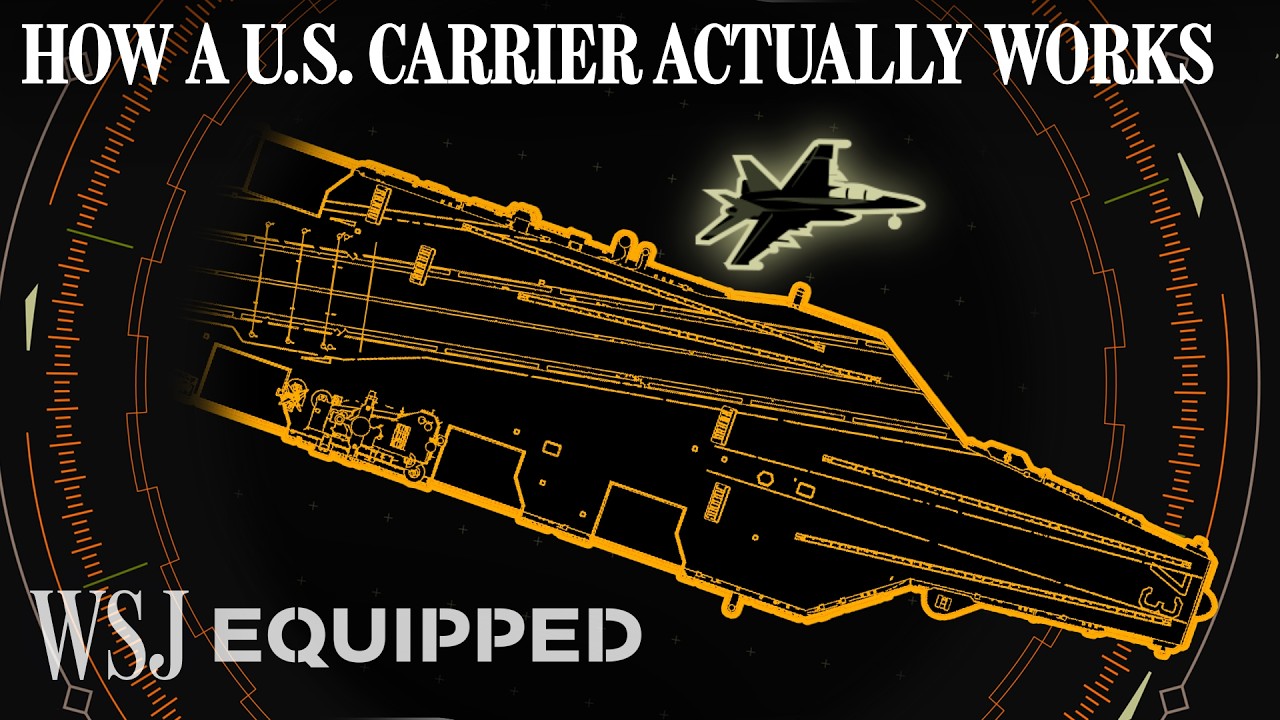

How U.S. Aircraft Carriers Operate During the Iran War
In a pivotal moment for U.S. military strategy, the aircraft carrier USS Theodore Roosevelt has recently arrived in the Middle East, poised to fortify American defenses against escalating Iranian aggression, particularly in the critical Strait of Hormuz. This deployment is not just a show of force; it expands the options available to the White House, including potential strike capabilities should President Trump decide to escalate military action against Iran. The Roosevelt joins the USS George Washington and USS George H.W. Bush, making this the second occurrence this year in which three U.S. aircraft carriers are stationed in the region.
The U.S. Navy has maintained at least two carriers in the Middle East since hostilities began, with five of its eleven aircraft carriers having been deployed to support the ongoing conflict. Notably, the USS Gerald R. Ford and USS Abraham Lincoln have achieved modern-day records for extended deployments, showcasing the endurance required in contemporary military operations. The USS George H.W. Bush, currently stationed in the Arabian Sea, has had its deployment lengthened, further underscoring the Navy’s commitment to securing American interests in the region.
In October, journalists from The Wall Street Journal gained rare access to the USS George Washington, which was pulled from its usual operations in the Western Pacific this past August to relieve the USS Lincoln. This visit provided insight into how these colossal naval vessels function under the pressures of war and operational demands.
Main Parts of the Ship
The USS George Washington, like its sister ships, is a marvel of engineering, with advanced technology enabling it to function as a floating airbase. From its flight deck, which accommodates a range of aircraft, to its command center where decisions are made in real-time, the ship is designed for a multitude of missions, emphasizing versatility and protection.
Launch and Recovery
One of the most critical and complex operations on an aircraft carrier is the launch and recovery of fighter jets. The process involves a well-coordinated ballet of personnel and machinery, ensuring rapid deployment and safe return of aircraft. This operational tempo is intensified during conflict, as tensions demand unwavering precision.
Replenishment and Resupply
A carrier’s endurance in the field is contingent upon its ability to be replenished at sea—an operation detailed and mastered by the crew. This capability allows them to sustain a continuous presence in strategic areas, such as the Strait of Hormuz, where maritime security is paramount.
Defense, Limitations, and Potential War with China
As tensions with Iran persist, the capacity of these carrier strike groups is being tested. The challenges are not limited to the current conflict; potential future engagements, particularly regarding China, pose further demands on the Navy’s operational capabilities. The strategic significance of carriers like the USS George Washington cannot be overstated, as they remain central to U.S. military power projection.
In summary, the deployment of U.S. aircraft carriers during the Iran war illustrates a disciplined and powerful response to regional threats while highlighting the extensive capabilities and logistical challenges these formidable vessels face. As the U.S. Navy continues to adapt and evolve, the significance of these carriers in both current and future conflicts remains crucial.
Watch the video by The Wall Street Journal
Video “How U.S. Aircraft Carriers Operate During the Iran War | WSJ Equipped” was uploaded on 11/16/2026 to Youtube Channel The Wall Street Journal