

The New Zealand velvet worm’s reign as Bug of the Year is coming to an end, with voting now open for the 2026 competition.
This year, 21 nominees are vying for the crown in the competition’s fourth year. Nearly 100 bugs have so far featured, representing an incredible range of rich invertebrate diversity – from insects and arachnids to crustaceans, worms and molluscs.
The term “bug” was chosen deliberately. While not scientifically precise, it acts as an easily understood umbrella definition of Aotearoa New Zealand’s sometimes overlooked littlest animals.
As relatively large organisms ourselves, we humans tend to notice and celebrate larger and more charismatic fauna and flora, such as birds and trees. But they comprise only about 5% of New Zealand’s estimated 70,000 native land species.
The rest are small and often unseen, but absolutely vital. Aotearoa is home to over 20,000 insect species – and those are just the ones we’ve identified. Around 6,000 beetle species alone crawl, burrow and fly across our landscape.
Bugs are the tiny critters that run the world. Forming the base of many food webs and ecological interactions, they underpin much of our freshwater and terrestrial biodiversity.
They pollinate food crops, decompose waste and recycle nutrients. Owing to their fast response to environmental changes, they also serve as key indicators of environmental health.
Dougal Townsend, CC BY-NC
And the nominees are …
This year’s nominees are the most diverse in the competition’s history.
There are repeat candidates, such as the endangered Canterbury knobbled weevil (Hadramphus tuberculatus), as well as new contenders such as the tadpole shrimp (Lepidurus apus viridis) which reproduces without males, or the double-spined stick insect (Micrarchus hystriculeus), which is an incredible master of camouflage.
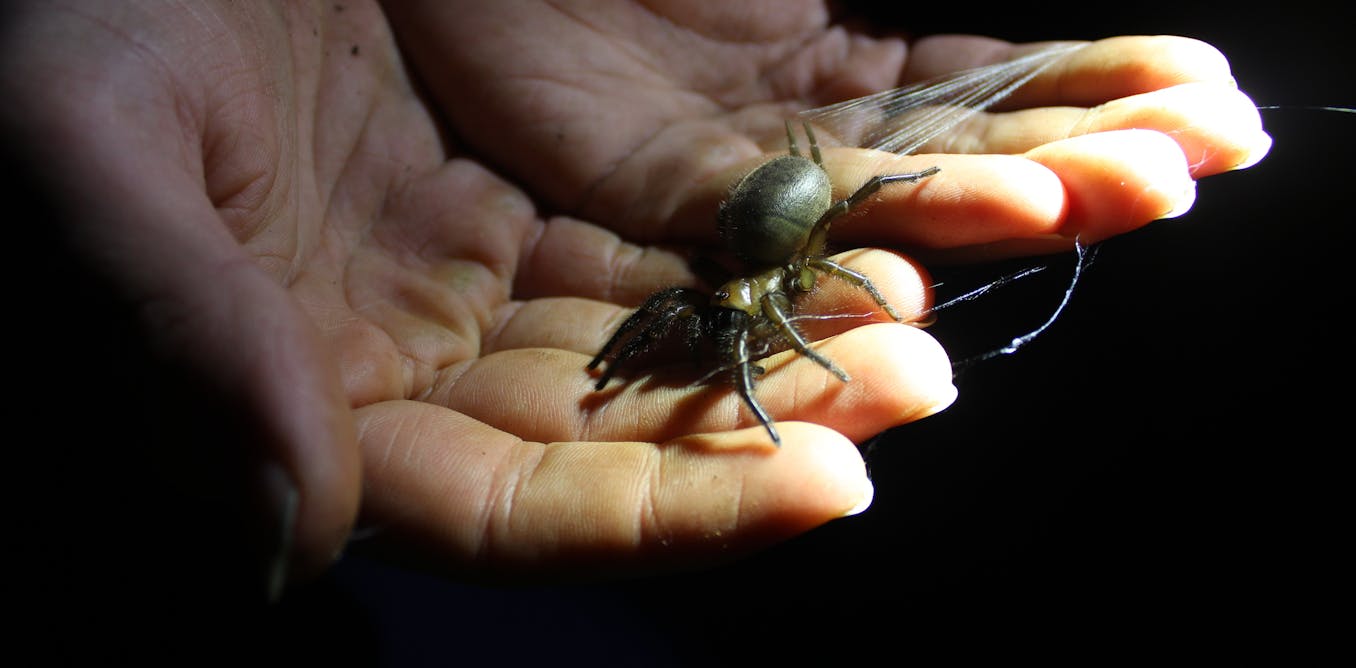
Some nominees, such as the sapphire spider fly (Apsona muscaria) – a fly that eats spiders – are relatively unknown. And there are more familiar species such as the impressively large black tunnelweb spider (Porrhothele antipodiana).
Others are known for their outstanding features or behaviour, including the hellraiser mite (Neotrichozetes spinulosa), which looks like a walking pin-cushion, and a critically threatened avatar moth (Arctesthes avatar), named for the movie series with its themes of environmental destruction.
We even have the ancient and gigantic glow-in-the-dark North Auckland worm, and the Otago alpine cockroach (Celatoblatta quinquemaculata) that can survive being frozen solid.
There is also one of the world’s only marine insects, the intertidal caddisfly (Philanisus plebeius), whose nymph lives on the rocky shore.

Shou Saito, CC BY-NC
Many are endemic and found only here. But like bugs and insect populations around the planet, they face mounting threats – described in one study as “death by a thousand cuts” – from climate change, agrichemical use and habitat loss or modification.
Aotearoa is not exempt from these threats, but many of our bugs are data-deficient, understudied, underappreciated and often out-competed for attention by other wildlife.
This summer, keep an eye out for the tiny things around you: the bugs that soar in our skies, scamper in our forests, settle in our rivers and lakes or even hide underground.
As humans continue to expand urban landscapes into natural ones, the Entomological Society of New Zealand hopes its Bug of the Year contest will help build public support and appreciation for more research into these unsung heroes of the natural world.
How to vote
Not sure what to vote for? Take the personality quiz to see which bug you most align with.
Voting closes on February 16 2026, with results announced on February 18.
Nominees are suggested by the public, so if your top pick isn’t featured this year, you can make recommendations by July 1 for the 2027 contest and beyond.
The post “Are you a hellraiser mite or a knobbled weevil? Take the quiz and vote for NZ’s Bug of the Year” by Connal McLean, PhD Candidate in Zoology, University of Otago was published on 12/31/2025 by theconversation.com