

Every autumn, homeowners and gardeners tend to engage in a familiar ritual. As trees shed their leaves, people drag out rakes, leaf blowers and lawn bags to strip their yards bare before winter arrives.
It is a tidy habit rooted in aesthetics, but ecologically, clearing away fallen leaves strips the very foundation of local ecosystems. Far from dead debris requiring disposal, this fallen foliage forms a dynamic layer and a biological interface that drives nutrient cycling and is essential for soil health and the environment, including biodiversity.
As a researcher of plant growth in yards and gardens, I would recommend leaving leaves on the ground. There, they can provide essential winter habitat for native pollinators – even in places that don’t have freezing temperatures. And they act as a nutrient-dense, natural mulch for the soil.
Here is the science behind why the first step of fall yard care could simply be doing less – along with practical ways to keep your yard looking neat while nourishing the ecosystem underneath.
A winter sanctuary for native pollinators
To understand why leaf litter matters, it helps to look closely at what happens beneath the surface as temperatures drop. While honeybees pass the winter in sheltered hives, the vast majority of North America’s native pollinators do not.
Up to 70% of native bee species, including many insects’ cocoons and larvae, nest in the ground. Fertilized queen bumblebees burrow just a few inches into the soil or hide under dense leaf mulch to survive the freezing months ahead, to lay eggs in the following spring.
Dania Maxwell/Los Angeles Times via Getty Images
Raking, bagging and blowing leaves away destroys this crucial winter nursery.
Many other insects depend on the shelter of fallen foliage:
Nature’s engineered soil insulator and fertilizer
In addition to being a shelter, fallen leaves are an evolved biological mechanism for nutrient cycling. Trees actively pump vital elements, including calcium, magnesium, potassium and nitrogen from deep subsoils, into their foliage. When autumn comes and leaves drop, these stored nutrients are deposited back into the soil.
Leaving leaves in place triggers fundamental ecological benefits.
A thick blanket of intact leaves acts as a natural insulator for the ground. Air pockets trapped between overlapping leaves moderate the soil temperature and slow heat transfer, buffering against the freeze-thaw cycles that heave soil, fracture plant roots and expose beneficial soil microbes to lethal cold. The intact leaf blanket also conserves moisture and prevents soil from drying out over the winter.
As fungi, earthworms and micro-arthropods digest fallen leaves through late fall and spring, they break down organic matter into a rich material called humus. This slow-release organic fertilizer boosts soil structure, improves water retention in sandy soils, and prevents erosion and runoff in heavy rains.
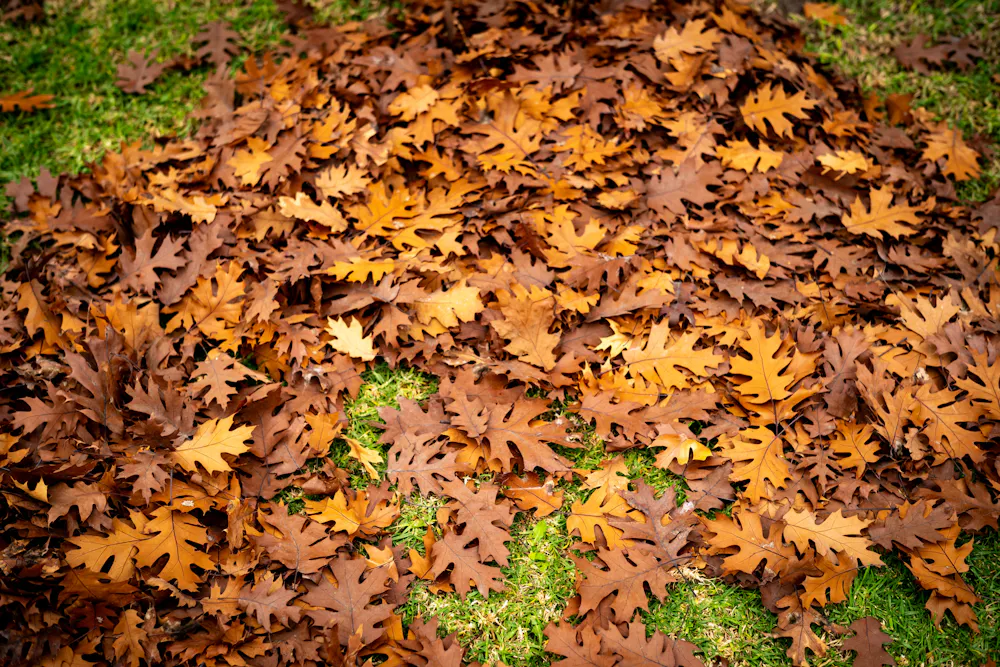
Decaying leaves feed beneficial mycorrhizal fungi in the soil. Those fungi form symbiotic relationships with plant and tree roots, helping the roots collect water and nutrients from the soil to nourish the plants above. A natural layer of leaves also suppresses spring weed seeds organically without needing synthetic chemical herbicides. And the moist, insulated microclimate under leaf litter is also critical for terrestrial amphibians, including frogs and salamanders, to survive freezing temperatures.
David Crane/MediaNews Group/Los Angeles Daily News via Getty Images
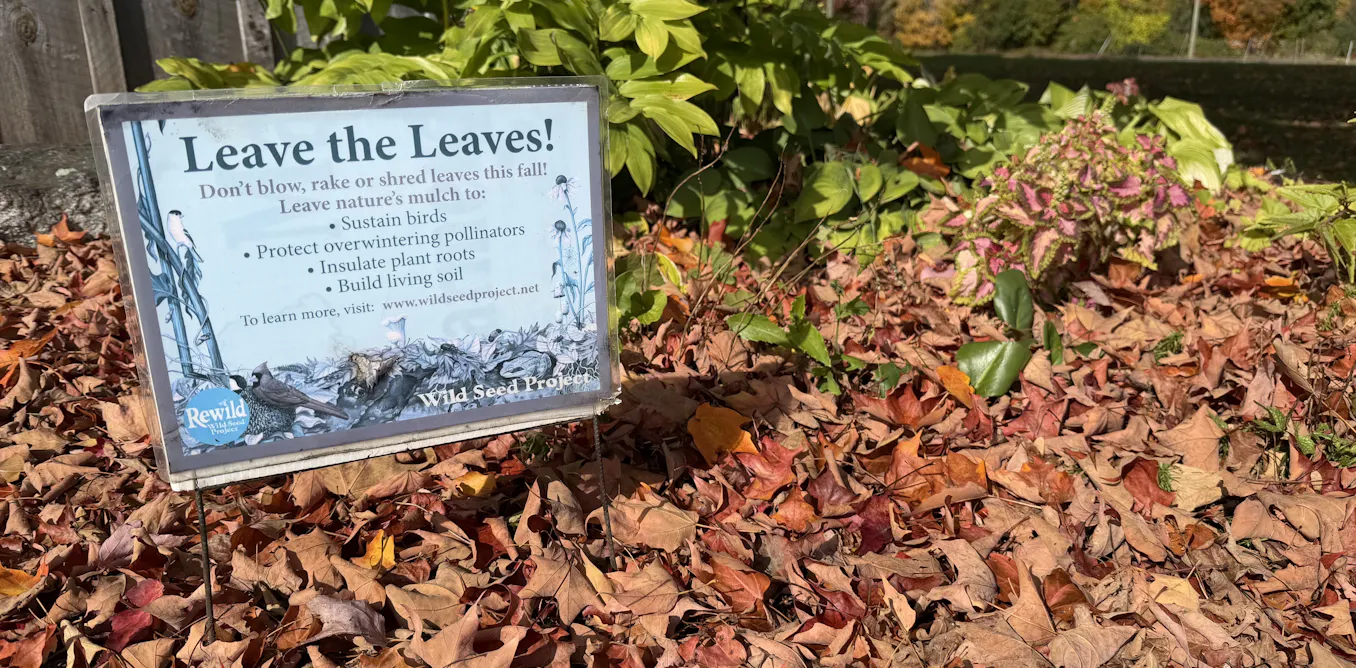
How to ‘leave the leaves’
Adopting a softer approach to fall cleanup does not mean your yard has to look completely untamed or that you have to risk killing your lawn. Here is how to balance suburban expectations with sound ecological science:
-
Move, don’t remove: Move the leaves from lawns and sidewalks, rake them into garden beds, around ornamental plants or into vegetable plots, using manual rakes or electric leaf blowers. Aim for a layer 2 to 3 inches deep. Leaving leaves in grassy areas can help ticks hide there too, but if you move the leaves to garden beds or spots that are used less, the ticks will be less likely to nest in the grass. Establishing pollinator zones on the property can also help reduce tick populations.
-
Skip the leaf shredder: Mowing over leaves with a mulching mower is better than sending them to landfills, but high-velocity mower blades still kill overwintering insect eggs, chrysalises and larvae. Leave leaves intact wherever possible in plant beds.
-
Wait for spring to clean up: Do not cut back hollow-stemmed perennials or clear leaf beds during early, warm spring days. Wait until temperatures consistently stay above 50 degrees Fahrenheit (10 degrees Celsius) so overwintering bees and butterflies have time to safely emerge.
When you bag leaves for disposal and then buy commercial wood mulch or synthetic fertilizers in the spring, you are effectively paying a price for what your trees provided for free. By rethinking the cultural expectation of pristine autumn lawns, it’s possible to transform silent landscapes into vibrant habitat sanctuaries, simply by stepping back and allowing natural processes to take over.
The post “Why fall yard care could start with doing less – but not nothing” by Manjot Kaur Sidhu, Assistant Extension Professor of Horticulture and Ornamental Horticulture Specialist, University of Maine was published on 10/09/2026 by theconversation.com