

Characterised at the beginning of the 20th century in Japan, umami literally means “delicious taste” or “tasty taste”. Umami flavour was accepted as one of the five basic tastes at the beginning of the 2000s, on the basis of its detection by the taste receptors present within the patches of tissue or papillae on our tongue. Umami’s distinctive, savoury flavour is mainly produced by certain amino acids that make up proteins, including glutamic acid or its salt form, glutamate (sodium).
Umami has a unique characteristic: a phenomenon of synergy. This means that the flavour of glutamate is drastically increased by certain compounds found in certain foods or ingredients such as bonito – a cousin of tuna – dried (katsuobushi) or yeast extracts.
A mysterious flavour in the West
Although many molecules can produce the umami taste, it is one of the most little known and difficult sensations to describe, mainly because of the rarity of compounds that possess a pure umami taste.
The umami taste can however be generated among foods that are far more widespread than you would imagine: this is the case for algae (kombu algae), mushrooms (shiitake, truffle…) and also as has long been the case with basic kitchen staples like cheese (Parmesan, mature Comté, for example), cured meats (salami, dried ham…), fresh fish (especially bonito, salmon), seafood (shrimp, crabs, scallops…) or simply… tomato juice.
Loïc Briand, Fourni par l’auteur

NEUROtiker, Wikipedia
Glutamate is the reference molecule mainly behind umami, although it gets its salty taste from the presence of sodium ions. In powder form it tastes like cooking broth or soy sauce if you disregard its strong, salty flavour. In many Asian countries, glutamate (where its flavour is well known) is used in cooking as an ingredient in its own right.
Westerners on the other hand, lack a reference compound so tend to refer to a broth-like taste or borrow soy sauce as a familiar umami food which despite its strong saltiness, produces a pronounced umami taste.
The History of how umami was discovered
The discovery of umami is a long story. In his book la Physiologie du goût, published in 1826, French gastronome Jean Anthelme Brillat-Savarin describes a specific taste associated with the water-soluble part of meat. In 1866, German chemist Karl Heinrich Ritthausen found and chemically identified glutamic acid by breaking down wheat gluten and separating out a new compound, noting that it is capable of generating a different flavour.

Wikimedia
The umami flavour concept was then put forward in 1908 by Kikunae Ikeda. A professor of chemistry at the time at the Tokyo Imperial University, Ikeda isolated glutamate from dried seaweed and was the first to describe its unique taste properties, which sit apart from the other basic tastes (sweet, bitter, sour and salty), and giving the flavour a Japanese name, in her “mother tongue”.
In 1913, Professor Shintaro Kodama highlighted the synergy (or the ability to amplify) of glutamate with compounds derived from RNA degradation (“ribonucleotides” such as inosinate and guanylate).
But it wasn’t until the 21st century that the umami flavour receptor called TAS1R1/TAS1R3 was identified in human papillae in 2002. From then onwards the umami flavour was completely accepted as the fifth basic taste among the scientific community.
The physiological role of umami
Our sense of taste is a chemical detection system dedicated to assessing food’s nutrient content. Its physiological role is to guide our food choices.
Therefore, detecting sweet molecules allows us to identify energy-rich nutrients, which is why we are naturally drawn to sweet things.
It’s a different story for the bitter taste, which provides the basis for our aversions to certain foods, allowing us to avoid potentially toxic compounds that have an unpleasant taste.
Detecting saltiness is of primary importance for maintaining our electrolyte balance. It is essential for finding sodium in our environment, because our bodies constantly lose sodium through our bodily excretory and secretory processes (sweat and urine).
Finally, acidity is an indicator of fruit maturity or the presence of microbial contamination. Identifying acidity also helps protect the body against eating food that is highly acidic that could damage our teeth and skin tissue.
But what about umami? It is believed that the physiological role of this particular taste is to detect amino acids and reveal the presence of protein and molecule-rich foods, which are crucial for ensuring our body functions properly.
Umami in world cuisine
Ingredients rich in umami compounds were introduced into our diet in ancient times to improve cooking. Garum was a condiment used in Rome as early as the Etruscan period. This sauce, derived from the fermentation of the heads and intestines of pickled fish, was used in many dishes and is comparable to nuoc-mâm, a Vietnamese sauce made from fermented fish in brine, that’s almost inseparable from spring rolls. We can also compare garum to pissalat, a French sauce made from fish (mackerel, sardines and anchovies) that is macerated in salt.
Soy sauce is a condiment hailing from China, which was introduced in Japan and spread worldwide. It is obtained by fermenting soya beans mixed with roasted cereals, and salt water. Its umami taste is very intense, as is its saltiness!
Another less well-known example to mention is Worcestershire sauce, which is popular in the UK. Invented in 1837, it is made from molasses and malt vinegar containing anchovies, onions and various spices. Viandox based on soy sauce, yeast extract, and meat extract, launched in France at the beginning of the 1920s, also packs a strong dose of umami.
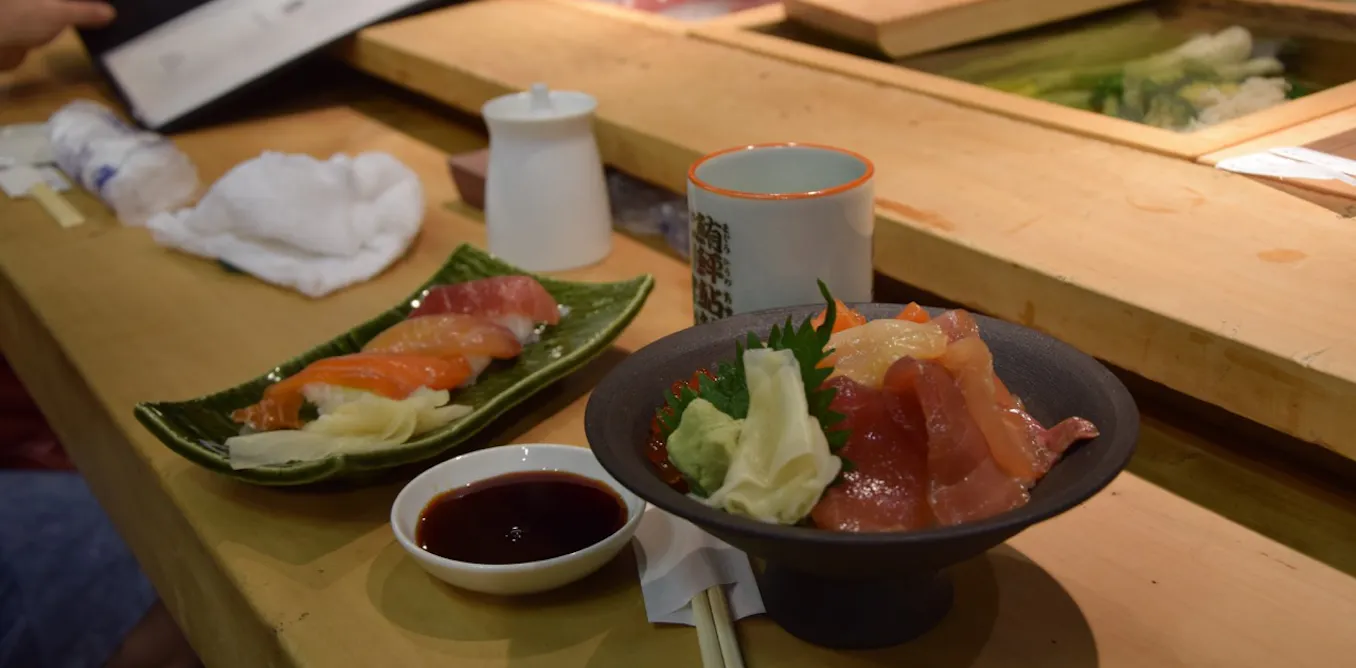
And last but not least, if there is one cuisine that has showcased this taste, it is Japanese cooking culture. Unlike French cuisine, which is built on layering elements and tastes, it seeks to refine the plate by extracting the quintessence of its most prized produce such as fish, seafood, and seaweed.
Umami is one of the first flavours for babies’ mouths
Glutamate, i.e. the salt of glutamic acid, is commonly used as a flavour enhancer in the food industry in the form of monosodium glutamate (E621). The most widely consumed food additive, it has a global production estimated at several billion tons.
Although glutamate is the focus of debate over the risk of over-consuming it, it should be remembered that it is the most concentrated, free amino acid in breast milk, where it is present at a concentration of 175 milligrams per litre. Since this concentration sits above the threshold of what humans can detect (120 milligrams per litre), umami taste is one of the first flavours babies are exposed to.
Umami is lost on giant pandas
Umami’s physiological role is to alert carnivores to the presence of essential proteins. For example, physiological studies into cat food preferences have shown that our feline companions are also very fond of amino acids.

Colin W./Wikipedia, CC BY-SA
However, genetic studies have shown that the giant panda is insensitive to the umami taste. But what makes pandas (aguesiac or who have lost their sense of taste) unable to detect umami? The giant panda belongs to the ursid family, of the carnivore order. Their diet (bamboo represents 99% of what they eat) sets them apart from their other animal cousins as they are vegetarian, which paradoxically, makes them strict herbivores.
As mentioned above, umami compounds are detected in the mouth by a single receptor consisting of two subunits (TAS1R1 and TAS1R3). However, a study of the genetic heritage of the giant panda’s genetic heritage has shown that the gene encoding one of the subunits is defective, leading to an inactive umami-like receptor. It is for this reason that giant pandas have no perception whatsoever of umami. It is thought that, during evolution, this gene was lost, simply because the selection pressure on this receptor was let go of, as the species’ survival did not depend on its ability to identify protein.

This article is published as part of the Fête de la science, an annual event in France honouring Science in all its forms (which runs until October 12, 2026) – A The Conversation France partner event. This new edition focuses on the theme “Saveurs Savantes”. Find all the events at Fetedelascience.fr.

A weekly e-mail in English featuring expertise from scholars and researchers. It provides an introduction to the diversity of research coming out of the continent and considers some of the key issues facing European countries. Get the newsletter!
The post “What is umami?” by Loïc Briand, Biologiste moléculaire et spécialiste du goût, Directeur de Recherche et Directeur du CSGA, Inrae was published on 10/11/2026 by theconversation.com