

California isn’t a place most Americans associate with tropical weather, but it’s taking a beating in 2026 from one of the most active eastern Pacific hurricane seasons in modern history.
For the second time ever, national forecasters issued a tropical storm watch for Southern California as Tropical Storm Rachel headed toward the region, bringing high tides, coastal flooding and drenching rain from Oct. 9-11. The first tropical storm watch was issued just three years earlier, for Hurricane Hilary.
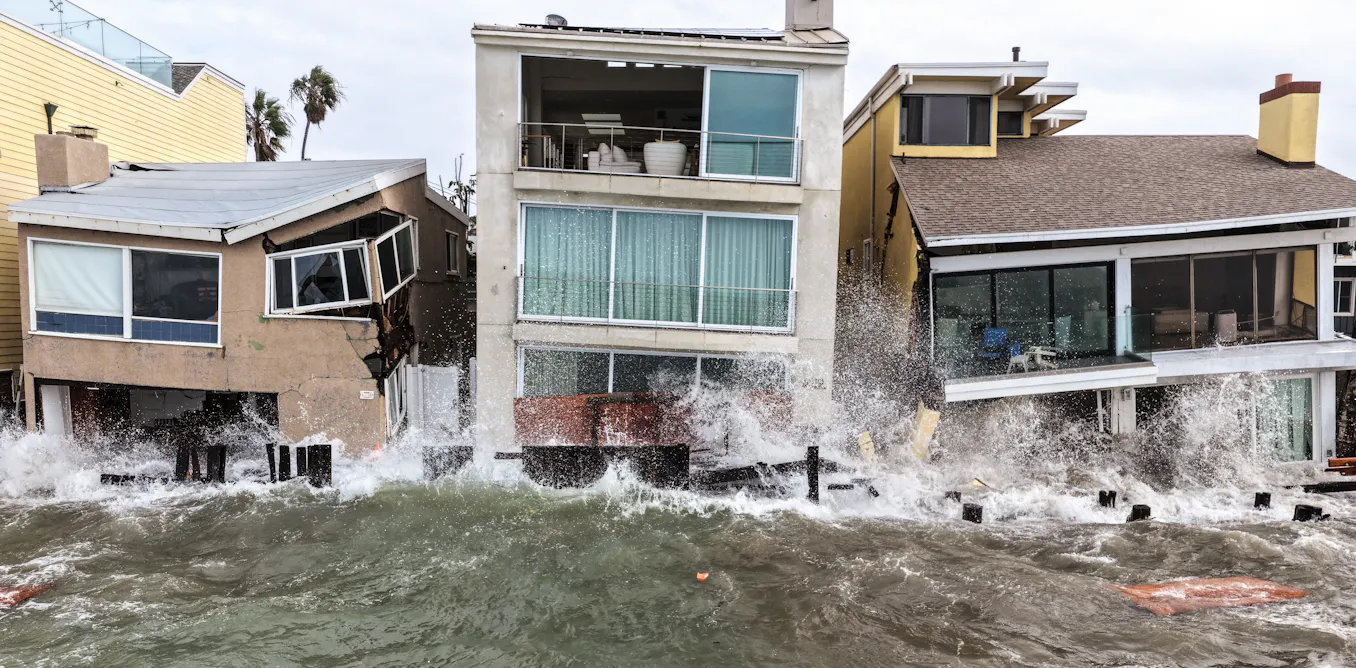
The U.S. occasionally sees heavy rain from the remnants of Pacific storms that pass over Mexico and travel into the U.S. Southwest. But the 2026 season has been different. Three hurricanes deluged Hawaii as they passed close to the islands, a rare event for that state. And in September, Hurricane Marie churned up big waves that damaged oceanfront homes near Los Angeles before veering away from the coast.
Rachel weakened to an extratropical cyclone before its landfall in Baja California, but it brought high waves to Southern California that damaged more coastal homes and flooded streets. Its rainfall drenched communities from San Diego to the desert Southwest and even triggered flooding in Las Vegas.
Mario Tama/Getty Images
I study Pacific hurricanes. While tropical storm impacts to California are unusual, they aren’t unprecedented. El Niño raises the risks.
California’s history with tropical storms
Historically, Southern California has seen a few direct hits from tropical storms and numerous cases of damage from systems that remained offshore.
To find the earliest known storm there, we have to travel back all the way to 1858, when a Category 1 hurricane, simply known as the 1858 San Diego Hurricane, brushed the coast of San Diego County and brought tropical-storm-force winds to the region. San Diego of the 1850s had a fraction of the population it has today, but the storm still caused significant damage.
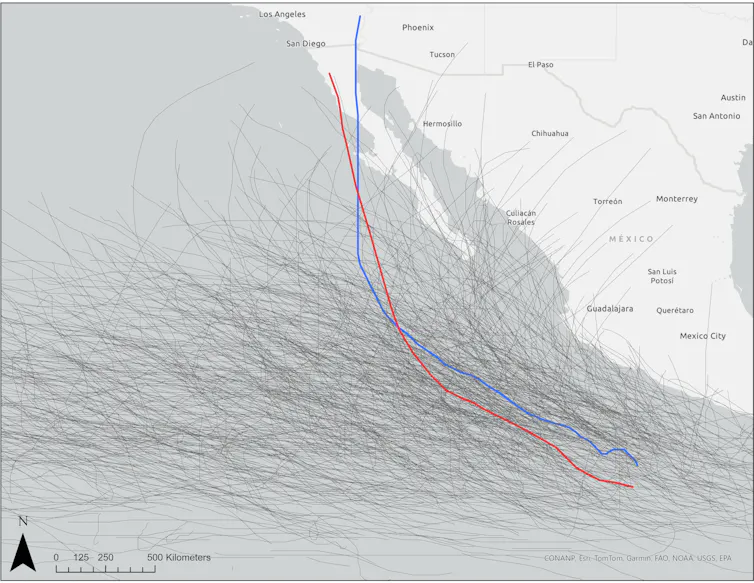
While weaker than the 1858 hurricane, the only tropical storm known to have made landfall on the California coast was a 1939 tropical storm that hit Long Beach, in Los Angeles County. It brought tropical-storm-force winds across a large swath of Southern California, along with over 4 inches of rain in some areas.
That storm was a surprise, and the United States Weather Bureau – the precursor to the modern National Weather Service – opened a Southern California office in 1940 in response. A 2004 research paper hypothesized that if a similar storm hit the region in the mid-2000s, it would have likely caused over US$200 million in damage to the region.
While a few other tropical storms in the 1970s came close to a landfall in California, all weakened or changed course, avoiding a direct hit. This includes the remnants of Hurricane Hilary in 2023 that were still strong enough to cause widespread flooding in Southern California and dump 10 inches of rain in the mountains.
A handful of additional systems that made landfall in Baja California or stayed offshore have brought tropical-storm-force winds to the state, including Hurricane Nora in 1997.
In addition, multiple recent storms over the open ocean have generated swells that damaged port and pier infrastructure in the region, including hurricanes Marie in 2024, Narda in 2025 and another Marie in 2026.
El Niño raises California’s storm risk
Several environmental factors increase the probability of tropical storms making an approach to Southern California.
The most notable is El Niño. This natural climate pattern, defined by unusually warm water in the eastern tropical Pacific, increases the frequency of storms in the eastern North Pacific. That’s because warmer than normal sea surface temperatures in the region are necessary to support the formation and development of these storms.

NOAA
Even during El Niño years, the waters off the coast of Southern California and northern Baja California are typically too cool to support hurricanes. Still, storms moving fast enough or with enough support from upper-level winds can survive these slightly cooler temperatures, allowing the system to make an approach toward California.
When Tropical Storm Rachel began its approach toward Southern California on Oct. 9, the National Hurricane Center noted that the sea surface temperatures were anomalously warm off the coast of Baja California and played a role in its potential to remain a tropical cyclone as it approached the coast.
The big storm problem: Rain
Like most eastern Pacific tropical storms and hurricanes, the primary effect on California from these systems is rainfall.
Most of Southern California is arid and rarely receives rainfall during summer and early fall. Early reports showed Rachel dumped upward of 6 inches of rain in parts of Southern California, including over 1 inch at San Diego International Airport in one weekend. That inch of rain in San Diego is double the typical October precipitation there.
While those amounts may seem minuscule compared to what typically comes with a tropical storm or hurricane landfall in places like Florida, they can cause flash flooding in the normally dry Southwest. The National Hurricane Center warned of flash flooding in California and other parts of the Southwest before Rachel’s landfall.
Unique cases like Rachel show that Mother Nature can always go against conventional wisdom, and, given enough time and the right conditions, potentially destructive things can happen.
The post “California is taking a beating from an unusually destructive 2026 Pacific hurricane season” by Nicholas Grondin, Assistant Professor of Environmental Studies, University of Tampa was published on 10/12/2026 by theconversation.com