

It’s 7 a.m. Still dark outside. “Alex, time to wake up! You have a busy day ahead, with an important meeting at 8:30,” announces the alarm in a soft but firm voice. Alex wakes up immediately, already thinking about the presentation that still needs a few finishing touches. In the kitchen, the coffee machine, set up for 7 a.m. sharp, has just finished brewing. “Alexa, set the temperature to 20 degrees,” says Alex, reaching for the coffee. But then, something catches Alex’s attention: a little bonsai tree on the windowsill. For the next few minutes, Alex forgets about the coffee, the presentation and the meeting. Carefully trimming new shoots, removing dead leaves and checking the soil, Alex becomes completely absorbed in the task. The technology fades into the background. So does the stress.
For a few precious minutes, Alex is simply enjoying doing something with his own hands.
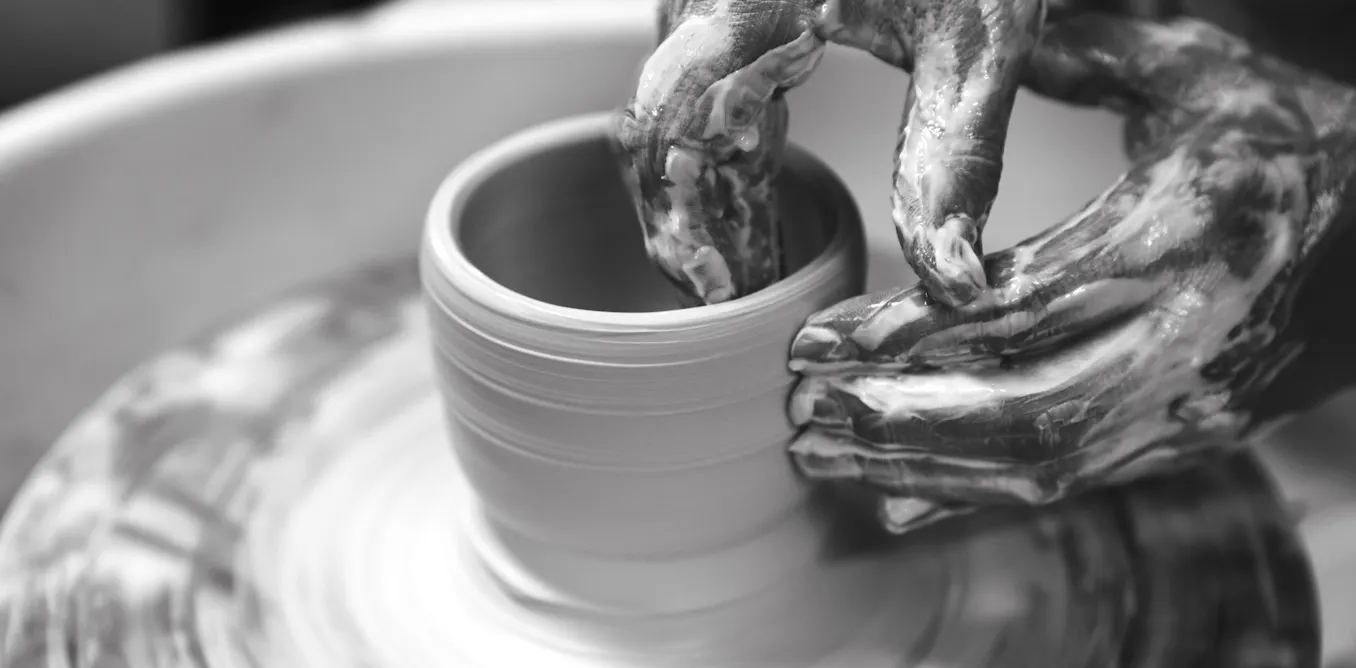
Whether it’s gardening, knitting, cooking or repairing an old chair, making things with our hands can do much more than produce a finished object. AI will therefore never take away this pleasure, since our fascination with making things by hand has survived centuries of technological progress.
With your own hands
After months of reading research from psychology, medicine, arts and marketing, I brought together the findings of 181 studies in a review published in the journal of Psychology & Marketing. What did I discover? In a world where AI and machines can do almost everything for you, there are at least five good reasons why you should still bother making things with your own hands:
1) Making things can make you happier.
Just like Alex, have you ever become so absorbed by making something with your hands that you completely forgot about your worries? You are not alone! In my review, out of the 181 studies, 38 explored the psychological benefits of handmade activities, while other 35 focused on the feelings of control and independence that these activities can provide. The repetitive and immersive nature of working with our hands gives a break from the hectic pace of daily life and some researchers even suggest it can transform us.
A study of 3,545 knitters worldwide found that those who knitted more frequently reported feeling calmer and happier. But the benefits go beyond relaxation. Creating something with your own hands, whether a simple Christmas decoration or a cake, can give you a sense of accomplishment that makes you feel more capable, in control, and overall, more empowered.
2) It changes your relationship with the things you own.
Not only you will feel better, but there is also this famous Ikea effect: people tend to value things more, simply because they’ve made it them themselves. A slightly crooked bookshelf might become your favourite piece of furniture if you made it yourself! Why is this good? Because, as explored in 42 of the studies I reviewed, making things can change the way you relate to them. Students who were encouraged to make their own equipment for physical education classes increased their enthusiasm for exercising. But it doesn’t stop at enthusiasm!
Studies show that people performed better when using equipment they’ve assembled themselves, partly because they felt more capable. The lesson? Next time you want your children to eat more vegetables, get them involved in preparing dinner! Or, next time you want to perform better at something, why not try assembling the equipment yourself?
3) It keeps your mind and body active.
Medical research has explored how handmade activities can improve physical endurance, motor skills, concentration and memory. In fact, 26 studies in my review explored the link between handmade activities and physical health. The health benefits of art therapy are widely talked about. But why wait until you have a health problem to take care of yourself? You can start today with something as simple as cooking, knitting or making a small artistic composition with your own hands!
4) It can connect you with others.
Making things doesn’t have to be a solitary activity. From knitting circles to community workshops and online crafting groups, handmade activities can bring people together, creating friendships and a sense of belonging. Interestingly, 47 studies I reviewed explored the social connections that develop around handmade activities, while 41 examined how making things allows us to learn, teach and pass on traditions from one generation to the next.
Although I didn’t always appreciate my father’s DIY adventures as a child, I often helped him in renovating the house or assisted him in repairing his car. The moments spent together in those shared activities were priceless. His passion for making things stayed with me. And perhaps that’s another wonderful thing about making things with our hands: sometimes, what we pass on isn’t just a skill or an object, but a way of interacting with the world.
5) It can help you live more sustainably.
Why buy something new when you can repair, reuse or transform what you already own?
Among the studies I reviewed, 22 papers explore how upcycling old clothes or restoring furniture can help reduce waste and encourage more sustainable consumption habits. The growing maker movement, bringing together people who enjoy creating and repairing things themselves, is often associated with anti-consumption and a more environmentally conscious lifestyle.
In my recent ongoing research, I explored this topic through three experiments involving more than 1,700 participants in the United States. I found that people who considered restoring old furniture themselves anticipated stronger feelings of satisfaction from doing something good and greater feelings of wellbeing. They also perceived their choices as more sustainable and reported stronger intentions to engage in repairing activities.
Offer the gift of making
So, in a world where machines can make more things for you, perhaps the real question is not what else you should automate, but what do you still want to experience yourself. Going back to Alex and those few precious minutes spent caring for a bonsai, perhaps we should all make a little more room in our busy schedule and offer ourselves moments like these in our technology-filled lives.
And with the holiday season approaching, or next time you are looking for a gift, why not offer someone the pleasure of making something? A pottery workshop, a woodwork class or a simple DIY kit might be a gift that keeps giving.
A weekly e-mail in English featuring expertise from scholars and researchers. It provides an introduction to the diversity of research coming out of the continent and considers some of the key issues facing European countries. Get the newsletter!
The post “Five reasons why we should still make things with our hands” by Mia Birau, Associate Professor of Marketing, EM Lyon Business School was published on 11/25/2026 by theconversation.com