

This article contains details of animal deaths some readers may find distressing.
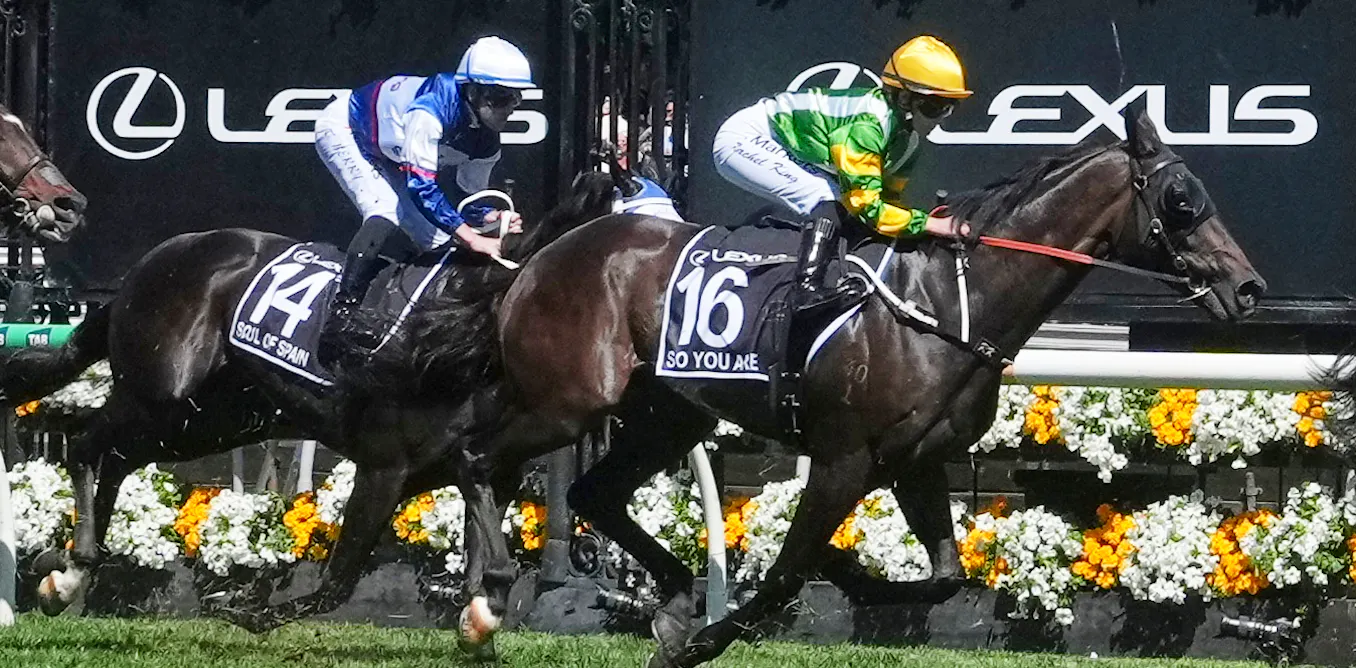
Late on Tuesday afternoon, the body of Melbourne Cup racehorse So You Are was found in a skip bin at a rubbish tip in Sydney.
The five-year-old gelding had been rushed to an equine specialist with severe colic (a gastro-intestinal illness) and was euthanised when the issue could not be resolved. A builder at the tip filmed the body and posted the video.
The vet hospital said its contracted provider took the horse to the landfill where he should have been buried promptly. It has apologised.
Racing NSW, which is conducting an investigation, stated So You Are was awaiting burial when the video was recorded.
What normally happens when horses die or are euthanised?
Many horse owners cannot bury a dead horse at home – they may not own a property or may lack the space or distance from water bodies to safely bury a horse.
An adult horse weighs around 500 kilograms, and a burial pit needs at least two metres of soil over the carcass.
It is common practice for vets to dispose of dead horses at licensed landfills. The standard procedure is carcasses are placed in designated areas and covered without delay. NSW Department of Primary Industries guidance lists licensed landfill as the preferred disposal option in most instances.
Some horses killed by captive bolt tools (where compressed gas or a specialised cartridge delivers high-velocity impacts) or firearms may be accepted by knackeries for rendering or use in pet food.
However this option is not available if drugs have been used to euthanise the horse.
Why the euthanasia drugs matter
Vets usually euthanise horses with an overdose of a barbiturate, given intravenously.
The drug will depress breathing, brain activity and ultimately the heart. During the euthanasia process it will be carried by the blood stream throughout the body, leading to high concentrations in organs such as the kidneys, lungs and liver.
Because it is slow to break down, it will remain in tissue long after death. This can poison animals which consume the carcass.
In one reported case, dogs were poisoned after scavenging a partly buried horse that had been euthanised two years earlier.
Studies of composted horse carcasses have found the drug still present in compost and liquids leaching from the soil.
Any animal that eats the tissue can be sedated, anaesthetised or killed. A review of reported cases found most poisoned wild animals were scavenging birds, and 86% of those were eagles or their relatives.
Dogs are the most often reported domestic victims.
Why a skip bin is a problem
Prompt and deep burial removes this risk. A carcass in an open skip, even for a short time, is within reach of birds and may be moved on with general waste rather than deeply buried.
If left in the bin for an extended period, the decomposition process can lead to unpleasant odours and carcasses can be a breeding ground for flies which can transmit disease.
How So You Are came to be in the bin instead of buried, and for how long, is for the investigation to establish.
The risks of secondary poisoning are well understood by the veterinary profession which is why vet practices establish relationships with local landfills.
Why a horse in a skip bin shocks us
Much of the reaction to the video has nothing to do with how So You Are was euthanised under veterinary care.
Many are reacting to the sight of a specific horse, a Melbourne Cup runner with a brand on his shoulder, lying among building waste as if he were household rubbish.
Such treatment seems a callous contradiction to industry narratives of how much care horses receive and how well they are loved.
It contravenes our expectations of how the body of a deceased equine “athlete” should be treated. The reverent burial of champions such as Makybe Diva appear to honour the service given by horses to racing.
Read more:
How are racehorses really treated in the ‘sport of kings’?
Tuesday’s video makes visible something that is usually hidden. Even after the best veterinary care, dead horses end up in local tips.
Landfill burial may appear more respectful than a skip bin, but its purpose is sanitary and to protect wildlife: it is still burial in a rubbish dump.
A dead horse has no welfare
For So You Are, the dumping of his body in the bin is not an animal welfare issue. Welfare concerns what an animal experiences: pain, fear, comfort, pleasure. A dead horse experiences nothing and has no interest in what happens to its body.
The distress belongs to the people who cared for him, and the real risk is to the animals that might eat from the carcass.
For the horse, what mattered was how he lived and how he died.
By the hospital’s account, he received emergency care and was euthanised under anaesthesia, about as good an end as a horse with fatal colic can have.
If this case makes us care more about horses, that attention belongs with the living: how they are housed, trained, raced and retired, and whether their deaths are timely and humane.
The post “A Melbourne Cup runner in a skip bin is shocking – but a lot of dead horses end up at the tip” by Cathrynne Henshall, Post-doctoral Fellow, School of Agricultural, Environmental and Veterinary Sciences, Charles Sturt University was published on 11/17/2026 by theconversation.com