

Pets just don’t live long enough. We spend time, emotion, energy and lots of money caring for them, all while knowing we’ll invariably outlive them.
It’s unsurprising then, that with the advent of cloning technologies a growing number of people are exploring the potential of creating copies of their beloved pets.
When Dolly the sheep was born in 1997, it heralded a major breakthrough in our ability to successfully clone mammals. Since then, cloning has become big business – and celebrities such as former American footballer Tom Brady and actor Barbara Stresiand have reportedly cloned their pet dogs. This has prompted many pet owners to wonder whether their much-loved pets could be immortalised, too.
Creating copies of special pets might be a way to keep the deep bond between person and pet alive, especially since their loss can be devastating. But is cloning our pets a good idea? Not only is cloning expensive, it potentially comes with health and welfare risks for the clones. There’s also a very high chance that your cloned pet might be nothing like your original – in personality, behaviour and appearance.
The African clawed frog was the first vertebrate to be cloned in the early 1960s. Since then a range of species, including mice, ferrets, sheep, horses, dogs, cattle and cats, have been successfully cloned.
The basic principle of cloning is to make an exact genetic replica of an organism. In the same way that identical twins have the same genetic profile, animal clones are genetically identical to the “parent” animal from which the genetic material is obtained.
The process of animal cloning is called somatic cell nuclear transfer or SCNT. Genetic material is removed from nucleus of an individual cell, which is then transferred into an egg cell which had its nucleus removed. Under the right conditions, that egg cell can then develop into a new organism – the clone. For pet clones, the treated egg needs to be transferred into a surrogate female, who will carry and then give birth to the fully developed clone.
Although biologists have been experimenting with cloning a range of animals for over a century, success has been slow. Even today, animal cloning only has a success rate of around 16%.
But while we might think that making a clone of our beloved pets would mean having an identical copy of them, cloning doesn’t work quite like that.
Yes, clones will be genetically identical – but an individual animal’s behaviour cannot be replicated. Although certain animal breeds may share common traits, their personality is also the result of their life experiences and their environmental exposures. These all impact on how genes actually function as well.
So unless you can create exactly the same maternal influences, upbringing, routines and living conditions for your cloned pet, it’s unlikely they will behave in exactly same way as your original pet.
Even the physical appearance of cloned animals can differ from the original genetic donor. This is a result of how genes are expressed. This means a clone’s coat colour might differ from the “parent”. For example, the genetic donor for the first cloned cat, “CC,” was a calico – but the clone had a brown coat.
The ethics of pet cloning
Pet cloning also raises significant ethical considerations. Our pets cannot consent to their genetic material being recovered before or after death for the production of clones.
If tissue samples are to be recovered from a living pet for future cloning potential, that might be associated with pain and distress – as well as the financial burden of a monthly storage fee for samples to be stored cryogenically.
While cloning might be useful to support conservation efforts for endangered species and for the agricultural production of economically valuable animals, the same doesn’t apply to our pets.
The process of SCNT involves harvesting eggs from female animals which can be invasive, involving hormone treatment and surgery. Even pregnancy and birth can be problematic for surrogate mothers, with pregnancy loss, birth abnormalities and offspring loss relatively common – although this is also seen with natural reproduction, too. The care and welfare of egg donors and surrogate females also needs careful consideration during throughout the cloning process.
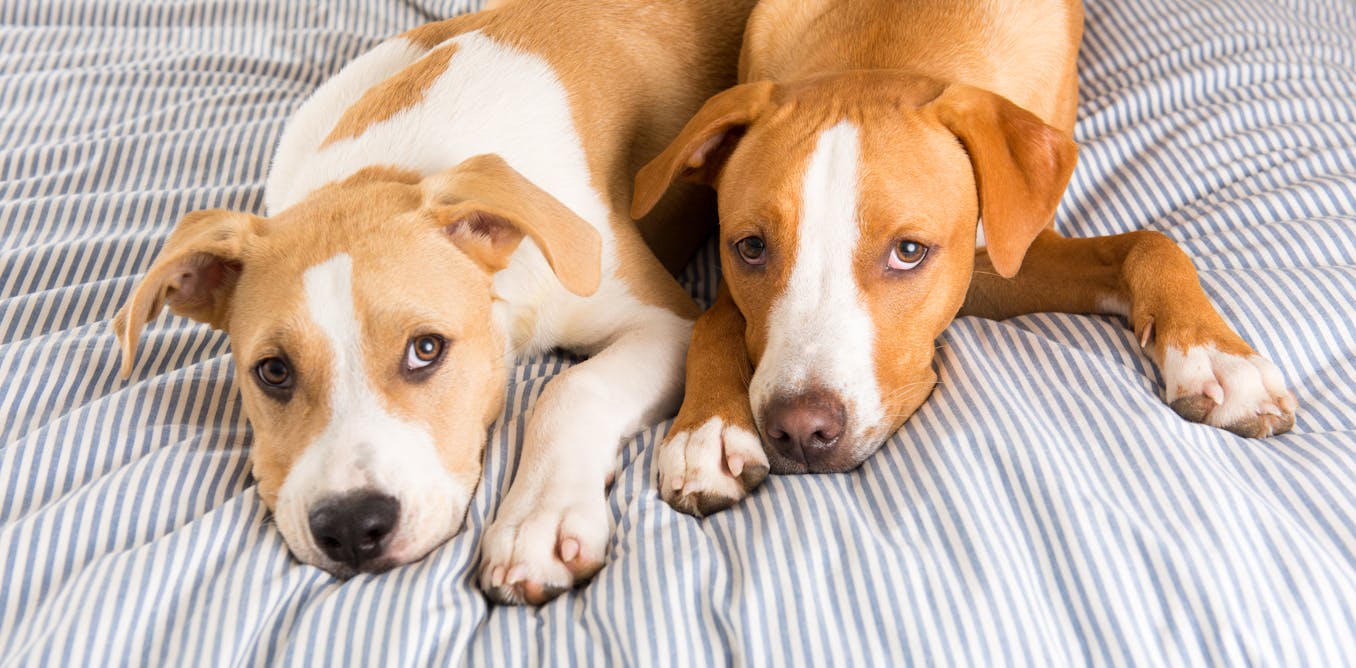
Lightspring/ Shutterstock
There are also potential health issues for cloned animals. One study suggested that 48% of cloned piglets died within the first month of life and cattle clones have had musculoskeletal issues, including lameness and tendon issues.
Some early evidence also suggested that clones had an increased risk of early oseteoarthritis, but more recent studies suggest this might not be the case. As clones become more numerous, our understanding of their health will improve – but at present there’s still much we don’t know.
Read more:
Dolly the sheep didn’t develop premature arthritis after all – and that’s good news for cloning
If your pet had any genetic diseases or increased disease risk because of their genetics, then any clones will inherit these too. This means that careful consideration should be taken in any cloning decisions for long-term animal wellbeing.
Cost is also a significant concern – with cloning typically costing upwards of US$50,000 (£37,836). It is easy to see how that money could instead be used to benefit the pet population more generally – including those in shelters that are desperately seeking loving homes.
In the UK, pet cloning is not currently permitted commercially – being viewed as a form of animal experimentation. However, the process can be commenced by recovering tissue samples from the donor animal and then progressed with the support of overseas laboratories, should your bank balance allow.
Our pets are important members of our families. Cloning might initially seem the perfect way to keep them in our lives longer. But with the challenges and potential concerns attached to the process, we would be better placed devoting time, money, emotional energy into making their time with us as happy and memorable as possible. This is often the best legacy of a much loved pet.
The post “Celebrities are cloning their pets – but the procedure risks animals’ health and wellbeing” by Jacqueline Boyd, Senior Lecturer in Animal Science, Nottingham Trent University was published on 12/01/2025 by theconversation.com