
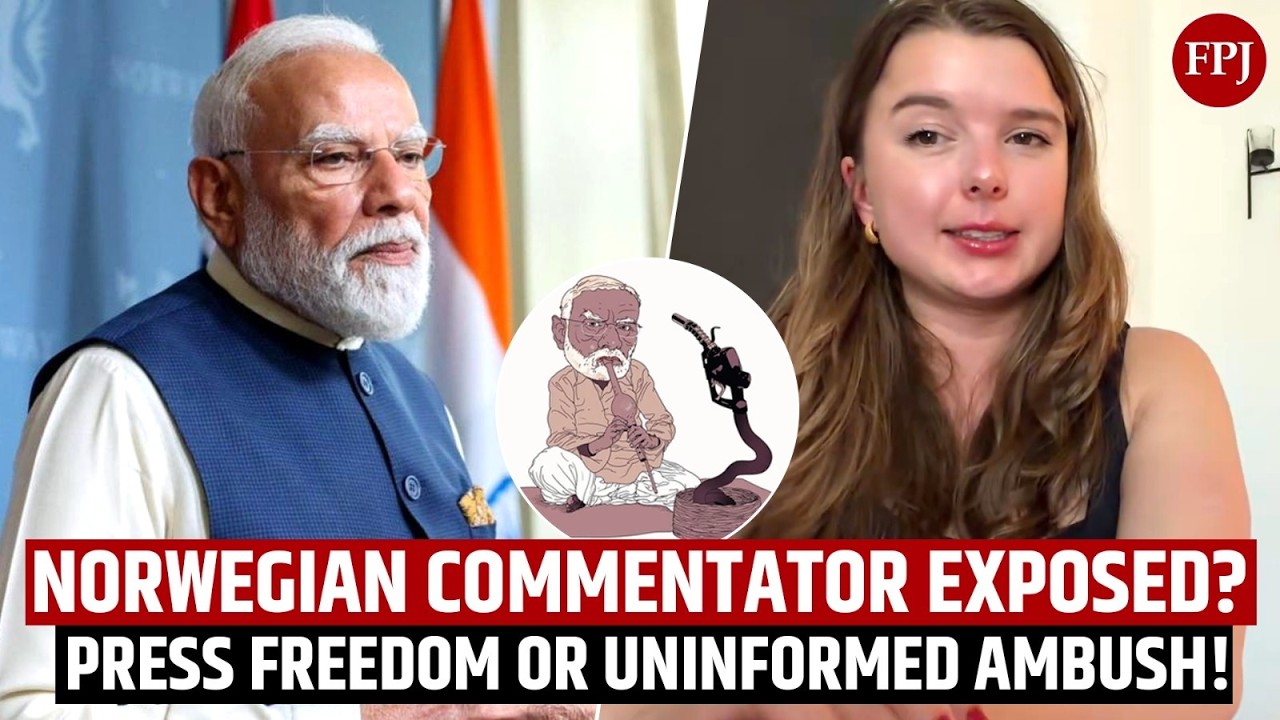

PM Modi vs. Norway Journalist: Viral Showdown or Lack of Depth? The Truth Behind Helle Lyng!
In a seemingly routine bilateral briefing between India and Norway held in Oslo, an unexpected outburst from Norwegian journalist Helle Lyng sent ripples through the international media landscape. The encounter, which quickly transformed into a viral sensation, raised crucial discussions around press freedom, media responsibility, and the often complex relationship between world leaders and the media.
During the briefing, Lyng confronted Indian Prime Minister Narendra Modi with a pointed question: “Why won’t you take questions from the freest press in the world?” This unscheduled moment, now viral, ignited a firestorm of reactions. Supporters of press freedom praised Lyng for her boldness, lauding her willingness to challenge one of the world’s most prominent leaders. On the other hand, diplomatic circles and Modi supporters expressed outrage, calling the interruption unprofessional and questioning the appropriateness of such direct engagement during a formal diplomatic meeting.
The controversy has since expanded beyond the initial exchange. India’s Ministry of External Affairs issued a firm rebuttal, reaffirming the country’s commitment to press freedom but criticizing the context in which Lyng’s question was posed. This response underscores the delicate balance between maintaining diplomatic decorum and allowing for candid media engagement.
Adding to the complexity of the narrative is an animated cartoon that depicted PM Modi as a snake charmer, which sparked a broader debate about satire versus stereotyping. Critics argue that such portrayals can reinforce harmful stereotypes and reflect biases within international media portrayals of leaders from the Global South. The backlash against this visual representation speaks volumes about the sensitivities surrounding media depiction, especially in an increasingly polarized global environment.
What began as a contentious exchange at a press briefing has morphed into a multifaceted discussion on journalistic ethics, accountability, and the need for greater context in reporting on international relations. As the dialogue unfolds, it begs the question: how do we define and protect press freedom in a world where context is frequently overlooked?
This incident serves as a reminder that every interaction between journalists and leaders carries weight, and that each question can provoke deep and far-reaching consequences. Engaging with powerful figures requires not just courage, but an understanding of the broader implications of those interactions.
The landscape of journalism is continually evolving, shaped by the global dynamics of power, representation, and the inherent responsibilities that come with reporting. As the world looks on, the principal question remains: Can we ensure that journalistic integrity and responsibility prevail in an age where sensationalism often overshadows depth?
In the wake of this viral moment, the discussion about press freedom, regional expertise, and media narratives is more pertinent than ever. It is a crucial juncture for both journalists and leaders to reflect on how they engage with each other—not just for the headlines, but for the integrity of the discourse surrounding the crucial issues that affect millions globally.
Watch the video by The Free Press Journal
Video “PM Modi VS Norway Journalist: Viral Showdown Or Lack of Depth? The Truth Behind Helle Lyng!” was uploaded on 05/21/2026 to Youtube Channel The Free Press Journal