

As Jane Austen drafted Sense and Sensibility in the late 1790s, Britain was experiencing a huge financial crisis. Despite its publication nearly 215 years ago, the novel’s most recent screen adaptation highlights the surprising relatability for a gen Z audience of the heroines’ economic and romantic struggles.
The novel follows sisters Elinor and Marianne Dashwood (played here by Daisy Edgar-Jones and Esmé Creed-Miles) after the death of their father. When their elder half-brother, John Dashwood, inherits their family home, Norland Park in Sussex, they are forced to move to rural Devonshire with a meagre allowance. The novel’s darker exploration of the sisters’ fractured relationship to property, succession and dependence on men are presented with more grit than previous adaptations.
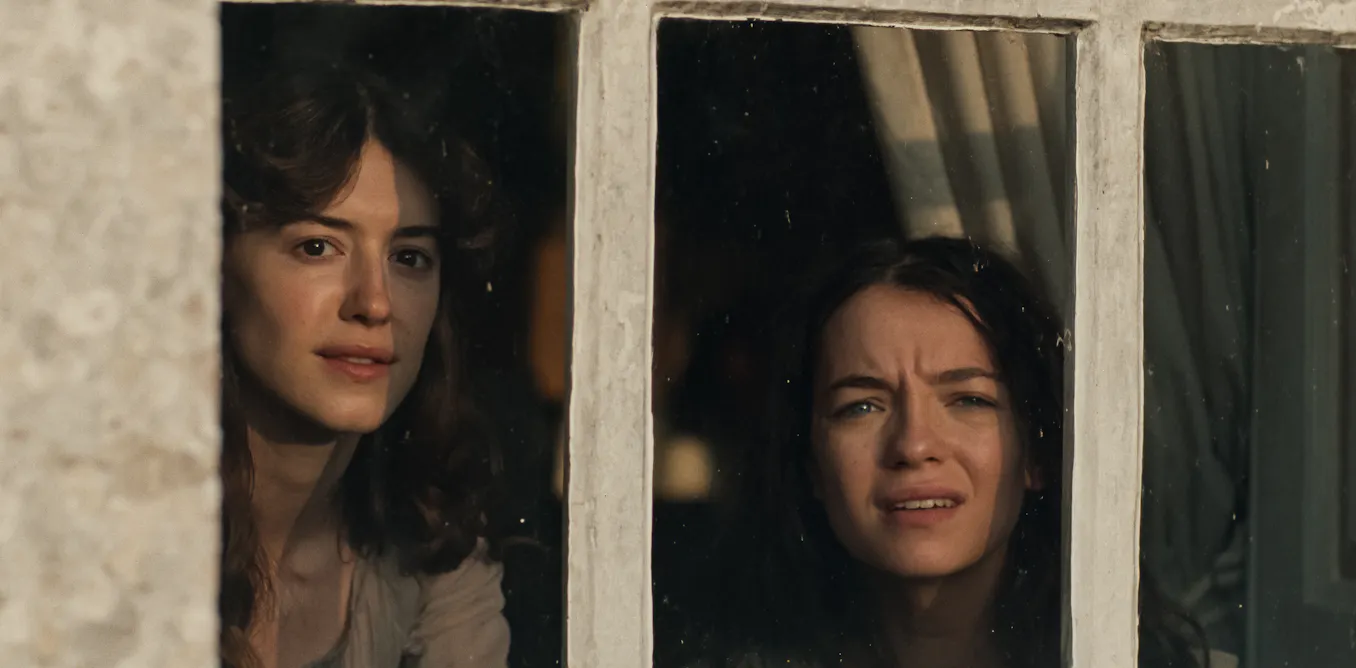
One striking difference is the decision to give more screen time to the oft overlooked third sister, Margaret (Bodhi Rae Breathnach). Several times we see the young girl struggle to face the loss of Norland Park. In one scene, she breathes on the window and traces an “M” on the glass, reclaiming a sense of ownership over the property that is no longer her home.
Margaret and young Henry, John’s son and the future “master” of Norland Park, fight over her dollhouse in the playroom, which is then left behind in the move to Devon. At Barton Cottage, Margaret only has a small replica of her dollhouse that sits on the windowsill.
Unlike Ang Lee’s 1995 film, which romanticises Barton Cottage as an idyllic and peaceful home, director Georgia Oakley’s version is small, dark and dingy. The Dashwood women make do. Mrs Dashwood (Caitriona Balfe) learns to cook, and Elinor gardens and does laundry. A fresh take on Mrs Jennings (a brilliant Fiona Shaw) and Sir John Middleton (Turlough Convery) gives the characters strong Devonshire accents, contributing to the sense that the Dashwoods are outsiders in their new community.
Read more:
Introducing Jane Austen’s Paper Trail – a new podcast from The Conversation
Adapting Austen for gen Z
Younger Austen fans will relate to this new take on the Dashwoods’ complicated relationship to property. In recent years the housing crisis, cost of living chaos and the rise of “generation rent” means that only a small portion of gen Z are homeowners.
According to think tank The Women’s Budget Group, housing insecurity disproportionately affects women due to “greater reliance on private renting, unaffordable housing and difficulty keeping up with housing costs”.
Austen herself faced housing insecurity throughout her life, particularly after the death of her own father. She revised Sense and Sensibility between 1809 and 1810 while living on her brother’s estate in Chawton as his dependant.
Focus Features
The film reflects a truth that gen Z are painfully aware of: romance and property are often inextricable.
Just as YouGov report that “over a third of women in a couple are financially dependent on their partner”, the only hope for the Dashwood sisters is to marry a man of significant means.
Marianne’s “situationship” with the caddish Willoughby (whom gen Z might describe as a textbook lovebomber and ghoster) promises the large estate of Combe Magna. When he snubs her at a ball, he describes Marianne to his rich fiancée as the girl “from the little cottage in the country”.
Later, in a scene visually replicated from the 1995 adaptation in which Marianne walks to Willoughby’s estate in the rain, there is one key difference: where Kate Winslet woefully recites Shakespeare’s Sonnet 116, Esmé Creed-Miles lets out a guttural scream directed towards the property she once dreamed of being mistress of.
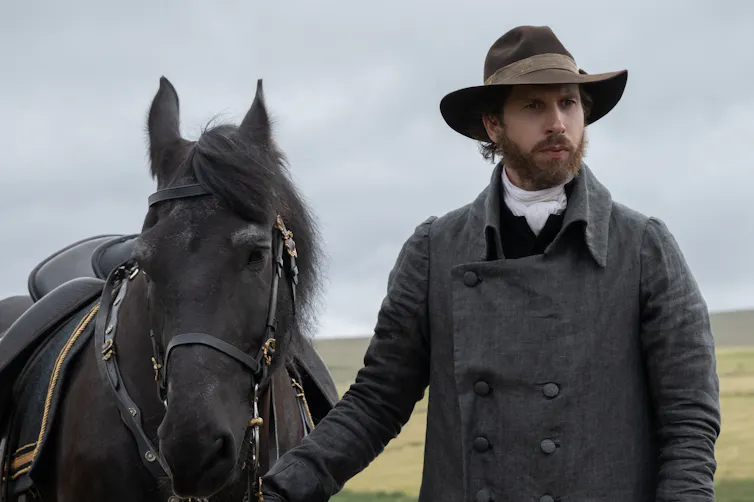
The film also reflects gen Z’s worries about modern dating. Inside homes, characters are limited to what they can say, whereas in nature, couples can express their true feelings without the fear or impropriety (all of Austen’s successful proposals happen outside for this very reason).
In many ways, the problems that Austen’s heroines wrestle with continue today. Marianne despairs of “second attachments”, while gen Z discourse over “body counts” (the number of sexual partners somebody has) circulates online. Where Austen presents both the dangers and safety that marriage posed for women, “pinkpill” influencers promote hypergamy (marrying up) and tradwife lifestyles.
Focus Features
In a world in which “having a boyfriend is embarrassing” and “getting the ick” seems unavoidable, romance also seems increasingly essential for survival. The Kinsey Insitute reports that more than half of young single people are interested in finding a partner to share expenses with because of the bad state of the economy.
Read more:
Jane Austen’s world ran on gossip – and she revelled in it
Oakley’s adaptation is therefore a welcome take on Austen’s novel. It provokes its audience to question how much has changed between 1811 and 2026 in respect to women’s struggle for independence.
Gen z’s tendency to view things in black and white perhaps robs the audience of Austen’s nuances in this adaptation and softens her heroes. Marianne’s novel counterpart is only 16, whereas Colonel Brandon (Herbert Nordrum) is “on the wrong side of five and thirty”. The decision to decrease his age (and increase hers) is likely due to recent online discourse around problematic age-gap relationships.
Similarly, the film presents Edward’s (George MacKay) bad treatment of Elinor as a result of his overly virtuous nature. Hugh Grant’s characterisation of him in Ang Lee’s adaptation as awkward, weak willed and a bad communicator aligned more closely to the novel.
The film’s ending might neatly resolve the romantic and economic problems that face its gen Z audience, as the two sisters may now live harmoniously as neighbours with their true loves. But Austen’s endings are never entirely satisfactory, and Sense and Sensibility ends abruptly. Oakley robs us of the classic white wedding scenes we have come to associate with Austen adaptations, leaving audiences to question whether the Dashwood sisters will truly be happy in their new homes and husbands.
The post “Sense and Sensibility: gen Z will relate to the Dashwoods’ complicated relationship with romance and property” by Katie MacLean, PhD candidate in literature and languages, University of Stirling was published on 09/28/2026 by theconversation.com