

Domestic pigeons have surprising cultural significance. They inspired Charles Darwin in his thinking about evolution, delivered wartime messages to save lives, and have symbolic meaning around the world.
The domestic pigeon is among the best understood animals on the planet, with research published weekly on various aspects of their biology. Yet we know very little about their wild ancestors. Because of this, I have been visiting Scotland’s Outer Hebrides since 2019 to study the truly wild pigeon.
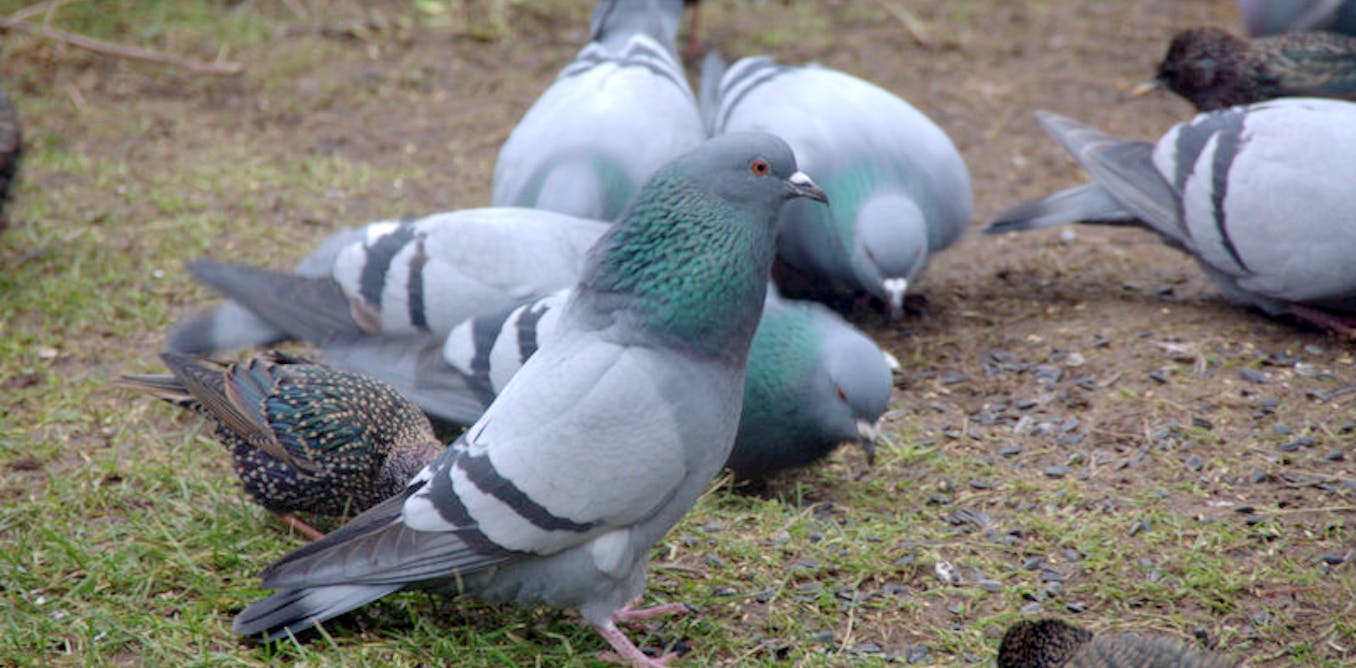
Millennia of human-pigeon interactions arose from the domestication of a small, blue-grey bird – the rock dove – 5,000-10,000 years ago, probably in the Middle East. Most of us are familiar with feral pigeons. Found cooing and strutting throughout the world’s cities, these animals descend from escaped domestic birds.
Unlike feral pigeons, which thrive in attics (or outside McDonald’s), the rock dove is shy, and mostly found on cliffs or mountains. Domestic pigeons, feral pigeons and rock doves all belong to the same species – Columba livia.
William Smith, Author provided (no reuse)
Although rock doves are native to vast swathes of Europe, Africa and Asia, their modern geographic distribution is unclear, thanks to interbreeding with feral pigeons. Across much of their original range, rock doves have gone extinct, replaced by pigeons with a mixture of wild and feral ancestry. For example, they have been completely subsumed into the feral pigeon gene pool across England and Wales.
Nevertheless, wild-looking pigeons were known to live in parts of Scotland and Ireland. Among ornithologists and casual birdwatchers, these birds were sometimes said to be “proper” rock doves, and sometimes wild-feral hybrids. It was this mystery that inspired me to study these birds which, living in remote habitats (and being difficult to distinguish from feral pigeons), had been neglected by scientists for decades.
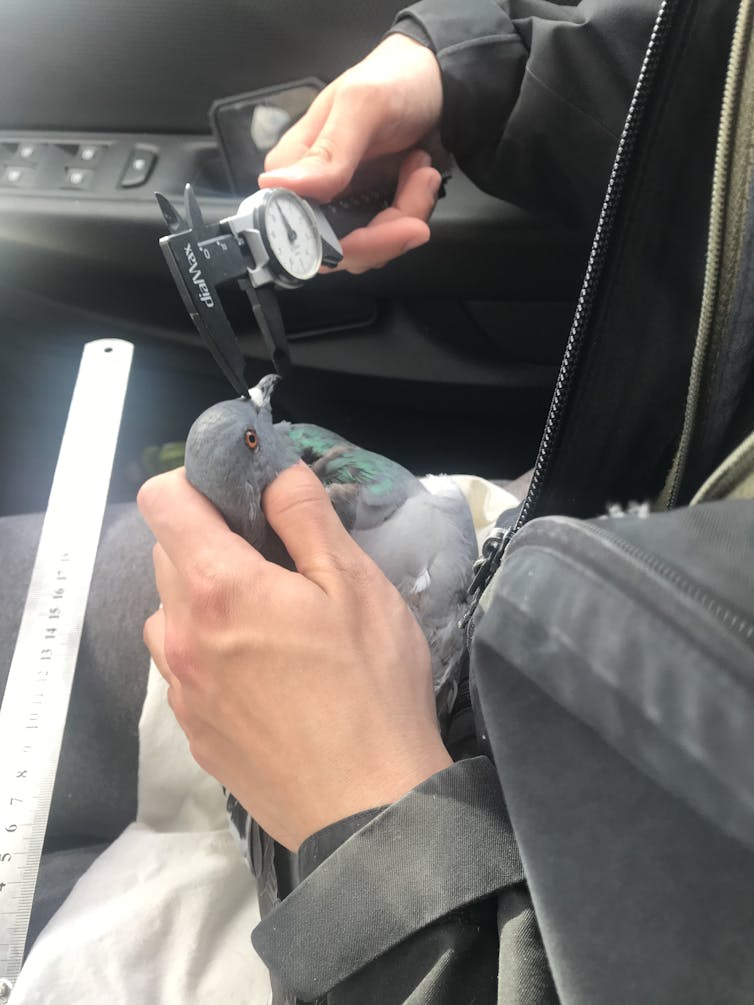
In 2022, my colleagues and I published the first genetic study of these Scottish and Irish populations. We confirmed that they are wild rock doves, but that wild-feral interbreeding is common. We found that rock doves have thinner beaks and rounded heads, whereas feral pigeons have an engorged cere (the white fleshy lump above the beak).
William Smith, Author provided (no reuse)
Most interestingly, the rock doves of the Outer Hebrides, off the west coast of Scotland, remain genetically distinct, with limited evidence of interbreeding with feral pigeons. Future genetic research will hopefully identify similar colonies surviving elsewhere (wild-looking populations are also seen in parts of Asia, north Africa, and the Mediterranean).
For now though, Outer Hebridean rock doves represent the “wildest” (having the least feral pigeon ancestry) known contemporary population in the world. Foraging in meadows, and roosting in sea caves, they have, against scientists’ expectations, escaped the impacts of domestication. This is probably because pigeon keeping has always been rare in the Outer Hebrides, and few feral pigeons make it across the sea from mainland Britain.
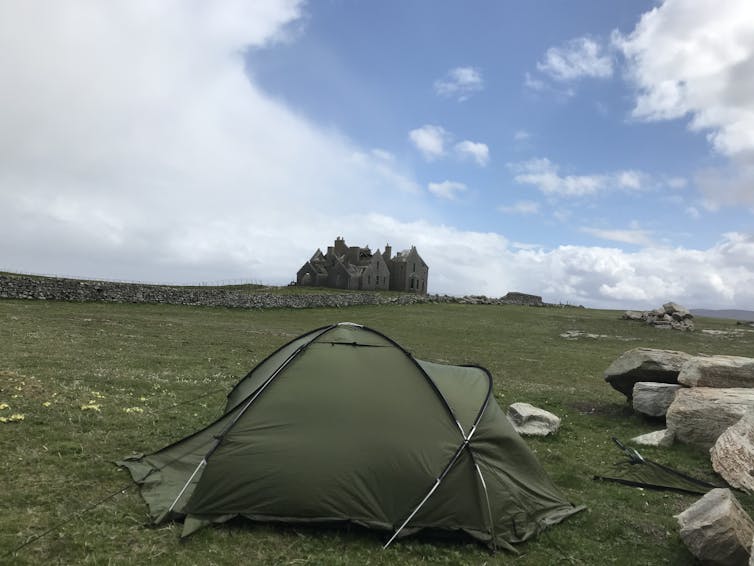
Each year, I spend several weeks in the Outer Hebrides studying the rock doves. To allow individual birds to be followed throughout their lives, they need to be fitted with coded leg rings. Urban feral pigeons can be captured with a hand net and some birdseed, but their warier cousins require a more thoughtful approach.
We find that the best way is to target them overnight, when they are roosting. We take measurements, photographs and blood samples, before returning them to sleep. We have so far incorporated over 1,200 birds into our study.
Outer Hebridean rock doves are sparsely distributed, in colonies of up to a hundred birds. They rest and breed in caves, rocky crags and ruined buildings. Living among golden eagles and red deer, it’s a completely different lifestyle to that associated with feral pigeons.
In 2025, we published the results of a GPS tracking trial. We tracked rock doves from a colony in a disused barn, to see whether life in a human-built environment affects their behaviour.
Although naturalists have long discussed a classic rock dove “commuting” behaviour (travelling many miles each day, between roosting and foraging sites), this is not what we observed with our barn-dwelling birds. While many Outer Hebridean rock doves still commute (they are seen traversing the islands each morning and evening), the doves we tracked had abandoned this behaviour, associating almost exclusively with farmland.
William Smith, Author provided (no reuse)
This may give us a rare window into the earliest stages of domestication in this species. Our observations suggest that, instead of being deliberately retrieved from nature and actively farmed, rock doves were probably first attracted by agriculture, abandoning their natural commuting behaviour to live alongside us. Providing roosting structures likely enhanced this process – and we started building dovecotes at least 4,000 years ago.
The exciting thing about working with rock doves is that much of their biology
remains a mystery. We now know that genetically distinct populations persist, but there’s little information about their reproduction, predators or diseases.
Studying wild rock doves gives us a rare chance to establish how one of science’s model species lives in nature. This may yield insights into domestication, wild-feral hybridisation, and human-wildlife relationships – contributing to the wider understanding of our place in the natural world.
The post “What I’ve learned from studying the wild pigeon” by Will Smith, Leverhulme Early Career Fellow, University of Nottingham was published on 01/07/2026 by theconversation.com