
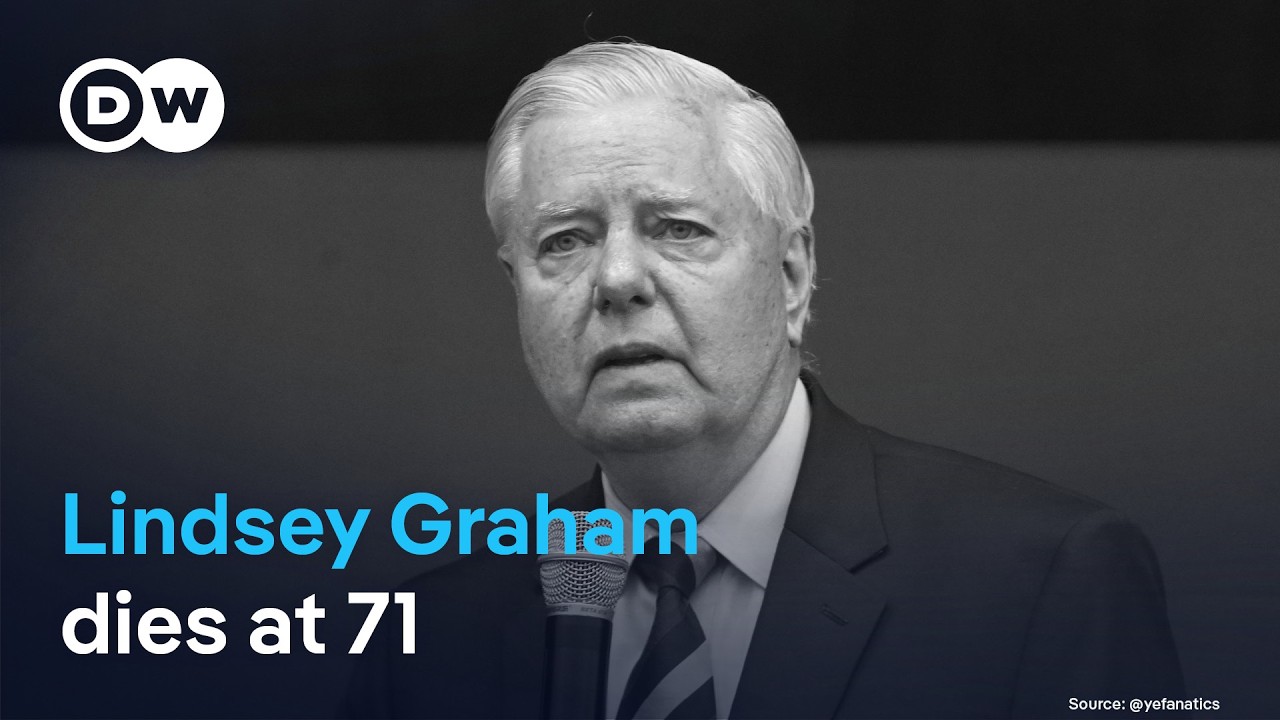

The Swift Surge of Conspiracy Theories Following Lindsey Graham’s Death
In a shocking turn of events, the political landscape was rocked by the sudden death of U.S. Republican Senator Lindsey Graham at the age of 71. While the circumstances surrounding his demise are still being scrutinized, the online discourse has swiftly spiraled into a realm of conspiracy theories and geopolitical speculation.
Unfolding a Tragic Event
Just hours after the announcement of Graham’s passing, social media platforms erupted with varied reactions, many turning conspiratorial. DW’s correspondent in Washington, Misha Komodovsky, reports on the initial shock waves that Graham’s death sent through the political community and beyond. Graham, a staunch ally of former President Donald Trump, was known for his vocal stances on a range of issues, particularly regarding U.S. foreign policy and relations with Russia.
Conspiracy Theories Take Center Stage
As the news settled in, numerous unfounded allegations began circulating online. Theories that suggested foul play, particularly involving Russian operatives, gained traction, captivating the imaginations of conspiracy theorists. The rapid dissemination of these theories highlights the current climate where misinformation can spread like wildfire, particularly in moments of political uncertainty.
According to Komodovsky, there is currently “no verified evidence” linking Russia or any other external actor to Graham’s death. Despite this, the specter of potential Russian involvement has dominated discussions, spurred by Graham’s critical stance on Russia’s actions, especially concerning the ongoing conflict in Ukraine.
Understanding the Context
The connection between Graham and U.S.-Russia relations cannot be ignored. The senator was known for his aggressive rhetoric towards Russian President Vladimir Putin, often advocating for a tough stance against Moscow. This historical backdrop provides fertile ground for conspiracy theories, especially in a time when geopolitical tensions are high and trust in institutions often questioned.
As investigations unfold, responses from key institutions such as the FBI and Capitol Police emphasize the need for caution and due diligence. Both agencies have stated their commitment to investigating the circumstances surrounding Graham’s death thoroughly, while assuring the public that any claims of conspiracy will be treated with skepticism until credible evidence emerges.
Conclusion: The Dance of Speculation and Reality
In the wake of Lindsey Graham’s death, questions linger not only about how he died but also about the ramifications of the ensuing conspiracy theories. As the narrative progresses, it will be essential to distinguish between facts and conjecture, and to remind audiences of the importance of critical thinking amidst a deluge of information. The media landscape, particularly in cases involving high-profile figures, must navigate this sensitive terrain with a focus on accountability and truth.
For now, while the political world mourns the loss of a prominent figure, the conversation continues, echoing the complexities of contemporary politics where reality often intertwines with speculation in unpredictable ways.
Watch the video by DW News
Video “Why conspiracy theories followed the US Republican senator's death so quickly | DW News” was uploaded on 07/12/2026 to Youtube Channel DW News