
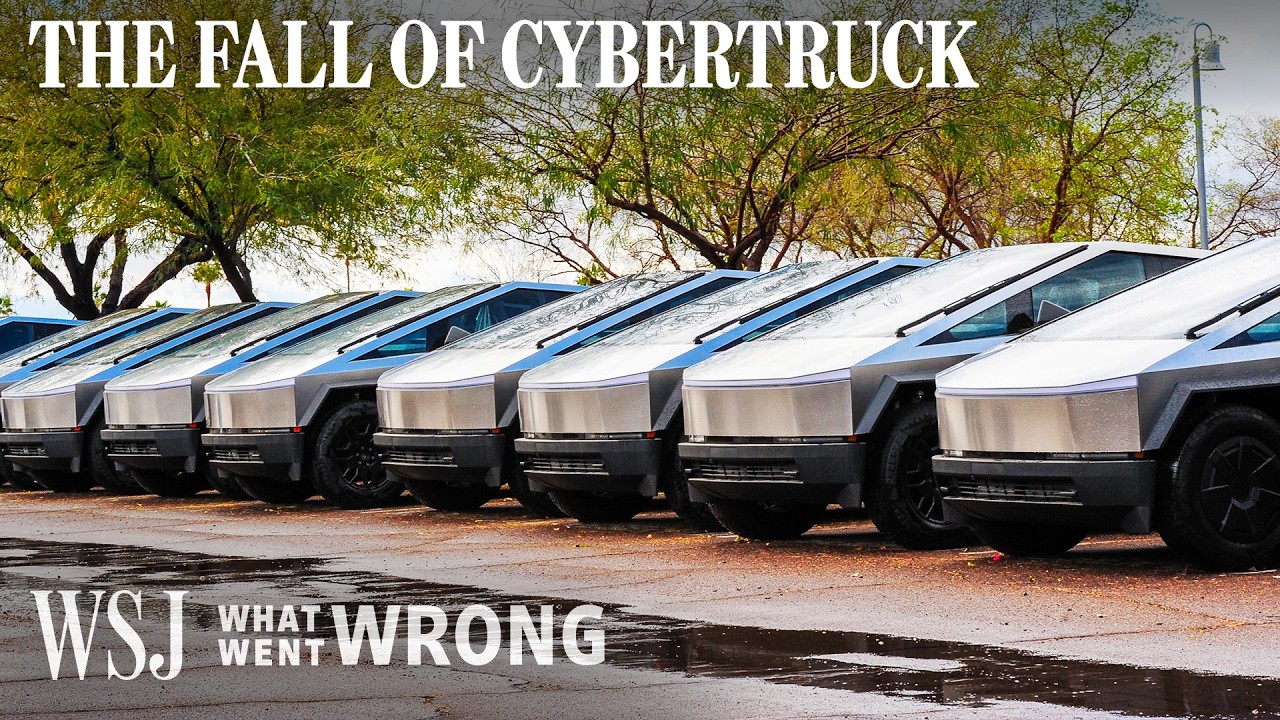

Why Elon Musk Is Killing His Polarizing Tesla Cybertruck: A Deep Dive
In a dramatic turn for one of the most ambitious electric vehicle projects, the Tesla Cybertruck—a vehicle once touted by Elon Musk as “the best product ever”—is facing a grim reality. Set to transform the traditional pickup truck market, the Cybertruck was initially projected to boast annual production of 250,000 units. However, production has come to a halt as Tesla shifts focus towards developing its next-generation self-driving vehicle, the Cybercab.
A recent video from The Wall Street Journal, featuring insights from reporters Becky Peterson and Sean O’Kane, delves into the myriad challenges and setbacks that have plagued the Cybertruck since its much-publicized unveiling in 2019.
The Cybertruck’s Troubled Launch
The much-anticipated launch of the Cybertruck was marked by a blend of excitement and skepticism. Its unconventional design and promises of innovative features excited fans and critics alike. Yet, since its debut, reality has proved to be a harsh wake-up call. The anticipated revolution in the automotive space never materialized as expected, leading to significant fallout.
Production Hurdles and Competition
One of the primary culprits behind the Cybertruck’s failure is production inefficiencies. As electric vehicle competition heats up, especially from established automakers pivoting to electric options, Tesla’s delays and inability to deliver the promised numbers have rendered the Cybertruck vulnerable in a crowded market. Just over 20,000 units were sold in 2025, with projections suggesting that number may dwindle even further in the coming year.
Quality Issues and Recalls
Compounding the production challenges are serious quality issues that have dogged the Cybertruck. From manufacturing defects to numerous recalls, the vehicle has struggled to meet the high standards expected from Tesla. This not only undermined consumer confidence but also raised questions about the overall durability and reliability of the Cybertruck—key selling points for any pickup truck.
A Shift in Focus
With sales lagging and production winding down, Musk’s vision of the Cybertruck is increasingly seen as a distraction rather than a hallmark of innovation. As Tesla pivots to the Cybercab, the future of the Cybertruck seems uncertain. The strategic decision to allocate resources to a self-driving vehicle aligns with Musk’s long-term goals but leaves many wondering whether the Cybertruck was ever viable in the first place.
Political Backlash and Public Perception
Additionally, Musk’s involvement in politics and controversial statements have exacerbated the situation. As public sentiment shifts, the once-thriving enthusiasm for Tesla’s products is tinged with skepticism. The Cybertruck has become a polarizing symbol—not just of Tesla’s ambitions but of Musk’s unpredictable leadership as well.
Conclusion: What Lies Ahead?
As the Tesla Cybertruck’s fate hangs in the balance, it serves as a cautionary tale about the complexities of innovation in a rapidly evolving market. Musk, who has often managed to recast Tesla’s narrative, now faces an uphill battle to revive the Cybertruck’s prospects or properly pivot towards new ventures that can restore consumer faith in the brand.
The Wall Street Journal’s insightful exploration unveils the tangled web of ambition, innovation, and stark reality that has led to the Cybertruck’s impending decline. The electric vehicle landscape continues to evolve, but the road ahead for Musk and Tesla will require more than just new ideas—it demands execution, quality, and a sensitivity to market dynamics that the Cybertruck has thus far failed to achieve.
Watch the video by The Wall Street Journal
Video “Why Elon Musk Is Killing His Polarizing Tesla Cybertruck | WSJ What Went Wrong” was uploaded on 11/14/2026 to Youtube Channel The Wall Street Journal