
Why Workers In India Risk Their Lives To Recycle Your Old Clothes
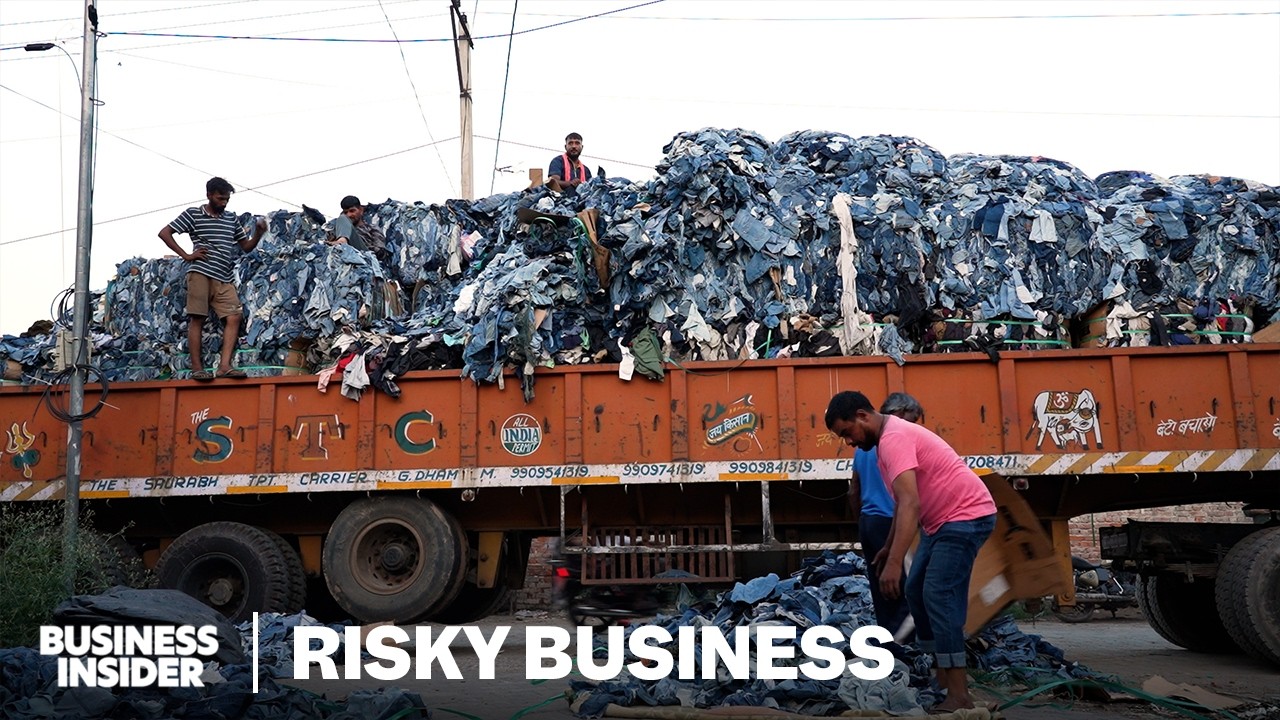
In a small town known as Panipat, India, the mountains of discarded clothing tell a sobering story. Each year, approximately 1 million tons of old garments find their way here, transformed into a vital part of the global fashion supply chain. However, this transformation comes at a significant cost. Workers in Panipat sort, shred, bleach, and dye these garments into new fibers, rugs, and blankets, all while facing serious health risks from textile dust, hazardous machinery, and toxic chemicals.
The video “Why Workers In India Risk Their Lives To Recycle Your Old Clothes” delves into the journey of fast fashion’s leftovers. It starts by exploring where the world’s unwanted clothes end up, highlighting Panipat’s key role in the lifecycle of discarded textiles. Once these clothes arrive, workers meticulously sort through the heaps, a labor-intensive process that requires both speed and precision. Unfortunately, the sorting itself exposes them to airborne textile dust, a harmful byproduct that can lead to respiratory issues over time.
Fast fashion has become synonymous with excessive waste—a stark reality that feeds into the operations in Panipat. As the demand for inexpensive clothing continues to rise, so does the volume of discarded textiles. The video points to this overwhelming problem, shedding light on how the relentless cycle of consumption creates increasing amounts of waste, forcing workers into perilous conditions.
The subsequent processes of shredding and transforming these old clothes into usable yarn are fraught with danger. Dangerous machinery operates in a relentless environment, where mishaps can lead to severe injuries. Additionally, the workers face exposure to harsh chemicals during the bleaching process, which not only affects their immediate health but poses long-term risks as well. The narrative captures the hidden cost of our clothing habits—individuals sacrificing their well-being for the sake of recycling.
As the garments move through the recycling chain, viewers witness the process of dyeing recycled fabric, another step laden with health risks. The workers’ daily reality juxtaposes the aesthetic transformation of our old clothes into vibrant products. Yet, this impressive turnaround comes wrapped in layers of risk that demand a reconsideration of how we approach the lifecycle of clothing.
The video concludes by presenting the end products of this intense labor, showcasing the yarn, rugs, and blankets that find new life in homes around the world. However, it leaves viewers questioning the ethical implications: Who truly pays the price for our discarded fashion? As Panipat continues to innovate in textile recycling, the health and safety of its workforce remains a pressing concern that must not be overlooked in our pursuit of sustainability.
In an ever-evolving fashion landscape, it is crucial for consumers to acknowledge the hidden stories behind their purchases, especially the lives at stake in far-flung locales like Panipat. Through this video, viewers not only gain insight into the remarkable resilience of these workers but are also urged to consider the broader implications of fast fashion and the urgent need for responsible consumption.
Watch the video by Business Insider
Video “Why Workers In India Risk Their Lives To Recycle Your Old Clothes” was uploaded on 11/21/2026 to Youtube Channel Business Insider


@BusinessInsider Can you cover about Military Engineers, it's vehicle, infantry loadout. 🙂
This is the fault of the companies that don’t provide workers with safe working conditions, and the companies that buy those goods without care as to whether workers were treated like humans and given a safe work environment and a living wage.
Was supposed to be about recycling. Very preachey
dont care, didnt ask em to do it
What is the percentage of the clothing that is New Old Stock being destroyed just sto dilute the clothing market?
Because as long as someone is making money out of exploiting people, it is justified in India which also has an over population problem
Recycling units must be formally established in these areas, with proper worker contracts and better salaries. Water pollution should reduced by the government through implementing various methods inside the recycling factories.
Recycling costs should be added directly to the MRP of all clothes. Waster water treatment plants must be surveyed and government must partner with them to improve the facilities and standards.
I do not know about other people, but I buy several shirts and other clothes a year. And I worn then until they can be used only as a rag or wipe the floor. No matter if shirt cost 5 or 50$, for me is the same. I have a t-shirt that I bought a 8 years ago, still use it. And this is not because I do not have money for a new one.
Why are there no protective gears , ventilation etc..😮
Watching labor documentaries about India I must ask
Is personal protective equipment illegal over there?
@4:15 You can see a $9 sweater which is actually probably not worth $9. There is a VinPrime logo on it, which is a secondhand retailer here in Korea that went out of business a while ago. Shopped there quite frequently myself.
So this means when VinPrime went into liquidation, they sold remaining stock – despite the 12,000 krw price tag – for whatever price the Indian buyer was willing to pay for the bulk pallet which was most likely hundreds of kilos, and which this "$9" sweater was part of. So in reality, that individual 12,000 krw sweater was sold for cents on the dollar.
These people are paying the ultimate price for the luxuries. It's not just governments, we all need serious changes in our lifestyles.
i put this next to people that use the internet to cause anger and divition on people from other countries.
It is better to buy secondhand or 100% natural locally organic produced clothes. Such as 100% wool, 100% hemp, 100% linen, 100% organic cotton. And undyed, because synthetic dye is super toxic to planet and our health as well!
They chose to do this business. If the workers don't like their job, get another one. Not our responsibility to give everyone a wage, and living equivalent to liberal left-wing social worker. Wanting to help everyone, and wanting to improve and "help," everyone, everywhere has become a disease. This series is badly infected with the disease and should be culled.
that’s the fault of the companies and not the consumers themselves
My wife once took a six week summer job at a CostCo. Her job involved refolding and organizing cloths. By the fourth week, she’d developed a cough we referred to as the CostCo cough as the cloth fibers, dust particles, etc. began to irritate her lungs. After she left this temporary job, the cough disappeared.
Why not? It's their f job 😑 no work no money
Kudos to us thrifters
Who the hell is buying 53 new pieces of clothing a year in the United States??? I’ve only bought 4 new shirts and 2 pairs of shoes (one being crocs) all year 😭