
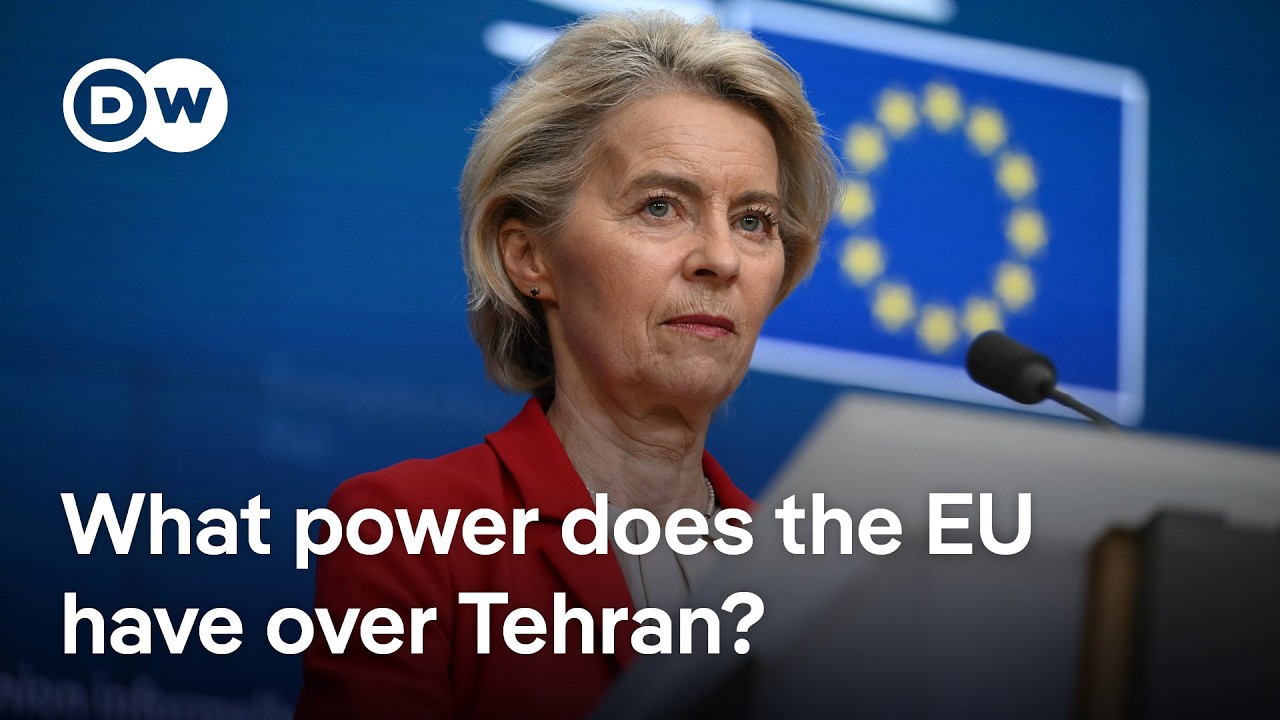

Will Anything Change for Iran’s Revolutionary Guard Following EU Sanctions?
As geopolitical tensions escalate, the European Union has taken significant steps by imposing sanctions on Iran’s Islamic Revolutionary Guard Corps (IRGC). This action, driven by concerns over Iran’s nuclear program and its role in destabilizing the region, prompts critical questions: What will these sanctions achieve, and how will they affect the IRGC’s robust influence over Iran’s political and military landscape?
The IRGC has long been deemed a cornerstone of the Iranian regime, wielding substantial power not just through military might but also through economic, political, and social control. With sanctions targeting its leadership and economic interests, the European Union aims to inhibit the operational capabilities of the Guard. However, observers remain skeptical about the potential effectiveness of these measures.
Historically, sanctions have played a dual role in Iran’s politics—often rallying public support around the regime, even as they strain the economy. The IRGC’s deep entrenchment in various sectors, coupled with its strong ideological commitment, suggests that it may weather the sanctions with relative ease. The organization has previously showcased resilience, adapting its strategies to circumvent restrictions and continue its operations.
Moreover, the IRGC’s strategic collaborations across the Middle East, notably in Syria, Lebanon, and Iraq, complicate the dynamics further. These alliances, underpinned by ideologies of resistance against Western interests, could solidify its standing rather than diminish it, even amid renewed diplomatic efforts from European nations aimed at curtailing Iran’s influence.
While the EU sanctions could hinder some aspects of the IRGC’s international operations, particularly in accessing financial resources, the core of its power—the allegiance of its rank-and-file members and its dialogue with hardline elements within Iran—remains intact. In the short term, it is plausible that the sanctions may intensify the regime’s narrative of external threats, consolidating support around the IRGC as a bulwark against perceived aggression from the West.
As the international community watches closely, the question remains: Can sanctions effectively shift Iran’s trajectory, or will they further entrench the IRGC’s dominance? The implications are profound, potentially determining not only the future of Iran’s domestic policy but also the broader equilibrium in the Middle East. As this narrative unfolds, observers are left to ponder the balance of power in a region rife with conflict, ideology, and ambition.
Watch the video by DW News
Video “Will anything change for Iran's Revolutionary Guard following EU sanctions? | DW News” was uploaded on 01/29/2026 to Youtube Channel DW News