

Most of us are used to hearing about the risks of not getting enough iron. Yet having too much iron in the body can also cause serious health problems.
Iron overload occurs when it gradually accumulates in the body. Excess iron can be stored in organs such as the liver, heart and pancreas. This can scar the liver, weaken the heart so it cannot pump blood properly, and damage the body’s ability to control blood sugar, leading to diabetes.
Could changing what you eat and drink affect how much iron builds up?
In a recent scoping review, my colleagues and I examined 40 sources on food, drink and supplements. These included 38 peer-reviewed academic papers and two sources of grey literature. The findings suggest that diet could complement medical treatment by changing how much iron the body absorbs, although its usefulness depends on the cause of the overload.
Doctors describe inherited iron overload as “primary”, and overload caused by illness or treatment as “secondary”.
Hereditary haemochromatosis is the most common inherited form. It causes the body to absorb too much iron from food, and is particularly common among people of northern European ancestry. Standard treatment involves regularly removing blood, a procedure called venesection or phlebotomy.
Transfusion-related iron overload develops after repeated blood transfusions, in which a person receives donated blood. Each transfusion adds iron that the body has no active system for removing. Treatment generally uses iron chelators – medicines that attach to iron so the body can pass it out in urine or stools.
This type of overload can occur in thalassaemia, a group of inherited conditions affecting haemoglobin, the protein in red blood cells that carries oxygen. Some people need regular transfusions, and thalassaemia can also increase iron absorption from food (though for those receiving regular transfusions, food usually provides a much smaller share of their excess iron).
What the studies found
Tea contains polyphenols – plant substances that attach mainly to non-haem iron, the form found chiefly in plant foods and foods with added iron. This makes the iron harder for the body to absorb.
A small clinical trial involving 18 people with hereditary haemochromatosis found that black tea reduced iron absorption from a meal. Participants asked to drink tea with every meal accumulated about one-third less stored iron over the following year than those drinking water. However, the difference between the groups was not statistically significant, which means the researchers could not rule out chance.
A later “crossover” study, in which all 14 adults tried both the supplement and an inactive capsule, tested extracts of black tea, cocoa and grape juice. The supplement reduced non-haem iron absorption from one meal and drink by about 40%. But because the study measured only this immediate effect, it could not show whether the supplement slowed iron accumulation or reduced treatment needs.
Coffee also contains polyphenols and can reduce non-haem iron absorption when consumed with meals. Evidence in people with iron overload remains stronger for tea, though.
Pheelings media/shutterstock
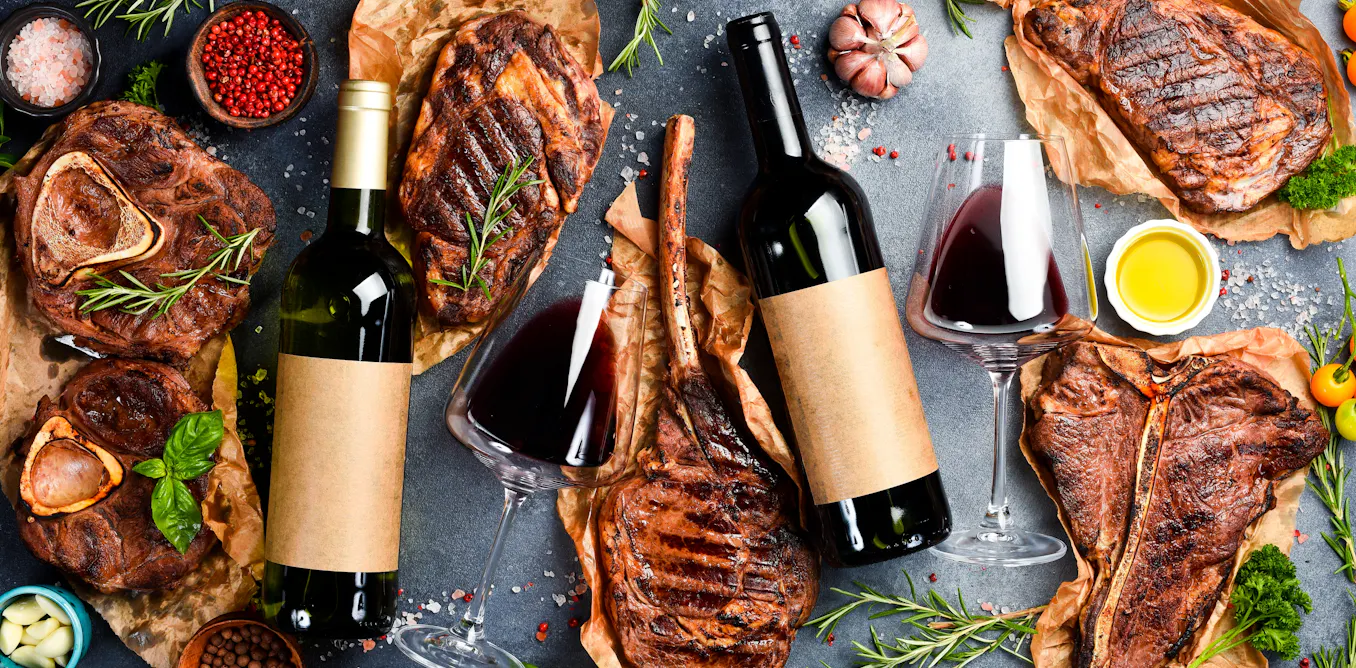
Haem iron, found in meat, poultry and fish, is absorbed more readily than non-haem iron. People with hereditary haemochromatosis may therefore be advised to moderate red meat and particularly iron-rich offal, such as liver, while continuing to eat a balanced diet.
People with iron overload are also generally advised to avoid iron supplements and multivitamins containing iron, unless a doctor has prescribed them. UK guidance advises people with haemochromatosis to avoid breakfast cereals fortified with iron.
Vitamin C increases the absorption of non-haem iron. People with hereditary haemochromatosis are usually advised to avoid vitamin C supplements, although they can still eat fruit and vegetables containing it.
The advice can differ for people with transfusion-dependent beta-thalassaemia, a form requiring regular transfusions, because some develop vitamin C deficiency. Medical guidelines allow small prescribed doses with certain iron-removing medicines or when deficiency has been confirmed. Unsupervised supplements can increase forms of iron in the blood that damage cells.
Alcohol is a particular concern, because it and excess iron can both injure the liver. A study of 206 people with the most common inherited form of haemochromatosis found severe, permanent liver scarring in 61% of those consuming at least 60g of pure alcohol a day, compared with 7% of those consuming less.
That amount is roughly 7.5 UK units a day and should not be treated as a safe threshold. UK guidance advises people who drink regularly not to exceed 14 units a week. Those with liver damage may be advised to avoid alcohol altogether.
People with haemochromatosis are also advised to avoid raw or undercooked shellfish, particularly oysters and clams. These can carry Vibrio bacteria found naturally in coastal waters. The resulting infection, called vibriosis, can be unusually severe in people with iron overload.
What the evidence can support so far
The evidence does not support a single “iron overload diet”. As a scoping review, our study mapped the available research but did not formally rate every source’s quality, nor combine the numerical results to calculate an overall effect.
The studies covered different conditions and approaches, usually in small groups over short periods. Many measured iron absorption or blood-test results without examining longer-term health or treatment needs. We therefore cannot say that dietary changes reliably reduce how often people need blood removed or should take iron-removing medicines.
For people with hereditary haemochromatosis, current guidance advises avoiding unprescribed iron or vitamin C supplements and limiting alcohol and frequent red-meat consumption. Tea or coffee with meals may help reduce non-haem iron absorption.
People with transfusion-related overload need individual advice that considers their treatment and whether they have low levels of any vitamins or minerals.
Anyone diagnosed with iron overload should discuss dietary changes and supplements with their doctor or a specialist dietitian. Diet can support treatment, but it cannot safely replace it.
The post “Iron overload: how tea, coffee, red meat and alcohol can affect absorption” by Alexandra Cremona, Lecturer, Human Nutrition and Dietetics, University of Limerick was published on 09/15/2026 by theconversation.com