
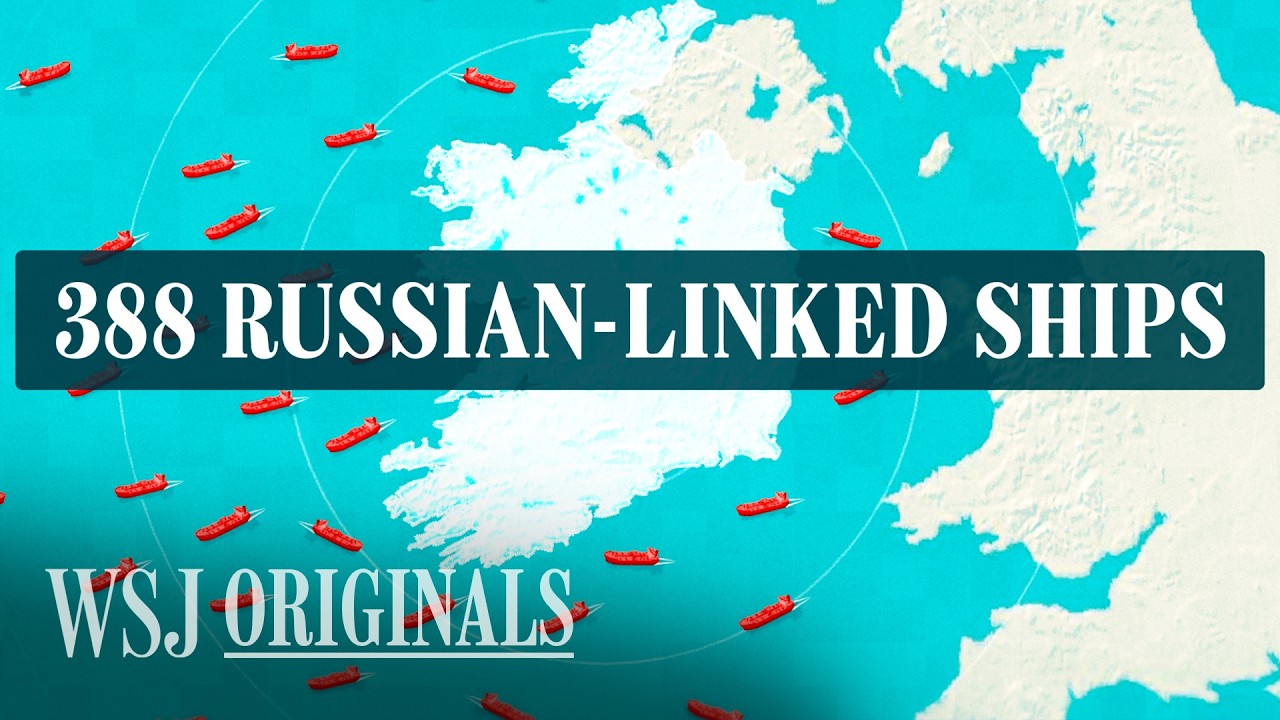

Ireland’s Fragile Maritime Landscape: Navigating Russian Threats
In a world increasingly defined by geopolitical tensions, Ireland finds itself at a crucial juncture. Known for its picturesque landscapes and rich history, the small island nation harbors a significant global responsibility, particularly regarding its role in transatlantic communications. Approximately 75% of all subsea cables connecting Europe and North America pass through or near Irish waters, elevating its strategic importance in the digital age.
However, this vital position is juxtaposed against a backdrop of military neutrality and historically minimal defense spending. While other European nations ramp up their defense budgets amid rising threats, Ireland has maintained a low level of military investment, leaving it particularly vulnerable to external pressures, with increasing concerns about Russian activities in its maritime territory.
In a recent feature by The Wall Street Journal, journalist Sune Engel Rasmussen embarks on a compelling journey with the Irish Navy to uncover the challenges faced by a nation grappling with how to secure its waters. The Navy, though small, plays a crucial role in safeguarding Ireland’s maritime boundaries amid growing incursions from vessels linked to Russia. As these vessels increasingly navigate Irish waters, questions arise about the capability and readiness of the Navy to respond to potential threats.
The video delves into Ireland’s modest defense spending, which remains the lowest in the European Union, raising alarm bells for policymakers and security analysts alike. This financial constraint limits the Navy’s operational reach and effectiveness, particularly in countering espionage or aggressive stances from foreign nations. The question lingers: How can Ireland, with its historical stance of military neutrality, effectively bolster its defenses without compromising its long-standing diplomatic positioning?
The exploration of Ireland’s military neutrality reveals an intricate balance between securing national interests and adhering to a policy that has governed its defense strategy for decades. As tensions rise, the country finds itself at a crossroads, with policymakers contemplating a significant shift in the defense paradigm.
Looking ahead, a pressing question emerges: what will be the next steps for Ireland in addressing these vulnerabilities? As the government vows to increase defense spending and enhance its naval capabilities, the implications of this new strategy extend beyond national borders, affecting relationships within the European Union and the Atlantic alliance.
In a landscape where digital and maritime security are intertwined, Ireland’s response to the Russian threat will not only shape its future but may also resonate across the international stage. In these uncertain times, the nation’s ability to adapt and safeguard its critical maritime infrastructure will be paramount in maintaining its sovereignty and security.
As the situation evolves, Ireland stands as a poignant reminder of the complex dynamics of modern security, where geographical significance and historical policy must navigate the turbulent waters of global threats.
Watch the video by The Wall Street Journal
Video “Why Ireland Is So Vulnerable to Russian Threats | WSJ” was uploaded on 09/15/2026 to Youtube Channel The Wall Street Journal