

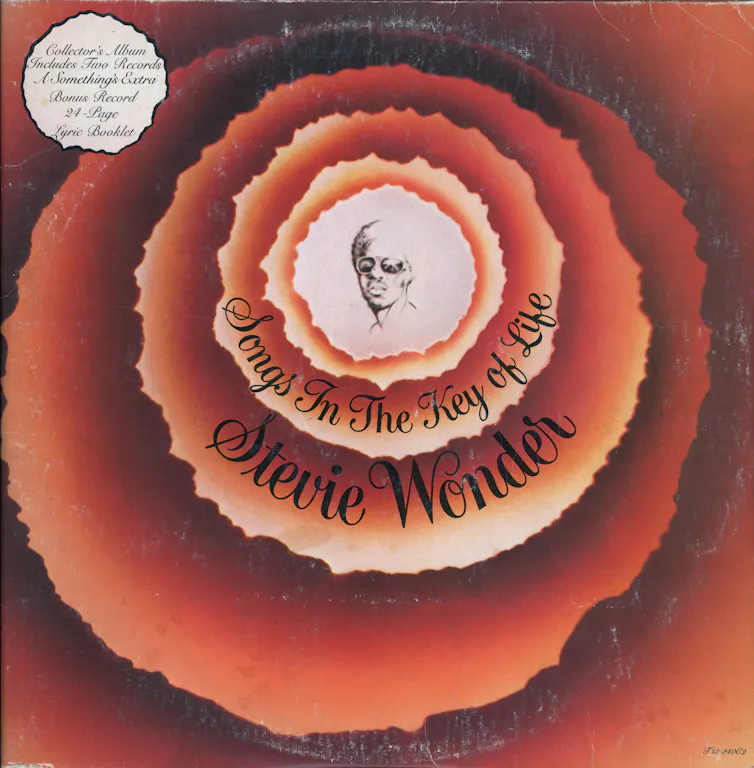
Stevie Wonder aimed to answer a lofty question in his 18th studio album, “Songs in the Key of Life”: Can we solve the world’s problems with love?
Released on Sept. 28, 1976, Wonder’s long-anticipated, 21-track double album dazzled listeners and influenced generations of artists. The album bridged the socially conscious R&B, funk, jazz and rock of the early 1970s with 1980s pop music.
As a cultural historian, I view Wonder’s record not just as a touchstone in the history of U.S. popular culture, but as a reflection of the artist’s Detroit upbringing.
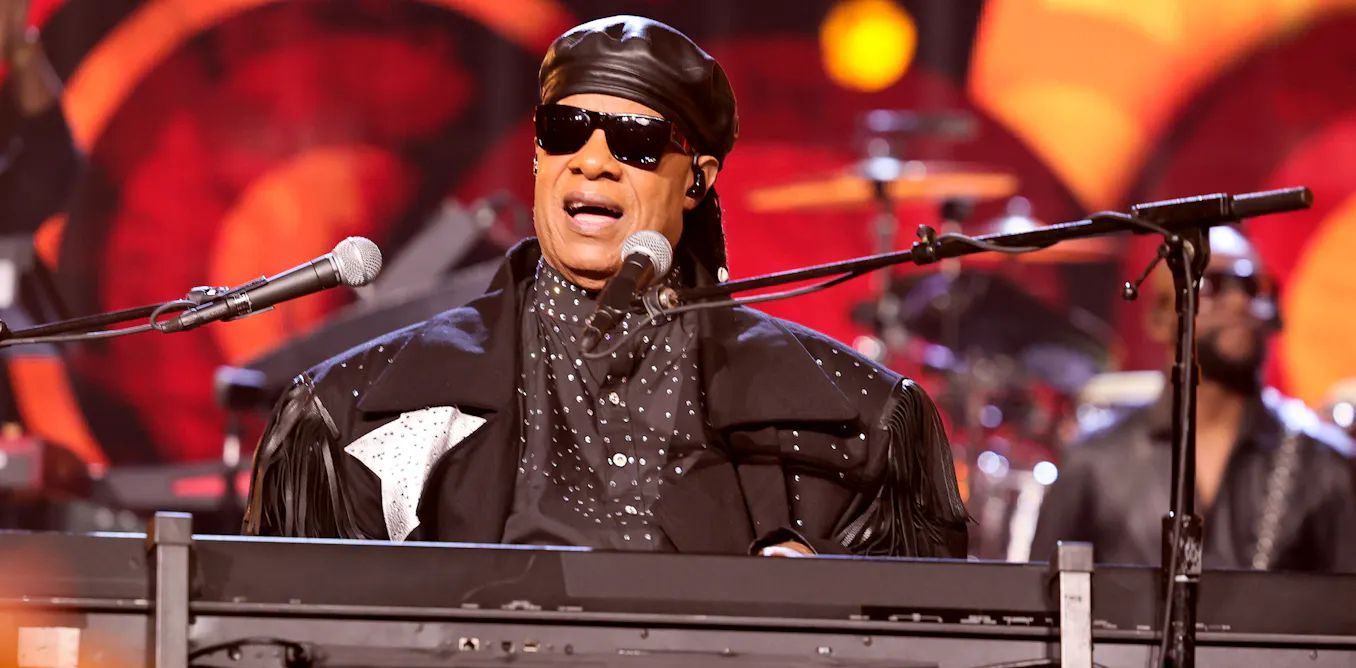
Wonder is celebrating the 50th anniversary of “Songs in the Key of Life” by touring over a dozen cities in Europe and the U.S.. He will perform the entire album.
Early days as a young artist
Wonder was born Stevland Judkins in Saginaw, Michigan, on May 13, 1950, to Lula Mae Hardaway and Calvin Judkins. The elder Judkins mostly found himself unemployed, hustling in the early 1950s and forcing Hardaway into sex work.
Born prematurely, Wonder developed retinopathy after receiving too much air while incubated. This left him blind.
According to “Signed, Sealed, Delivered,” a biography of Wonder published in 2010, Wonder’s mother divorced Judkins after she and her family moved to Detroit in 1954, when Wonder was 4 years old. Left to raise six kids, Hardaway found steady work at a fish market.
From an early age, Wonder attracted attention from his mother, siblings and friends for his musical gifts. He learned to play the piano, harmonica and drums by the time he was 10. And like many aspiring Black musicians, Wonder began his life of performance by singing in a church choir, at the New Corinthian Church on the West Side of the city.
“After the first service of the day, he’d hang around and come in between services and ask to play the piano … that boy could play!” recalled Kim Weston, a Motown singer.
Motown Records Founder and CEO, Berry Gordy, Jr. signed Wonder in 1961 when the artist was 11.
Bettmann/Getty Images
At the time, Gordy compared Wonder to Ray Charles. The young prodigy recorded 13 albums and 35 singles in the decade that followed.
Wonder’s musical evolution
Wonder eventually wanted to produce his own music without Motown’s direction.
Wonder’s childhood contract with Motown expired when he turned 21. This led to turbulent negotiations for a new record deal with Motown, as Wonder fought for more creative control.
Meanwhile, Wonder expanded his sound as the negotiations stalled. He experimented more with rock. He studied funk performers like Sly Stone.
After signing a new contract with Motown, Wonder embarked on one of the most exceptional periods of album recording in the history of popular music. In collaboration with music producers Malcolm Cecil and Bob Margouleff, he released four classic albums — “Music of My Mind” and “Talking Book” in 1972, “Innervisions” in 1973 and “Fulfillingness’ First Finale” in 1974.
Then tragedy struck.
During his tour for “Innervisions” in August 1973, Wonder got into a car accident that left him in a coma for four days. Five months after regaining consciousness, he started performing with his band Wonderlove again.
Wonder then signed a seven-year, seven-album, US$13 million contract in 1975 and began writing “Songs in the Key of Life”.
Blank Archives/Getty Images
A glorious vision
“Songs in the Key of Life” dropped in a tenuous moment not just for Motown Records, but for Detroit and the United States.
Detroit struggled economically during the 1970s, as businesses and residents continued to move out. The unemployment rate in Detroit hovered near 14% in 1975 after layoffs from the auto industry and economic crisis shook the city.
“Songs in the Key of Life” features a bevy of collaborators, from the Wonderlove band to keyboardist Greg Phillinganes, organist Ronnie Foster, harpist Dorothy Ashby and American jazz musician Herbie Hancock to the West Angeles Church of God Choir, Hare Krishna singers and members of Wonder’s family.
The synthesis of musical genres, English, Spanish and Zulu languages, and themes like love, heartbreak, regret, spirituality and religion make Wonder’s album difficult to categorize.
Wonder reminisces about his time as a “nappy-headed boy” growing up in Detroit on the cheerful and nostalgic “I Wish.” He sings about the high jinks that he and his “hoodlum friends” got into – sneaking outside, smoking cigarettes and getting into trouble at school.
Wonder grew up in Detroit’s Brewster-Douglass projects, living at 2701 Hastings, although he later lived in homes on the city’s East and West sides before Gordy bought a home for Wonder and his family in the Bagley neighborhood in 1963.
The tracks “Village Ghetto Land” and “Pastime Paradise” chronicle poor and working-class Black folks’ struggles to survive the economic crises and malaise during the 1970s in cities like Detroit.
Wonder also celebrated Black history on the album. Dedicated to Duke Ellington, who died two years before the album’s release, “Sir Duke” also pays homage to other jazz giants like Count Basie, Louis Armstrong and Ella Fitzgerald.
The song “Black Man” is a history lesson about the contributions of Black, brown, Asian and Native Americans over the country’s 200-year history – figures like abolitionist Harriet Tubman and World War I veteran Sing Kee.
In “Ngiculela – Es Una Historia – I Am Singing,” Wonder sings in Zulu, Spanish and English, which speaks to the beauty of multiculturalism.
However, I consider love the most prominent theme of “Songs in the Key of Life.”
On the grand yet slow-burning opening track “Love’s in Need of Love Today,” Wonder sings about the need for people to nurture love.
“The concept I had in mind was that for love to be effective, it has to be fed. Love by itself is hollow,” Wonder told The Wall Street Journal in 2015.
While Wonder reflects on romance and heartbreak in songs like “Knocks Me Off of My Feet” and “Ordinary Pain,” he captures the joy of new life and fatherhood on “Isn’t She Lovely,” a song celebrating the birth of his daughter Aisha Morris in 1975.
On “As,” Wonder asks whether we can describe the meaning of love through words alone. The 7-minute song shares a hopeful spiritual, cosmic and utopian message. Lyrics like “until the day the Earth start’s turnin’ right to left” and “until the day that eight times eight is four” show how love can be illogical but enduring.
In a preacher’s tone, Wonder sings about his devotion to love, through pain and struggle and the passage of time on the last verse of “As.”
50 years later, Wonder’s influence lives on
The album was popular in Detroit, despite a mixed critical reception.
Detroit Free Press staff writer Carl Arrington reported in October 1976 that “Songs in the Key of Life” sold 10,000 copies a day in the city in its first week in stores. “There are more hooks in the songs than there are at a fisherman’s convention,” he wrote.
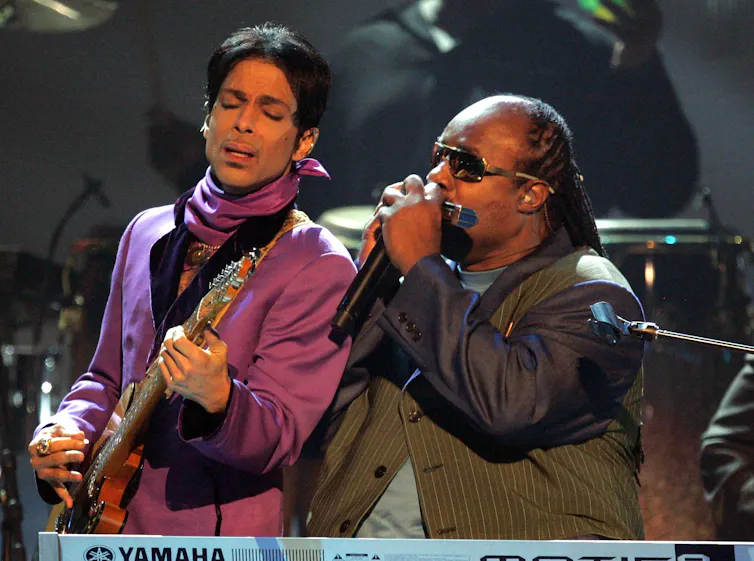
Two of popular music’s biggest stars in the 1980s, Michael Jackson and Prince, cited “Songs in the Key of Life” as an inspiration. Many R&B and rap artists have sampled it. Coolio and L.V.’s 1995 hit “Gangsta’s Paradise”, a reinterpretation of Wonder’s “Pastime Paradise,” became one of the biggest singles in the 1990s, selling more than 3 million copies in the U.S.
Frank Micelotta/Getty Images
On Sept. 28, 2026, Wonder dropped a four-track EP of songs recorded during those studio sessions for “Songs in the Key of Life.”
“They were part of what I was feeling and discovering as we made it,” Wonder said in a statement about the previously unreleased songs. “They bring me back to that time in my life, and now they get to become part of yours.”
The post “Stevie Wonder’s ‘Songs in the Key of Life’ – which spread an audacious message of love – turns 50 as the Motown legend goes on tour” by Austin McCoy, Assistant Professor of History, West Virginia University was published on 11/23/2026 by theconversation.com