

Holiday shopping season is kicking off, inundating consumers with Black Friday offers. With inflation fatigue, declining real wages and stock market turbulence thrown into the mix, is the U.S. consumer on the verge of scaling back?
This question has long puzzled economists, who wonder why spending has held up even as consumer sentiment slumps. As a researcher of supply chains who has also worked for years at consumer products companies, I’ve run my own studies and have been surprised, time and again, by how spending has continued at a healthy clip even when the economy is faltering.
Most recently, in March 2026, I built a model to assess how the Iran war could affect global supply chains at three, six and nine months out. In the case of consumer behavior, the hit was less than what was expected. Even though Americans were paying substantially more at the gas pump due to the disruption in the Strait of Hormuz, as well as dealing with tariff-induced inflation and high interest rates, consumer spending held up remarkably well.
I now believe I missed two things: resilience and innovation. More specifically, Americans are continuing to work, whether in formal or gig jobs, and that’s the main factor holding up spending. And as long as consumers have income, they’ll keep finding a way.
What’s changing, though, is that this balancing act is getting harder for many people to keep up.
What resilience looks like
Resilience and innovation may sound admirable, but in practice they’re often difficult and onerous.
Under “innovation,” some traditional adjustments for consumers include buying cheaper “private label” or store brands, shopping at off-brand and discount stores, or relentlessly hunting for deals. Other adjustments include eating more meals at home rather than going out, or downsizing vacation plans.
“Resilience,” meanwhile, can mean taking on extra work. Economists call this the added worker effect, and it shows up during tough times. During the 2007-09 Great Recession, for example, more married women joined the labor force as unemployment rose among their spouses. In 2026, there’s an uptick in retirees heading back to work as well as an increase in the share of mothers with children who are staying in or reentering the workforce.
These are both responses to the rising cost of living.
More broadly, Americans are using traditional and nontraditional means to make some extra cash.
About 1 in 3 workers has had a side hustle in 2026, according to the jobs database ZipRecruiter – whether it’s nanny jobs, side gigs on Etsy, delivering meals for DoorDash or driving customers for Uber. For many Americans, this work is a necessity, not just a way to earn extra discretionary cash. The increasing need for extra work over the past five years underscores the drop in purchasing power from the salaries many people earn.
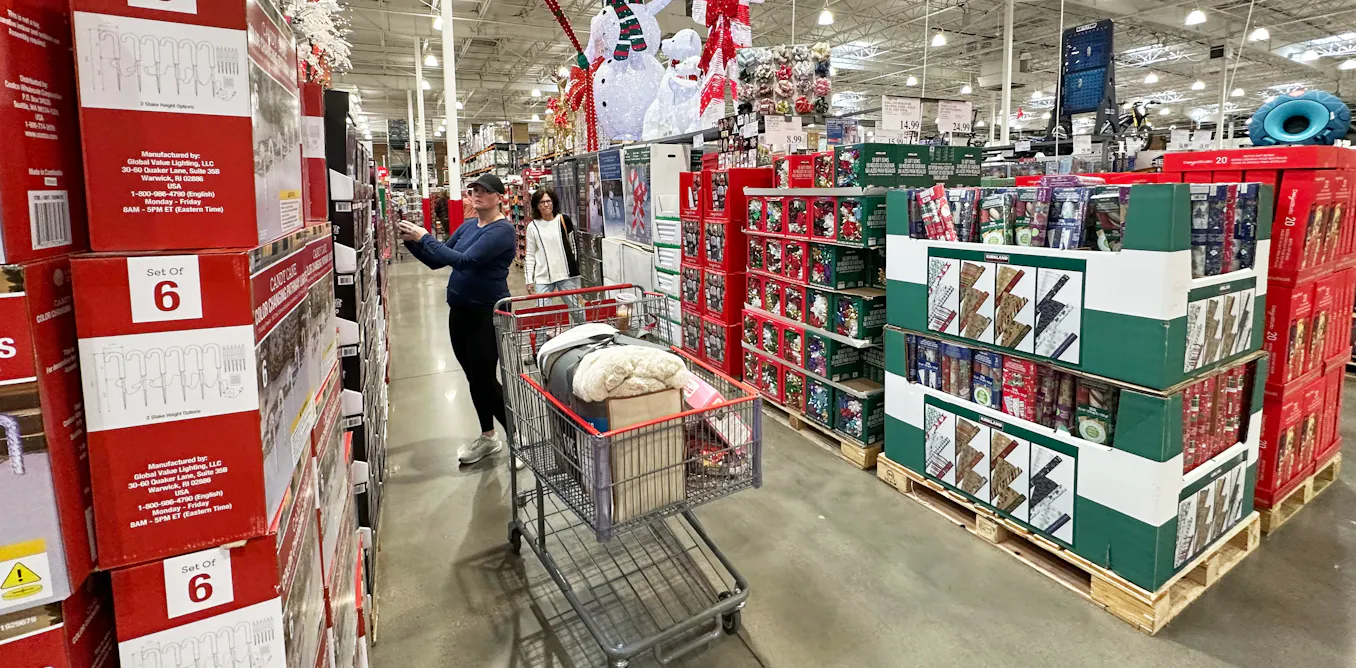
AP Photo/Emily Wang Fujiyama
Another form of resilience can be seen through volunteering and charitable giving. In my own neighborhood, a food bank that started during the COVID-19 pandemic has helped many in the community over the past five years. Across the country, food bank donations and charitable giving continue to rise despite economic challenges.
According to Giving USA, charitable giving rose to US$617 billion in 2025, surpassing the $600 billion mark for the first time. This increase addresses a growing need for food banks to feed Americans who can’t afford basic groceries anymore. At the same time, the actual number of donors is dropping.
Shoppers are hitting the limit
Many consumers are now running out of levers to pull.
Wealthier Americans are continuing to spend at a strong clip, which is why official consumer spending data suggests the economy is steady. But it’s a different picture for the rest.
One in four families are spending more than they make, as seen by rising credit delinquency and auto repossessions, according to the Atlanta Federal Reserve. Whether it’s food, healthcare, rent or cars, Americans are spending a much larger share of their income on necessities than they did 10 years ago.
For especially strapped Americans, like those facing the double whammy of a car payment and a student loan, these trade-offs are especially challenging. A good example are auto loan delinquencies, now near a 10-year high. Losing a car can mean losing a job, with devastating financial consequences. Frontline workers also
miss more shifts as gas prices rise.
And this gets to a core lesson for understanding today’s economy: The bedrock for consumer spending remains employment. The stable job market we see right now – with unemployment at 4.1% – is critical. If this healthy job market holds and interest rates and energy prices ultimately ease, the average consumer will still tread water. But if inflation continues to run hotter than the Federal Reserve would like, and rates rise, Americans’ disposable income will likely shrink – and hurt economic growth in the process.
That could lead to a domino effect: Unemployment rises, reducing the discretionary spending that had been keeping economic growth steady.
Whether it comes to this, it’s important to remember that the holiday season isn’t necessarily an accurate forward-looking indicator. Shoppers often go to great lengths to make family and friends happy. The big challenge for consumers will start in early 2027. Will the Fed hike rates? Will inflation stay high? Will gas prices come down?
Until these questions are answered, we’re in the “bend but don’t break” phase. Many consumers are facing challenging times in 2026, but their resilience has been a surprise on the upside. I’d like to be surprised again in 2027 – but that’s far from a sure thing.
The post “Why American consumers are still spending and powering the US economy – and why this could soon fizzle” by Chris Gaffney, Professor of the Practice of Supply Chain Management, Georgia Institute of Technology was published on 11/25/2026 by theconversation.com