

The devastating recent deaths of three toddlers in Queensland, linked to low iron levels, have understandably left many parents wondering whether their own child is getting enough iron.
The good news is that life-threatening iron deficiency is uncommon.
But being low in iron is one of the most common nutrient deficiencies in young children. So it’s worth understanding why iron matters and how to tell if they’re getting enough. There are simple ways to help children meet their iron needs.
Why is iron important?
Iron helps carry oxygen around the body and plays an important role in brain development, growth, immune function and learning.
If a child doesn’t get enough iron, their iron stores gradually become depleted. Over time this can lead to iron deficiency anaemia, where their blood doesn’t have enough haemoglobin (an iron-rich protein) to carry oxygen efficiently.
Iron deficiency during infancy and early childhood has also been associated with poorer cognitive, behavioural and motor development. So prevention and early recognition are important.
What are the signs your child might have low iron?
The early signs of low iron can often be challenging to identify, as toddlers can have these symptoms for a range of reasons.
Children with low iron may seem:
• more tired than usual
• pale
• irritable
• less interested in eating
• slower to gain weight or grow
• less energetic when playing.
Some children also develop pica, where they crave or chew non-food items such as dirt or paper.
Having one or more of these symptoms doesn’t necessarily mean your child has low iron.
But if you’re concerned about their diet, growth, development or energy levels, it’s worth discussing this with your GP, child health nurse or accredited practising dietitian.
How do health professionals check iron levels?
Iron deficiency can’t be diagnosed based only on symptoms. If a health professional suspects low iron, they will likely recommend a blood test.
The blood test usually measures ferritin, which reflects the body’s iron stores, as well as haemoglobin, which helps identify whether iron deficiency has progressed to anaemia.
A child can have low iron stores long before they develop anaemia, so doctors often consider both the blood test results and the child’s overall health.
Does drinking too much milk cause iron deficiency?
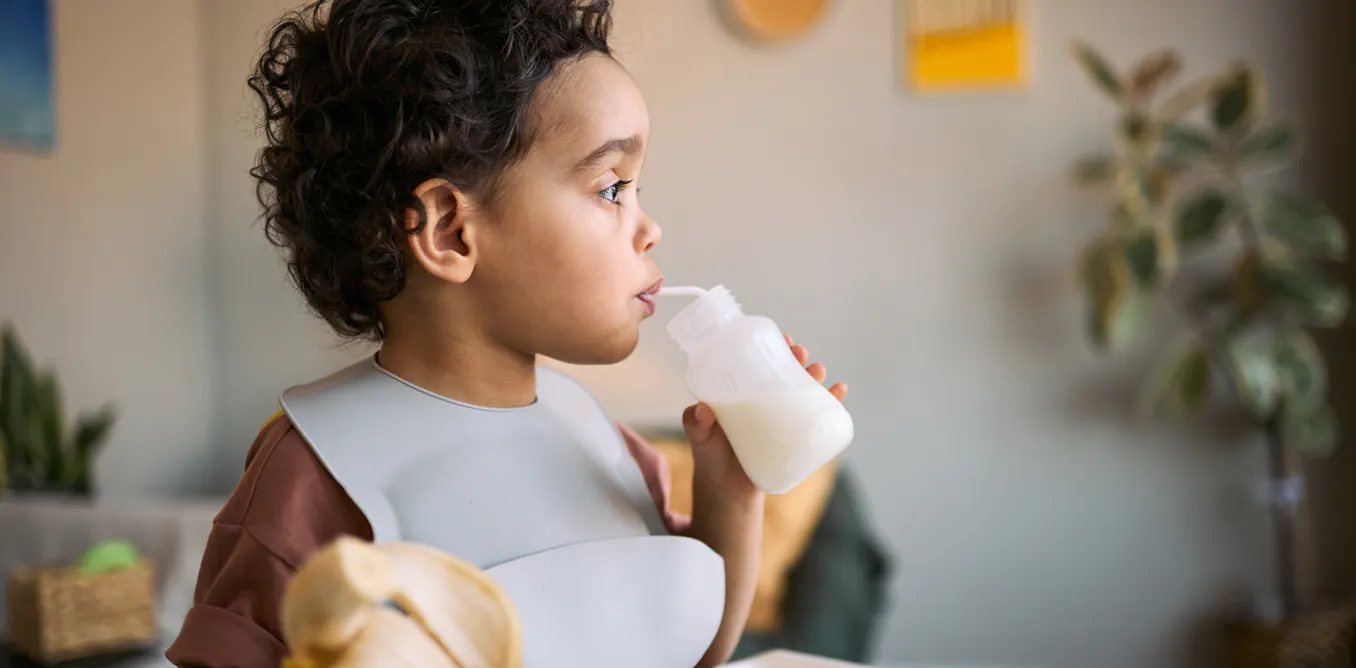
Cow’s milk can be part of a healthy toddler diet, but drinking large amounts can increase the risk of iron deficiency.
There are a few reasons why. First, cow’s milk contains very little iron. Second, toddlers who drink a lot of milk may fill up before meals, leaving less appetite for iron-rich foods. Third, replacing a variety of foods with milk reduces opportunities to eat foods that naturally contain iron.
Australian guidelines recommend limiting cow’s milk to around 500 millilitres a day after 12 months of age, while continuing to offer a wide variety of foods.
What if my toddler is still breastfeeding?
Breastfeeding continues to provide many nutritional and developmental benefits throughout the second year of life and beyond.
Breast milk contains iron, and babies absorb its iron very well. However, from around six months of age, breast milk alone no longer provides enough iron to meet a growing baby’s needs.
For infants who are formula fed, standard infant formula sold in Australia contains iron in line with Australian food standards.
Whether a baby is breastfed or formula fed, Australian infant feeding guidelines recommend introducing iron-rich complementary foods such as lean beef, chicken, chickpeas and baked beans from around six months while continuing breastfeeding if desired.
Read more:
Do governments know what to do with street art?
Practical ways to increase iron
Fortunately, helping toddlers meet their iron needs does not need to be complicated.
Parents and carers can offer a variety of iron-rich foods across the week, including lean red meat, chicken, fish, eggs, legumes (such as baked beans or chickpeas in hummus), tofu and iron-fortified breakfast cereals.
If you’re choosing a breakfast cereal, turn the packet over and look at the nutrition information panel or ingredient list. If iron has been added, it will usually be listed among the vitamins and minerals. Examples include Weet-Bix and NutriGrain.
If your child enjoys plant-based iron sources such as baked beans, lentils or tofu, serving them alongside foods rich in vitamin C (such as orange segments, strawberries, kiwi fruit or capsicum) helps the body absorb more of the iron.
Don’t worry if your toddler refuses one particular food. Many children go through phases of eating only a handful of favourite foods. The goal is to continue offering a variety of nutritious options over time rather than expecting a perfectly balanced diet every day.
Read more:
5 picky eating habits – and how to help your child overcome them
The bottom line
Iron is an essential nutrient during early childhood. Most toddlers who are offered a variety of nutritious foods, including iron-rich foods, will meet their iron needs.
If you’re worried your child may have low iron, talk with your GP, child health professional or accredited practising dietitian. They can assess your child’s diet, growth and development and decide whether blood tests are needed.
Early recognition and treatment of iron deficiency are important, but the focus for most families should remain on offering a varied, enjoyable diet that supports healthy growth over time.
The post “Worried your toddler isn’t getting enough iron? Here’s what parents need to know” by Lauren Ball, Professor of Community Health and Wellbeing, The University of Queensland was published on 08/14/2026 by theconversation.com