
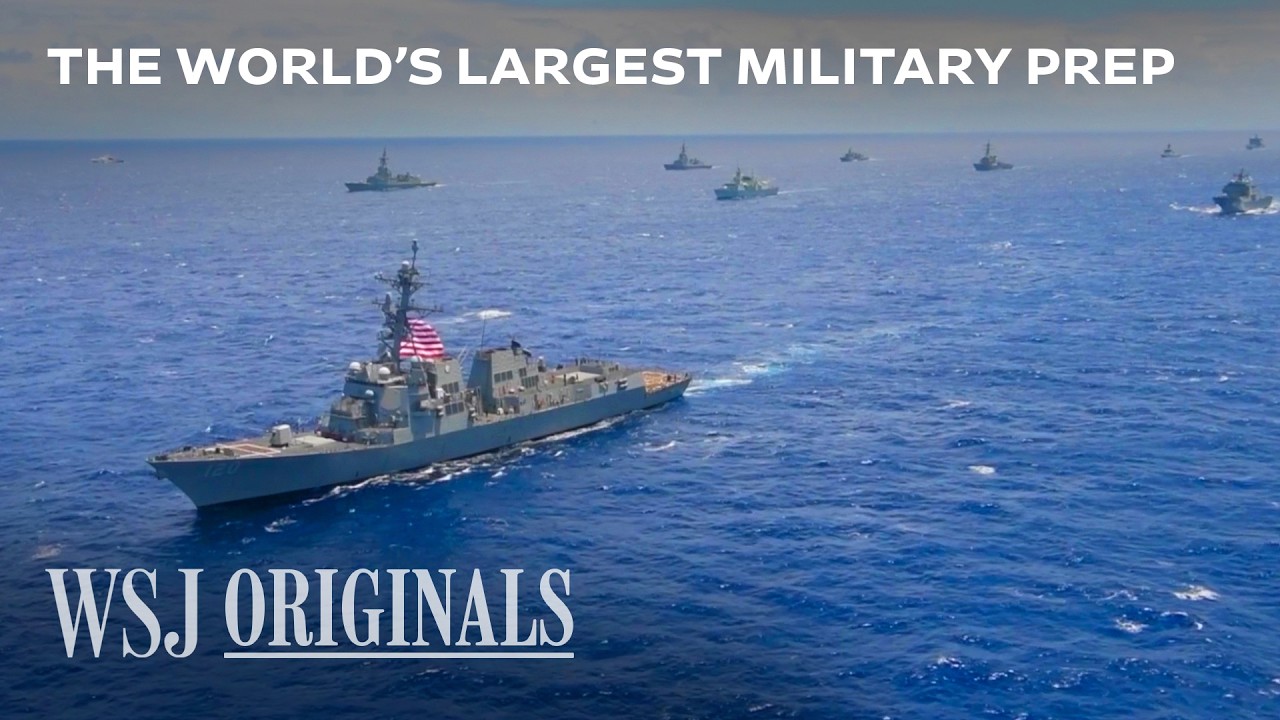

Global Military Readiness: RIMPAC Exercises Amid Growing Tensions with China and North Korea
As geopolitical tensions escalate in the Pacific, a remarkable convergence of military prowess has taken place in Hawaii. The Rim of the Pacific (RIMPAC) exercise, recognized as the world’s largest naval drill, has drawn the forces of 30 nations to participate in a comprehensive simulation designed to prepare for potential conflict in a region increasingly fraught with uncertainty.
The backdrop for this year’s exercises is punctuated by rising hostilities stemming from China and North Korea, making RIMPAC not just a display of military might, but also a crucial effort to bolster international cooperation in the face of pervasive threats. Journalists from the Wall Street Journal, including reporter Tim Martin, were granted rare access to the drills, offering an inside look at the preparation involved for the potential challenges ahead.
Understanding the Drill’s Importance
From the moment the drill commenced, it was clear that the stakes are high. Throughout the video, Martin highlights the central role of aircraft carriers, marine divisions, and advanced technologies in naval warfare. These vessels, often seen as the backbone of naval fleets, serve as floating command posts capable of projecting power and conducting operations far from their home ports.
Deep dives into the equipment being utilized reveal a tapestry of high-tech weaponry and communication systems, grounded in cutting-edge military strategy designed for rapid response and flexibility. This insight underscores how nations are adapting to new warfare paradigms, reflecting the changing dynamics of power in the Pacific theater.
Navigating Growing Threats
As the exercises unfolded, the commentary turned toward the broader implications of RIMPAC in light of growing threats from North Korea’s missile tests and China’s assertive territorial claims. The drills serve as both a show of force and a tactical rehearsal, providing opportunities for allied nations to evaluate their readiness and refine their strategies in anticipation of provocative actions.
One stunning sequence captured in the video revolves around an amphibious raid, an operation showcasing the seamless coordination between maritime and ground forces. Such exercises are critical in honing skills necessary for future missions, whether they involve humanitarian assistance or direct combat.
Is RIMPAC Provocative?
The undertaking is not without its controversies. Critics question whether the scale and visibility of RIMPAC may escalate tensions rather than stabilize them. Martin explores the fine line between deterrence and provocation as countries work to reassure allies while simultaneously signaling resolve to potential adversaries.
In a world where military posturing can quickly spiral into confrontation, RIMPAC stands as a testament to international cooperation and military preparedness; yet, it also serves as a reminder of the fragile peace in the Pacific region.
In-Depth Reporting on Global Defense
The Wall Street Journal’s coverage of RIMPAC extends beyond mere spectacle, diving deep into the narratives that shape military strategy and international relations. Through on-the-ground journalism, WSJ Originals delivers crucial insights into how nations navigate the intricacies of global security.
As the world watches these exercises unfold, the implications of RIMPAC extend far beyond the Pacific waters, resonating in the halls of power and the minds of policymakers worldwide. As tensions rise, the significance of coalition operations like RIMPAC become ever clearer—an essential preparatory step in an uncertain geopolitical landscape.
Watch the video by The Wall Street Journal
Video “How 30 Nations Prepare for Potential War With China and North Korea | WSJ” was uploaded on 08/05/2026 to Youtube Channel The Wall Street Journal