

When five police officers were shot in Houston in January 2019 while serving a drug-related arrest warrant, all of them were transported to the hospital after emergency medical services arrived. Two went by air and three by ground ambulance.
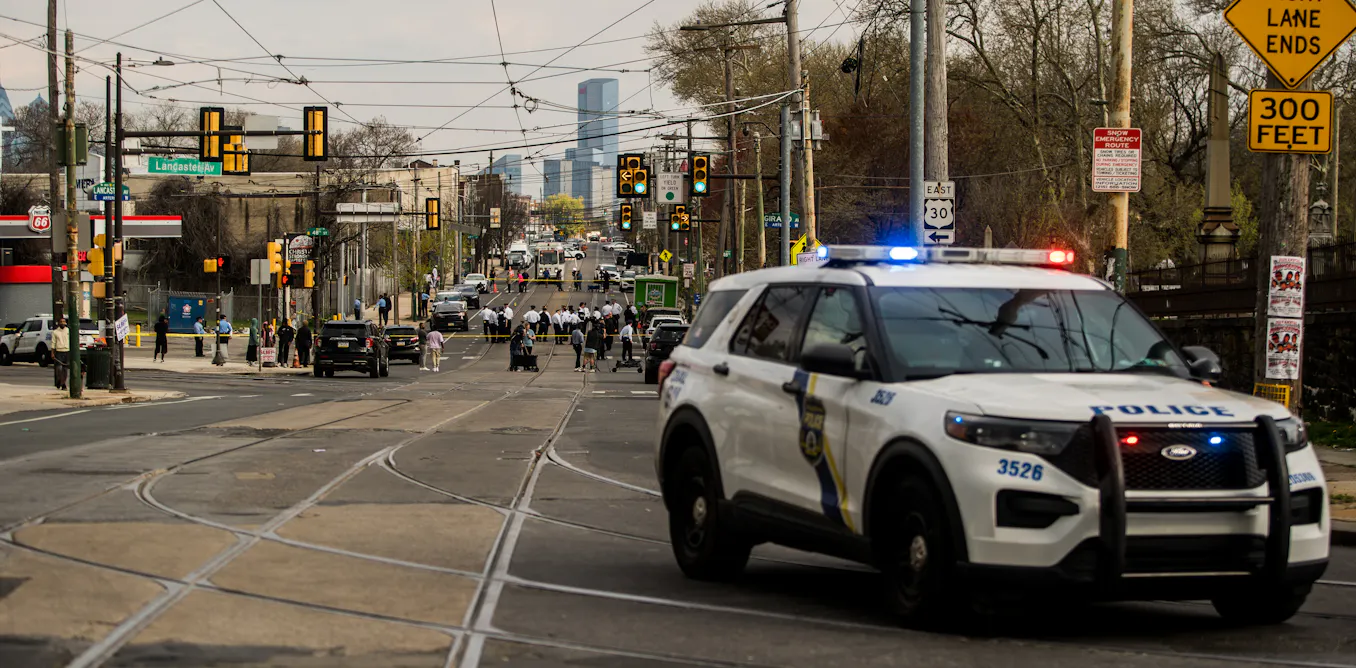
About seven months later, a gunman in Philadelphia shot six police officers during another drug warrant execution. Videos show police putting the wounded officers into their vehicles to take them to the hospital themselves, without waiting for EMS.
Finally, in 2024 in Chicago, in an accidental shooting, the same bullet pierced a 16-year-old boy and a policeman. A detective confirmed to me that the officer was immediately taken to a trauma center by fellow officers, while the boy waited for an ambulance.
These are just a few of the many examples of varying protocols across U.S. cities for how injured citizens and police officers are transported to medical facilities. This contrast in protocol is remarkable for policing, a profession that operates by standard procedure.
In each case, officers did what they were supposed to do. They acted according to the rules. But were those rules in the best interests of the injured?
The goal is to get medical treatment as quickly as possible. But the quality and effectiveness of that care in the field matters too.
We research health policy, health services and decisions in prehospital care – the interval between when a medical emergency occurs and a person arrives at the hospital. This led us to wonder: What do police do after one of their own has been shot?
Kyle Mazza/Anadolu via Getty Images
How wounded police are transported
To study this important question, we turned to the Gun Violence Archive, a national database of shootings in the United States, to identify shootings in which law enforcement personnel were wounded.
We focused on cities that had at least 10 police officers shot in the line of duty from 2018 to 2024. This resulted in a total of 574 police wounded in 27 cities.
Then, using news reports, police reports and video analysis, we determined how police were transported after being shot. Two researchers reviewed each incident, and any discrepancies were resolved through discussion or referred to a third researcher. We kept only the cities where we could confirm the transport mode in at least 70% of cases. Our final sample included 335 injured officers across 18 cities.
Our study was recently published in the peer-reviewed medical journal BMJ Injury Prevention.
Policies vary by city
Of the 132 injured officers who were transported from the scene by a police vehicle, 10.6% died.
Of the 168 injured officers who were transported by ground ambulance, 11.3% died.
These numbers don’t imply that transport by police vehicle instead of an ambulance necessarily saved more lives. To draw such conclusions we would need more information, such as the severity of the gunshot wound, to make sure we are comparing similar cases.
Overall, 56% of wounded officers were transported to the hospital by ambulances and 44% by police vehicles. However, the variation across cities was striking.
In Philadelphia, for example, 28 injured officers were transported by police vehicle and none by ambulance.
But in Houston, only three officers were transported by police vehicle and 20 went by ambulance.
This variation in protocol could simply mean that cities are quite different from each other and require different approaches. However, it could also be that in the ways that matter to police officers surviving after a gunshot wound, some cities have it right and are saving more lives.
Transport for police vs. civilians
In many U.S. cities there is a striking contrast between how injured police officers and injured civilians are taken to hospitals.
In Detroit, for example, where we were able to determine the transport for 12 of 13 cases through video and document analysis, 10 police officers were transported by police vehicle.
In comparison, fewer than 1% of civilian gunshot victims in Detroit receive police transport.
This difference may reflect procedural norms, professional boundaries or other factors. Yet, how police treat their injured colleagues also reveals their beliefs about the value of rapid transport.
Does ‘scoop and run’ save lives?
The bulk of existing research on how U.S. patients are transported to the hospital after trauma has focused on comparisons of two types of ambulances: basic life support ambulances vs. advanced life support ambulances.
Basic life support ambulances provide minimal intervention and focus on rapid transport to a hospital. Advanced life support ambulances are equipped to provide more intensive treatment at the scene and en route.
Perhaps surprisingly, two large-scale studies – one across 17 Canadian cities and the other, which one of us led, involving the U.S. Medicare population – reveal that basic life support ambulances are more likely to result in the patient surviving than advanced life support ambulances. Our analysis accounted for differences in injury severity among patients who were transported by advanced life support vs. basic life support.
This counterintuitive result stems, in part, from complicated procedures – such as endotracheal intubations – performed on the scene by paramedics who are less practiced than anesthesiologists or emergency medicine physicians, or procedures such as fluid resuscitation that are best performed at a hospital.
The basic life support approach is commonly called “scoop and run.” Police transport of shooting victims takes “scoop and run” to the next level by transporting people in the back of a cruiser.
As radical as it may seem, “scoop and run” is allowable by police for civilians in written police procedure in many U.S. cities, including Detroit. Philadelphia, however, is the only major city to use it regularly.
Researchers at the University of Pennsylvania conducted two Philadelphia-based studies, published in 2014 and 2021, using observational data of thousands of patients with gunshot and stab wounds. The earlier study found higher survival rates with police transport than with EMS transport for major trauma patients after adjusting for age, sex, injury severity and comorbidities.
The more recent study found no significant survival differences between police transport and EMS transport. However, a key flaw in this study’s design was that the researchers adjusted away the differences in prehospital care by comparing patients in similar conditions upon hospital arrival. This makes the results difficult to interpret.
Neither study analyzed survival beyond hospital discharge or nonfatal outcomes.
First on the scene
In interviews that University of Pennsylvania researchers conducted, patients, police and trauma clinicians all agreed that police transport had the distinct advantage of speed, which could save lives.
It may also provide an opportunity for positive interactions between police and civilians.
For example, a 19-year-old reported that he perceived the responding police officers as a source of support after he was shot. He recalled how they stayed by his side through the initial phase of his care in the hospital. He also valued the speed of transport. “Because without them, I probably would have been still sitting on the step bleeding to death,” he said. “I thank them.”
While the participant appreciated how quickly he got to the hospital, he noted that the ride felt insecure and physically dangerous. “I wasn’t like strapped in or nothing,” he said. “I was sliding all over the place. When they’re making wide turns, I was hitting my arm and hitting my buttocks where I got shot.”
Concerns like this may be easy to address.
However, there are communities and neighborhoods where relations with police are strained, and mistrust could preclude adoption of police transport. But where that trust exists or can be built, scoop and run may offer a real chance to save lives that would otherwise be lost to gun violence.
Read more of our stories about Philadelphia and Pennsylvania, or sign up for our Philadelphia newsletter on Substack.
The post “When a police officer is shot, how they get to the hospital depends on the city – and Philadelphia stands apart” by Prachi Sanghavi, Associate Professor of Public Health Sciences, University of Chicago was published on 07/14/2026 by theconversation.com