
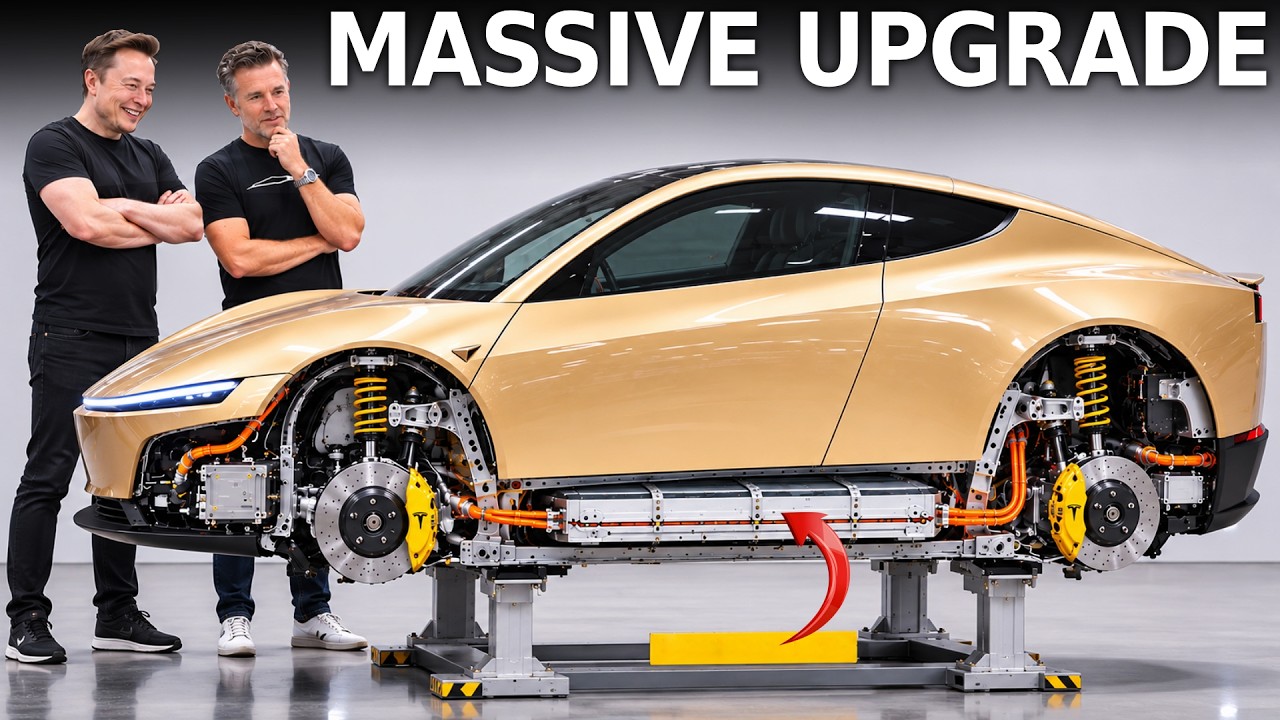
Tesla Cybercab BIG Update: Impressive Ramp Up & Production Line
In this exciting video, we dive deep into the latest updates on the Tesla Cybercab, showcasing its impressive production ramp-up and groundbreaking advancements in battery technology and factory output. With reports highlighting a staggering 10-second production cycle and a factory capacity target of over 125,000 vehicles per year, the Cybercab is set to revolutionize the electric vehicle landscape.
Join us as we explore the potential transition from Tesla’s 4680 batteries to more affordable LFP cells, paving the way for a price point that could dip below $30,000. We’ll also take a closer look at Tesla’s expanding Robotaxi fleet in Texas, where it aims to compete head-to-head with industry giants like Waymo.
Whether you’re a Tesla enthusiast, an EV advocate, or simply curious about the future of self-driving technology, this video provides an in-depth analysis of what the Cybercab ramp-up could mean for transportation. Could we see the Cybercab available for purchase before the end of 2026? Tune in to find out!
🔔 Don’t forget to subscribe for more updates and insights!
Subscribe here
Hashtags:
TeslaCarWorld #TeslaCybercab #TeslaRobotaxi #TeslaProduction #CybercabUpdate
Watch the video by TESLA CAR WORLD
Video “Tesla Cybercab BIG Update, Impressive Ramp Up & Production Line” was uploaded on 11/04/2026 to Youtube Channel TESLA CAR WORLD


Building a Cybercab every 10 seconds sounds impressive, but I wonder how many are actually ready for passenger service.
I can understand why Tesla might choose LFP batteries. For a robotaxi, long-term durability could matter more than maximum driving range.
A factory capacity of 125,000 vehicles per year is a big target. The real challenge is keeping production consistent at that scale.
I'm still not convinced that removing the traditional paint shop is the right choice. How will those colored panels hold up after years of daily use?
If the Cybercab really costs less than $30,000, it could change the robotaxi business. But will that price actually be achievable?
Tesla may be growing quickly in Austin, but Waymo still has a much larger operating history. Comparing the two isn't that simple.
The modular battery design is interesting. Wouldn't being able to replace one damaged module instead of the entire pack reduce maintenance costs?
A robotaxi operating 20 hours a day sounds great, but what about charging, cleaning, repairs, and downtime?
I'm curious whether customers will actually be able to buy the Cybercab in 2026 or if Tesla will prioritize its own robotaxi fleet first.
What do you think is Tesla's biggest advantage here: the manufacturing process, the battery strategy, or its autonomous driving technology?
Amazing
Battery most likely will last longer than the car…🤭
still looking for that super senior bundle a cyber cab and an optimist in one package
can i get them both in red please
e ste porco dio di azioni che da 5 anni non fanno un massimo dio cane
🎊 Cybercab is Fun-wild-autonomous Party’ BFF. 🎊
❤
The modular battery design and faster production line show Tesla is making real progress.
think the LFP and advanced manufacturing line are all part of a massive surge that is being readied to be triggered. As soon as Tesla feels they have the data and experience they need from the Austin Launch they will launch in Phase 2 and Phase 3 cities with incredibly fast deployments. The other aspect is that I expect the CyberCabs to be in almost every major US city before the end of 2027 and the same for European cities by the end of 2028.
T C W….THANKS, FOR SHARING NEWS UPDATE…..PLEASE LET THE PEOPLE LEARN THE TRUTH…..