

When people think about climate change and animals, they might picture melting sea ice, drought-stricken landscapes or species struggling in the wild. Far less attention is given to the animals living in our care. Yet as heatwaves become more frequent, intense and unpredictable, zoos may be facing one of the biggest animal welfare challenges of the coming decades.
The recent deaths of three lions at Tama Zoo, Japan during a heatwave that reached over 40°C have brought this issue into sharp focus. Investigations are ongoing, but the incident raises an important question. Do we understand how animals will – or won’t – cope with heat in a rapidly changing climate?
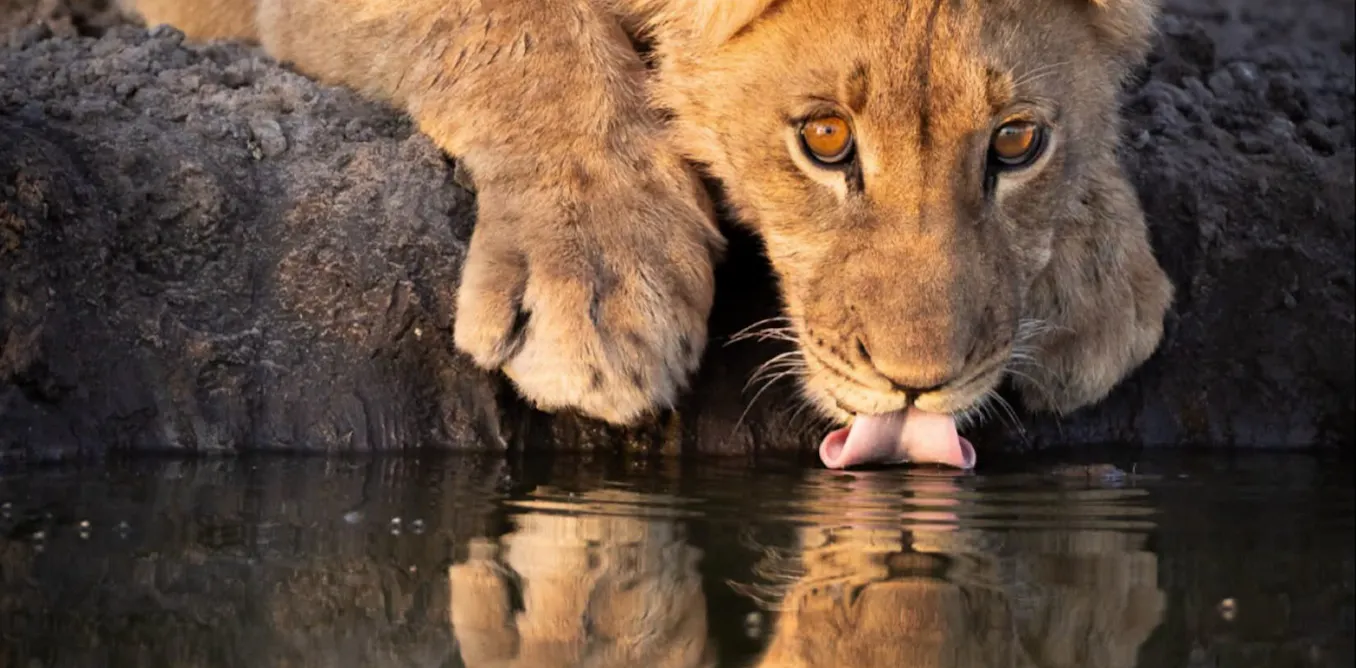
Many people are surprised to learn a lion can be vulnerable to high temperatures. After all, lions evolved in Africa and are often associated with hot, arid landscapes. But this assumption oversimplifies how animals experience heat. Temperature is only one part of the story.
Humidity can play an equally important role. Lions, like many mammals, do not sweat effectively like humans do. Instead, they seek shade, move less and pant to dissipate heat.
High humidity can make these cooling strategies less effective. Perhaps surprisingly, humans are often more heat tolerant than lions. Our ability to sweat over most of the body makes evaporation cooling remarkably effective, allowing us to remain active in conditions that may force lions to rest and seek shade.
In the wild, lions may have more choices available to them that help them to remain cooler. Wild lions can move across large landscapes, select favourable microclimates, rest in shaded areas and adjust their activity patterns – none of which may be feasible in a zoo. Wild lions are famously inactive for much of the day, often waiting until cooler periods to hunt and socialise.
Other vulnerable species are perhaps unsurprising, including polar bears, penguins and red pandas, all of which are adapted to cooler climates. However, climate change may also affect species that people typically associate with warm environments.
Great apes, tapirs, cheetahs and even elephants can struggle with dangerous levels of thermal stress when high temperatures are combined with humidity, which reduces the body’s ability to dissipate heat. For elephants in particular (due to their large body size), the risk is heightened when access to shade, water or other cooling opportunities is limited.
This highlights an important principle in animal welfare science: welfare is influenced not simply by the environment animals are exposed to, but by the degree of choice and control they have within it.
Climate change is changing welfare
Historically, many zoos, particularly in temperate regions such as the UK, were designed with cold weather in mind. Considerable effort has gone into protecting animals from low temperatures and rain. Extreme heat, by comparison, has often been viewed as a relatively minor concern. That assumption may no longer hold.
NaturePhotographyOfficial/Shutterstock
Climate change is increasing the frequency, duration and intensity of extreme heat events across the globe. As heatwaves become a more regular feature of British summers, zoos will need to think differently about how they manage animal welfare. Temperature control measures that were adequate ten or 20 years ago may not be sufficient for the conditions today and in the future.
Zoos have long managed environmental conditions for species with specialised needs. Tropical animals are often provided with heated indoor shelter, for example. The challenge is that climate change is shifting the environmental baseline upon which many of these systems were designed.
One strength of modern zoo management is its recognition that animals are individuals. Two animals of the same species living in the same enclosure may respond very differently to identical conditions. Older animals may have less physiological resilience. Animals with respiratory conditions or other underlying health issues may be particularly vulnerable.
The good news is zoos routinely maintain detailed individual records on behaviour, personality, social relationships, health history and life experience, which will help them monitor any changes.
Increasingly, extreme heat should be treated in the same way as severe storms, flooding or disease outbreaks: as a foreseeable animal welfare risk. This might involve expanding shaded areas, creating climate-controlled refuges, improving ventilation, installing misting systems and water features, and monitoring temperature and humidity in real time.
But infrastructure alone will not be enough. Zoos may also need to adapt their daily management practices, adjusting feeding and enrichment schedules and modifying routines to minimise heat exposure during the hottest parts of the day.
Tell-tale signs
One of the most valuable and commonly used indicators of animal welfare is behaviour. An animal that appears lethargic, withdrawn or less engaged with its surroundings may be signalling compromised welfare long before clinical symptoms emerge.
An animal experiencing thermal discomfort may alter its activity patterns, spend more time in certain locations, change its posture, eat less food or interact differently with other animals. Humans are no different.
During heatwaves we change our routines, seek cooler places, struggle to sleep and often reduce activity. In people, exposure to extreme heat also affects cognition and behaviour. Evidence suggests that attention, memory and decision-making can deteriorate under thermal stress, raising important questions about how heat may influence the behaviour and welfare of animals in our care.
These insights are relevant not only to zoos, but to all managed animal populations. Farms, wildlife parks, rescue centres and companion animal owners are all likely to confront similar welfare challenges in a future defined by more frequent and intense heatwaves.
The post “Are zoos ready for the changing climate?” by Samantha Ward, Professor of Zoo Animal Welfare & Legislation, Nottingham Trent University was published on 08/17/2026 by theconversation.com