
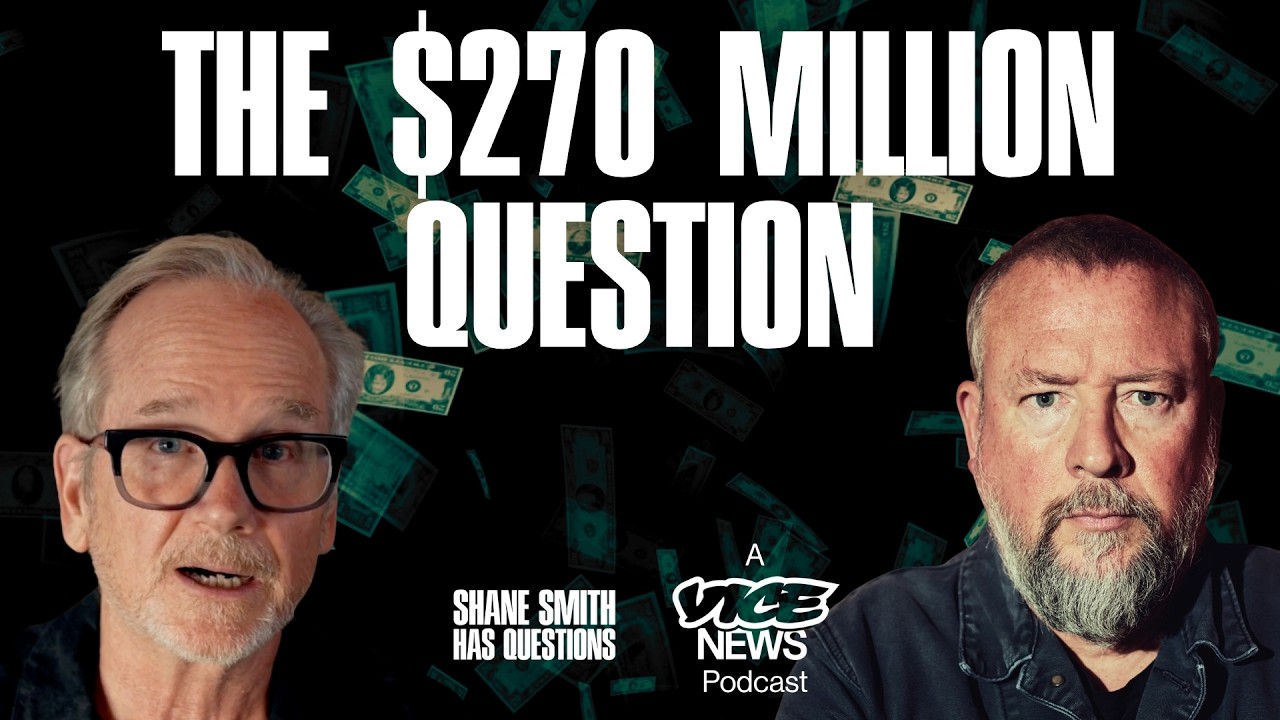

The Lawsuit That Could Change American Elections: A Deep Dive with Lawrence Lessig
In a landscape often dominated by headlines about Super PACs and the fallout from Citizens United, Harvard Law professor Lawrence Lessig challenges the prevailing narratives surrounding American campaign finance. In a compelling discussion with Shane Smith, Lessig addresses a critical lawsuit that could redefine the very essence of political donations and election integrity in the United States.
The conversation begins with a powerful assertion: the common perception of Citizens United is fundamentally flawed. While most Americans point to this Supreme Court decision as the root cause for the explosion of Super PACs, Lessig contends that the legal groundwork laid by a prior ruling is what truly enabled these political action committees. His insights challenge listeners to reconsider their understanding of how campaign finance evolved and the legal missteps that paved the way for billion-dollar contributions.
Among the myriad issues they tackle, the $270 million political donations by Elon Musk come into sharp focus. Lessig argues that these enormous sums could influence, if not purchase, political outcomes, ramping up the stakes in an already complicated electoral landscape. The implication is clear: when wealth can so easily translate into political power, democracy itself is at risk. This raises the question of whether we are witnessing the systematic buying of influence and whether this lawsuit could put an end to such practices.
As the conversation unfolds, the potential ramifications of a favorable ruling for Lessig are explored. Should the Supreme Court decide to impose limits on Super PAC contributions, the 2028 presidential election could see a significant shift in the way campaigns are funded—moving towards a system that prioritizes equitable political engagement over financial might. The anticipation of this ruling underscores the urgency surrounding campaign finance reform, which Lessig argues is a necessary step for restoring faith in American democracy.
Public sentiment reinforces Lessig’s argument, as a staggering 90% of Americans believe the current campaign finance system is corrupt. This widespread concern highlights the disconnect between the electorate and the established political machinery, suggesting that the public is ready for change. The critical question emerges: if Super PACs are reformed or dismantled, what would the landscape of American elections look like? Would candidates rely more on grassroots mobilization and small donations, leading to a revitalized democratic process?
Although skeptics may question whether billionaires would simply find alternative methods of exerting influence, Lessig posits that regulatory changes could illuminate and diminish the less visible means of political manipulation. By making political donations more transparent and accountable, the hope is that the appearance—and reality—of corruption would be significantly reduced.
The dialog points to the intricate interplay between campaign finance and the core principles of democracy, raising profound questions about the nature of representation in modern America. As Lessig and Smith navigate these complex issues, it becomes increasingly clear that this lawsuit is not just another legal battle; it is a pivotal moment that could redefine the relationship between money and politics in the country.
Ultimately, the stakes are high, and the outcome of this lawsuit could reverberate through the halls of power, leading to a new era where American elections are not swayed by the influence of a few, but rather reflect the will of the many. As the legal landscape prepares for what could be a transformative ruling, the anticipation builds around the potential for a more balanced and equitable political system.
Watch the video by VICE News
Video “The Lawsuit That Could Change American Elections | Lawrence Lessig | Shane Smith Has Questions” was uploaded on 08/06/2026 to Youtube Channel VICE News