

In every culture, humans speak and sing to each other. We have created an astounding array of languages and musical structures across the globe. And yet, within this diversity, some fundamental sequence patterns are repeated. These are often referred to as “universal” patterns in human vocalization.
Our new research, published this week in Science, reveals that many of these acoustic patterns in human song and speech are also shared with birdsong.
The study compared the songs of 367 bird species with examples of song and speech from 52 human languages.
How we gathered the data
As researchers in animal behaviour and neuroscience and music, we (Logan and Jon) spent 10 years documenting the prevalence of universal human acoustic patterns in the songs of zebra finches.
(Unsplash/Angelo Casto)
When Kendra joined our lab during her PhD, she proposed we investigate whether these patterns are shared across other bird species as well.
To research this, we needed a large number of birdsong recordings. Luckily, many people around the world are fascinated by the sounds of birds and upload their recordings to public repositories. We collected and manually annotated individual syllables in the songs of over 360 bird species, generating more than 70,000 birdsong syllables for analysis.
We then compared these to data sets of human speech and song from a variety of languages and cultures around the world.
Fortunately, some of these data sets contain annotated recordings of the same individual producing both speech and song, which was perfect for our comparisons to bird vocalizations.

(Unsplash)
Regular and predictable rhythms
Overall, we found numerous similarities in the acoustic patterns of bird songs and human vocalizations. For example, humans and birds both tend to end their phrases with longer syllables.
They also organize their syllables in a way that minimizes changes of pitch across adjacent syllables. And they tend to produce their songs with regular and predictable rhythms.
In some cases, birdsong appeared more similar to human song than human speech. In other cases, we found birds tended to have songs that were more similar to human speech than human song.
Unrelated to vocal learning
We designed this study to ask an important question: Does vocal learning ability shape sequence patterning? Humans learn the structure of their vocalizations from others, particularly as they grow up.
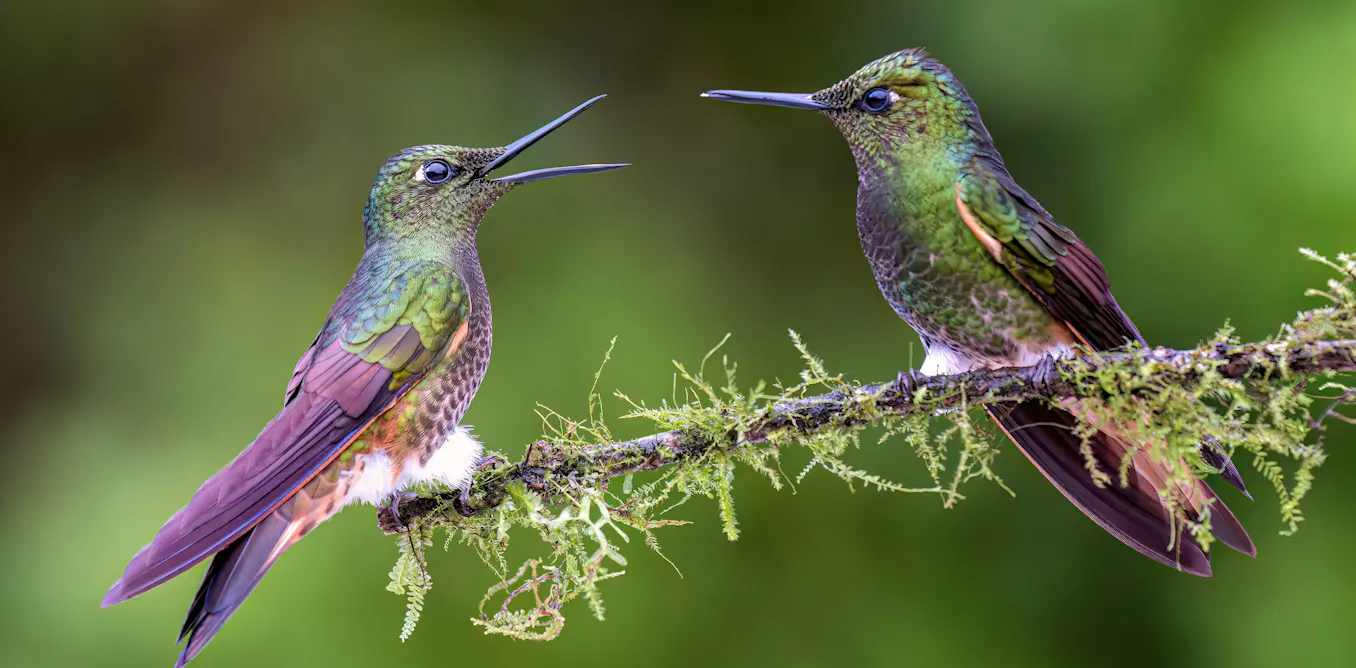
It turns out many birds also learn their vocalizations as they grow up. We looked at two separate groups of these vocal learning birds: songbirds (oscines) and hummingbirds. We compared them to two closely related bird groups that are not vocal learners: suboscines and nightjars.
Because humans, songbirds and hummingbirds are all vocal learners, we thought some patterns may be similar within these species and distinct from those within suboscines and nightjars. Surprisingly, we found very little evidence for this. The degree of variation across bird species did not appear to be related to vocal learning.
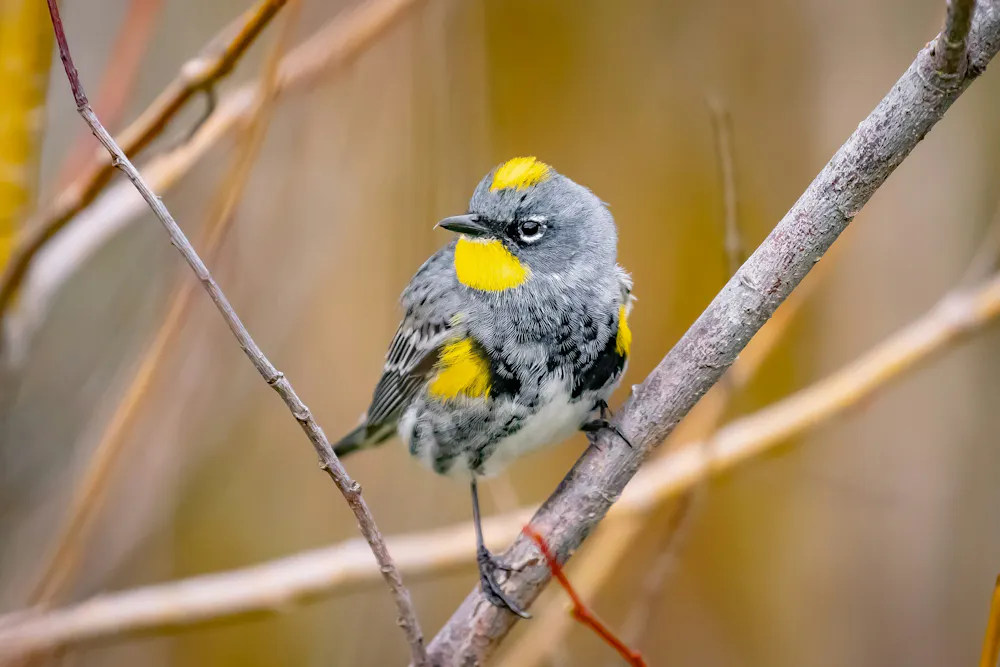
(Unsplash)
How humans and birds make sound
What then might drive the similarities in sequence patterning across so many species? We will need more studies to determine the answer, but we hypothesize that similarities in how humans and birds produce sounds could shape some vocal sequence patterns.
For example, the shared need to co-ordinate breathing with vocal musculature could contribute to shared acoustic patterning across birds and humans. Specifically, precise movement of muscles that control the vocal tract are timed with airflow from the lungs across all birds and humans.
If this is true, it’s possible these patterns may be found in many other species.
Did birds teach us to sing?
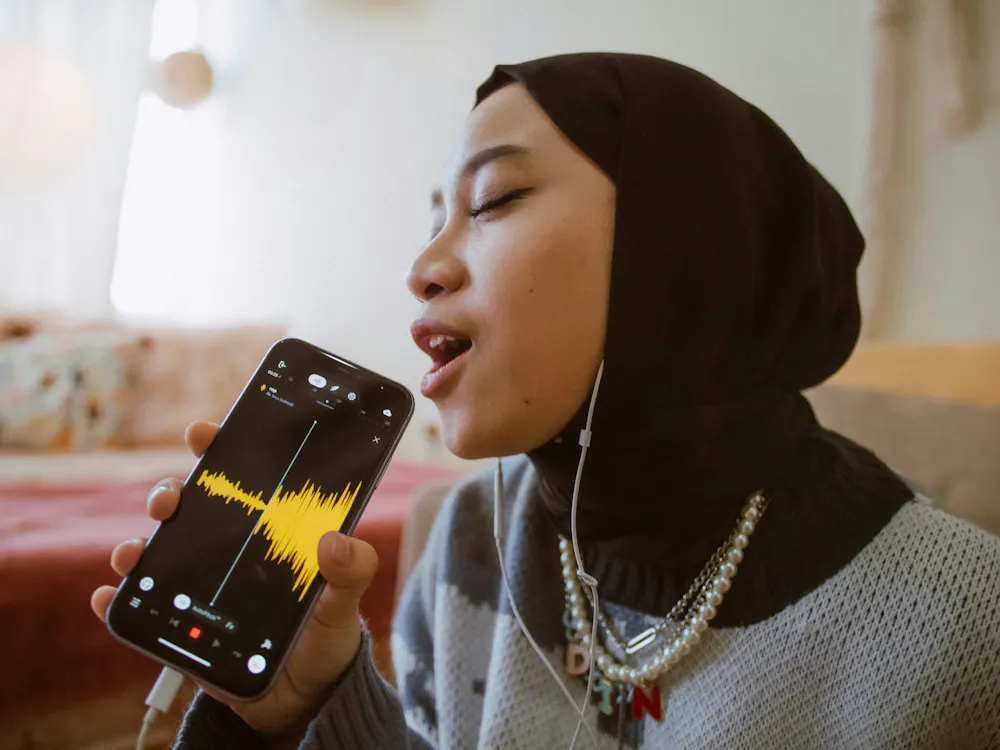
(Unsplash)
Songbirds first evolved about 50 million years ago, long before the first lines of humans split from the other great apes. This means that birds have decorated our soundscapes throughout human evolution.
The songs of birds have inspired music throughout time and cultures. Might these natural sounds have influenced the earliest humans as they began experimenting with making sounds themselves, discovering the joy of music to their ears?
These are some of the big ideas we are excited to explore in future studies.
The post “Human speech follows the same patterns as birdsong — new research” by Logan S. James, Postdoctoral Researcher in Biology, McGill University; The University of Texas at Austin was published on 11/01/2026 by theconversation.com