

Hearing that a new primate species has been named is exciting news for scientists because primates across the world are in decline. According to the IUCN Red list, a global inventory of animal extinction risk, 44.4% of primate species are classed as endangered or critically endangered (versus 13.2% of all mammals).
In most cases when the number of primate species increases, it is because a known species has been upgraded from the status of subspecies to species, or two populations that were previously considered the same species are re-classified into two separate ones. The African monkey Likweli (Colobus congoensis), however, is a completely new addition to the primate family tree, which makes this news particularly interesting.
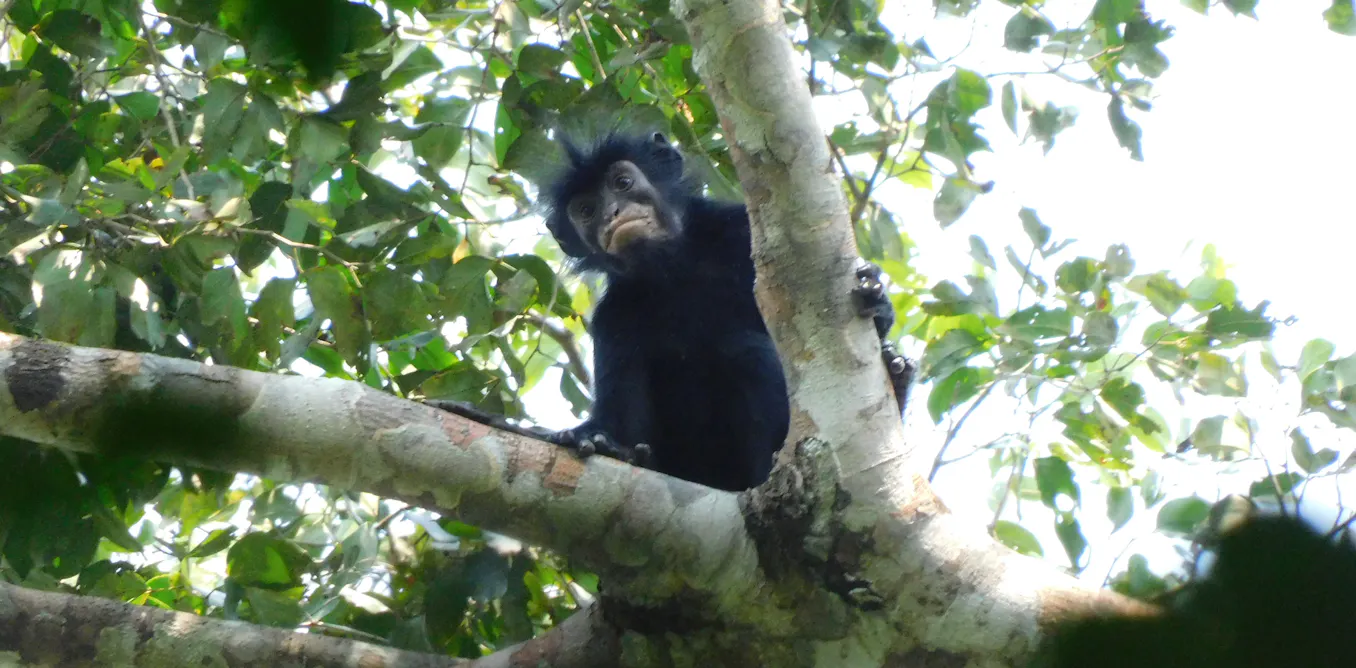
Likweli is a colobus monkey. The word colobus stems from the ancient Greek word κολοβός, meaning truncated, because they don’t have much of a thumb. It has an orange mouth, lives in the Democratic Republic of Congo and is part of the large subfamily colobines. Colobines are found in both Asia and Africa, but not in the Americas.
Three colobine genera are found in Africa. The olive colobus genus, has one species (a small monkey with drab olive-brown fur and a grey-black face). The red colobus genus and the black-and-white colobus genus, that Likweli belongs to. What is interesting about Likweli is that its closest relative is the black colobus (Colobus satanas), which has two subspecies – the critically endangered Bioko black colobus on the Island Bioko (20 miles off the coast of Cameron) and the Gabon black colobus on the nearby mainland. Their nearest range is 1,200km away from the range of Likweli monkeys.
Colobines have specialist digestive adaptations, including multi-chambered stomachs, that allow them to digest high fibre leaves and toxic seeds. To accommodate their large gut, many colobines are relatively large for monkeys. Likweli is smaller than the other colobus species though, and more comparable to some Asian colobines (like langurs and leafmonkeys). African colobines depend on forests and rarely come to the ground, but they can survive in small forest fragments and mangroves.
Likweli’s orange tinted mouth resembles that of some Asian langurs. But members of the Colobus genus have all black faces, making it almost impossible for human observers to recognise individuals based on their facial features. This also makes it hard to see their facial expressions. Scientists believe these monkeys’ more subtle facial expressions are related to the relatively low levels of competition within groups and less stringent social hierarchies.
Relationships between groups, however, can involve threats, loud roars and sometimes fights. Colobus males produce a loud roar to warn group members of danger, scare off predators, or during encounters with other groups of the same species. Likweli monkeys produce a similar roar although the researchers were unable to determine the sex of the callers. Likweli’s roar resembles that of the black colobus, but is distinctly different from that of other nearby colobus species.
It is not surprising that the central African region is providing new scientific discoveries. The area has been politically unstable for decades and a difficult place to conduct scientific work in. Working in these forests as a scientist means a risk of running into rebels, soldiers and professional poachers.
But the area is not only under-studied, it also represents a birthplace for many new species because the region has diverse soil including one of the largest peatlands on the globe. Plus, the landscape has been shaped and reshaped over centuries by a combination of tectonic plate movement, climatic changes, human influences and changes in its wetlands and rivers. Current climate change forecasts suggest that the area will remain suitable for colobus species in the future.
Tomas Hejlek/Shutterstock
Some forests in this region contain around 20 species of primate, a value only matched by some Amazonian regions.
Most of those species are cercopithecids, the sister sub-family of the colobines. Likweli also shares its range with the striking Angola colobus, Colobus angolensis and the Lomami red colobus (Piliocolobus parmentieri). Likweli, like many red colobus species, has often been found mingled in with groups of other primates (up to six species), like guenons and sometimes Angola colobus or Lomami red colobus.
There are also apes (gorillas, chimpanzees and bonobos) in the region. Chimpanzees in other regions are well known to hunt red and black-and-white colobus monkeys for meat.
Likweli lives in small groups (a mean of six but this can range from one to 20). All Colobus species typically live in units of multiple females together with one male and their offspring. Multi-male groups are rare. Some Colobus species, like the Angola colobus, can form large aggregations of over 200 monkeys, consisting of multiple smaller one-male units travelling together.
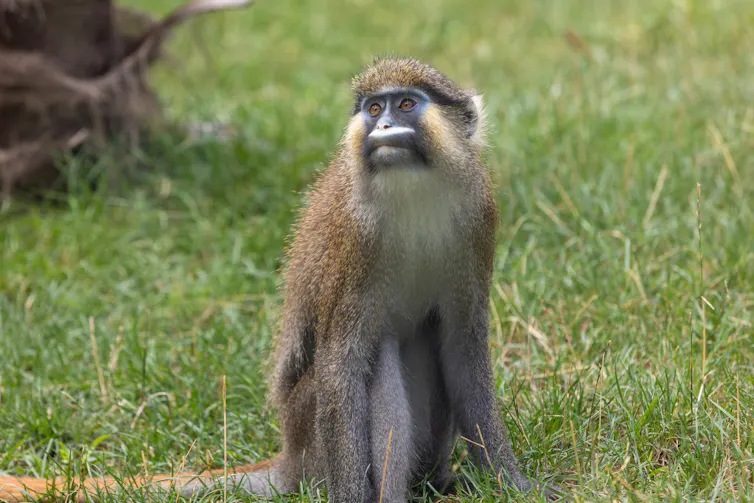
Roberto Dani/Shutterstock
The Likweli is only the fifth new African monkey species to have been described since 1975, one of which was a local guenon, the Lesula (Cercopithecus lomamiensis). Meanwhile, Miss Waldron’s red colobus has probably gone extinct as there have been no conclusive sightings since 1978, despite intense searching after some unconfirmed sightings in 2000 and 2001.
The Likweli is already considered endangered and protection of this hotspot for biodiversity is urgently needed.
There may well be more undescribed primates (although another monkey species is unlikely) hiding in these forests. It is nice to imagine that these African forests still contain hidden secrets.
The post “Meet Likweli – the newly named monkey that hints at Congo’s hidden secrets” by Amanda Korstjens, Professor Of Behavioural Ecology, Bournemouth University was published on 07/23/2026 by theconversation.com