

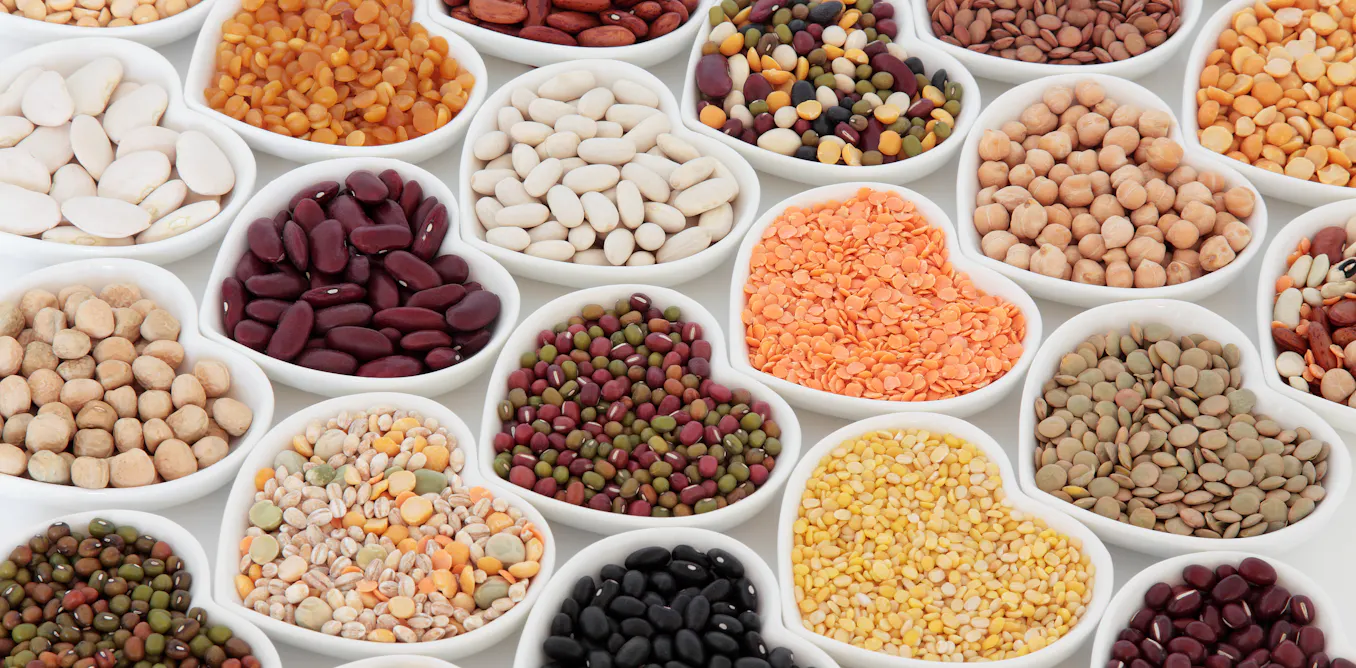
Lentils, beans and chickpeas have been feeding people for thousands of years. Lentils are among the world’s earliest cultivated crops, with archaeological evidence tracing them back to the beginnings of agriculture. Yet scientists are still learning what happens inside our bodies when we eat them.
A 2026 review of the research examined the evidence on pulses and their effects on the gut and metabolism. Pulses are the dried edible seeds of legume plants, including lentils, chickpeas, dried beans and dried peas. Legumes are the wider plant family and also include foods such as soya and fresh peas.
The researchers brought together evidence from human studies with laboratory and animal research. So what does the science suggest pulses actually do once we eat them?
1. They feed microbes in your gut
Pulses provide plant protein and fibre, along with carbohydrates that are not always completely broken down before they reach the large intestine.
There, gut microbes get involved. When some bacteria break down fibre and other carbohydrates, they produce substances called short-chain fatty acids. These help support the lining of the gut and are involved in how the immune system and metabolism work.
Because pulses provide some of the carbohydrates these microbes feed on, researchers are interested in whether regularly eating them changes which microbes thrive in the gut and what they produce.
Jakov Ilkoski/Shutterstock
The recent review found promising evidence that pulses can affect the gut microbiome, the community of microbes living in our digestive system. But much of this research still comes from laboratory and animal studies. Longer human trials are needed before we know how important these changes are for health.
2. They can change what happens to your blood sugar after a meal
Blood sugar normally rises after we eat carbohydrates. Pulses appear to reduce the size of that rise.
A review that combined the results of 65 clinical trials, involving 2,102 adults with and without type 2 diabetes, found that eating pulses reduced rises in blood sugar after meals.
One possible explanation lies in their structure. Pulses contain fibre and starch that can be digested relatively slowly, and intact cell walls can make some of the starch harder for digestive enzymes to reach.
The evidence for longer-term changes is less certain. The same review found some improvements in measures of blood-sugar control, particularly among people with type 2 diabetes, but researchers rated much of this evidence as low or very low certainty.
3. They may modestly lower cholesterol
There is also evidence from human trials that eating legumes can produce small improvements in cholesterol.
A 2024 review of 24 trials involving 1,938 people found modest reductions in both total cholesterol and LDL cholesterol.
LDL stands for low-density lipoprotein. These particles carry cholesterol through the blood, and extensive genetic and clinical evidence shows that higher exposure to LDL contributes to the build-up of fatty plaques in arteries, increasing the risk of cardiovascular disease.
The changes seen in the legume trials were relatively small, so eating beans or lentils should not be thought of as a treatment for high cholesterol. They can, however, form part of a diet that supports cardiovascular health.
4. They may help you feel fuller
Pulses may also affect how hungry you feel after eating.
A systematic review and meta-analysis of short-term feeding trials found that people reported feeling fuller after meals containing pulses than after comparison meals. However, this did not reliably translate into eating less at the next meal.
This means the evidence supports a short-term effect on feelings of fullness more clearly than it supports claims that pulses automatically reduce how much we eat.

Food magic/Shutterstock
5. How you prepare them can change what your body absorbs
Pulses contain minerals such as iron and zinc, but they also naturally contain phytate. Phytate can bind to minerals and make some of them less available for the body to absorb. broken link
Preparation can change this. Research has found that techniques including soaking and sprouting can reduce phytate and improve the availability of iron and zinc, although the effects vary between foods and preparation methods.
So the amount of a mineral present in a food tells only part of the nutritional story. How that food is prepared can influence how much becomes available for our bodies to use.
There is an environmental advantage too
Pulses also have an unusual ability before they ever reach our plates.
Legume plants form partnerships with bacteria around their roots that convert nitrogen from the atmosphere into forms plants can use. This relationship is one reason legumes are important in farming systems and can help reduce reliance on synthetic nitrogen fertilisers.
So, should we eat more pulses? The evidence is strongest for some effects and still developing for others. Human trials suggest pulses can reduce blood-sugar rises after meals, modestly improve cholesterol and increase feelings of fullness. Research into their effects on our gut microbes is particularly interesting, but better long-term studies in people are still needed.
Fortunately, adding pulses to meals does not require much reinvention. Lentils can be added to soups, curries and salads. Chickpeas can become hummus or be roasted, while beans work in stews, wraps and pasta dishes.
After thousands of years on our plates, pulses are hardly a new discovery. What is changing is our ability to follow what happens after we eat them, from the bacteria in our gut to changes in our blood. And scientists are still filling in parts of that picture.
The post “What happens to your body when you eat more pulses? Five effects you need to know” by Lewis C. E. Mason, Lecturer in Microbiology, Kingston University was published on 08/26/2026 by theconversation.com