
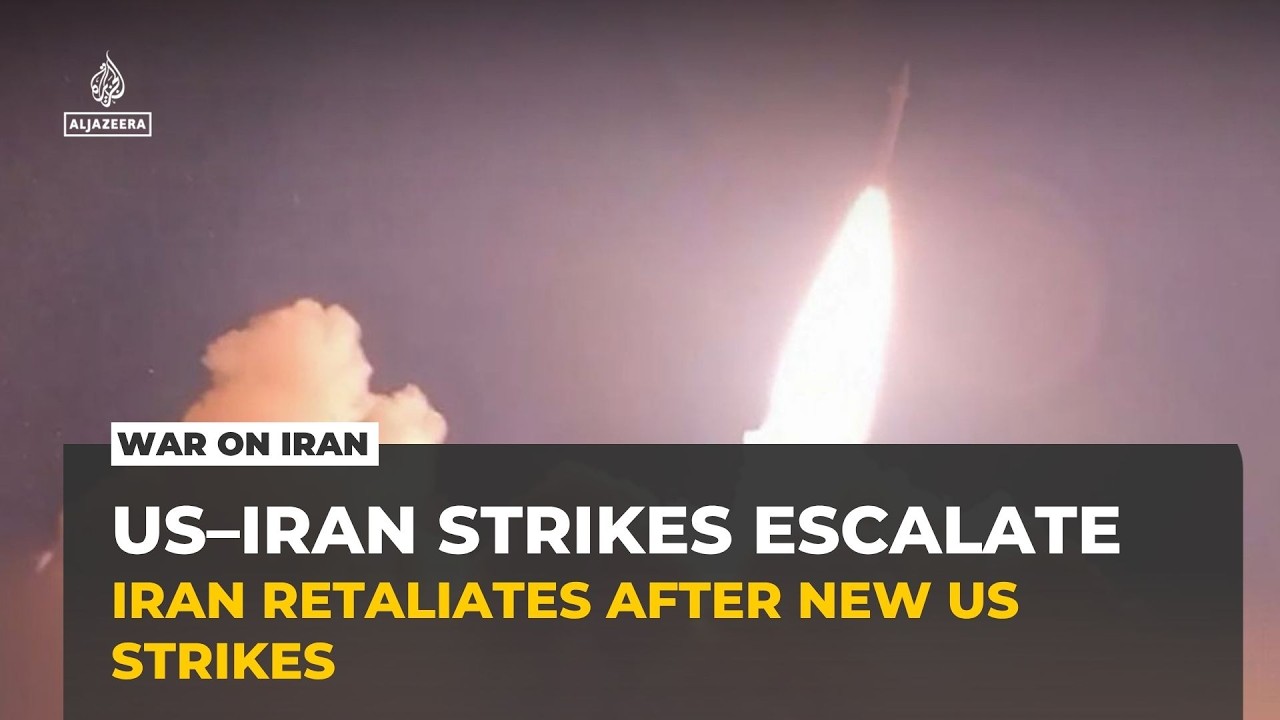

Title: US-Iran Tensions Escalate Amid Attacks in Bahrain and Kuwait, Heightening Fears of Regional Conflict
In a rapidly deteriorating geopolitical landscape, tensions between the United States and Iran have escalated sharply, following a series of attacks that have rattled the Gulf region. Recent military actions have raised alarm bells, prompting regional mediators to push for de-escalation and discussions of a potential interim ceasefire agreement.
Fresh missile strikes by Iran’s military have targeted several neighboring countries, with confirmed attacks in Kuwait and Bahrain. Reports indicate that Kuwait’s power and water desalination infrastructure has been particularly hard hit, raising concerns about the stability of essential services. The urgency of these developments is underscored by Iran’s Interior Minister, who is currently engaged in high-level talks with officials in Pakistan, ostensibly to navigate the crisis.
The background to these events includes a series of retaliatory strikes by the United States against Iran, following the tragic deaths of at least three American soldiers. President Donald Trump has made it clear that Tehran will “pay” for its actions—a declaration that appears to signal further military involvement. U.S. operations have increasingly targeted Iran’s economic lifelines, particularly in vital port cities like Bandar Abbas and Sirik, in an effort to degrade the capabilities of the Islamic Revolutionary Guard Corps (IRGC) and undermine Iran’s economy.
The tension has spurred Iran to issue threats regarding the Strait of Hormuz, a crucial maritime corridor for global oil shipments. The IRGC has stated that they will assert control over the strait, warning that it will remain closed as long as there are perceived aggressions from U.S. forces. This posture has led to widespread fears of a direct military confrontation in the Gulf.
Adding to the complexities of the situation, Qatar has submitted a formal complaint to the United Nations, condemning Iranian attacks on its territory and asserting the country’s right to self-defense. This development highlights the broader regional ramifications of the ongoing conflict, as tensions threaten to envelop neighboring states.
As diplomatic efforts continue to find common ground for peace, the stakes remain high. In a recent discussion, Al Jazeera correspondents Rasool Serdar in Tehran, Zein Basravi in Doha, and Alan Fisher at the White House dissected the evolving crisis and its potential implications for the region. The specter of a wider conflict looms, underscoring the urgent need for dialogue and conflict resolution as the international community watches closely.
With both sides seemingly on a collision course, the need for restraint and diplomatic intervention has never been more critical. As regional mediators strive to reignite discussions, the hope remains that a path to de-escalation can still be forged before the situation spirals into a wider confrontation.
Watch the video by Al Jazeera English
Video “US-Iran tensions escalate as attacks hit Bahrain and Kuwait, raising wider war fears” was uploaded on 07/21/2026 to Youtube Channel Al Jazeera English