

When academic research has explored the impact of school summer holidays, it has often focused on the costs to parents and to children’s learning and health.
The childcare juggle, the costs of summer holiday activities and the potential impact of losses in learning or more sedentary behaviour by children in the holidays do have a real impact on families.
But research on the summer break often does not reflect how children and young people feel about school holidays. Children’s rights to both education and health, laid out within the UN Convention of the Rights of the Child, are widely known. There is perhaps less awareness that these UN rights also include children’s right to leisure, as our research has explored. Academically, we know very little about how children and young people experience school holidays as leisure time.
Our research set out how children and young people are often seen as in a process of “becoming”, and that their leisure is viewed as an extension of this: it should have a purpose in developing them as future healthy, educated citizens. Even play is seen not as an activity in itself but as a way to learn skills or increase physical health.
But if we see children as already “being”, not just “becoming”, then we can appreciate that their leisure time could also be the chance to rest and simply do what they want.
Holiday downsides
Undoubtedly, managing school breaks can be challenging for working parents. It is estimated that weekly holiday childcare ranges from £180 in Scotland to £224 in Wales, with a UK average of £191.
Beyond childcare, there has been increasing attention paid to the other costs of the school holiday. Children need to be fed and entertained over these breaks. In the context of a cost-of-living crisis, prices quickly add up.
The most significant political attention has been on holiday hunger: the food insecurity faced by families during breaks from school when free school meals cannot be accessed. Under pressure from charities and footballer Marcus Rashford, local authorities in England, Wales and Scotland have moved to provide food, vouchers or cash payments to families to ensure children do not go hungry during the holidays.
Research has raised concerns about learning loss over the summer break, particularly for poorer children. The focus of these studies has tended to be on literacy and numeracy, discounting other opportunities for development.
Concerns have also been raised about the impact of school holidays on children’s wellbeing. There is some evidence that during school holidays children are less physically active, more likely to gain weight, more sedentary, more likely to experience poor mental health and are a greater risk of harm.
Given these issues, it’s no wonder that questions have been raised over whether a term structure that is over 150 years old is still fit for purpose today.
The Welsh Government launched a consultation in 2023 on whether to shorten the summer break and redistribute holidays more evenly across the school year. Responses were divided and ultimately no changes were taken forward.
In the US, some jurisdictions have experimented with a more balanced school calendar with the long summer break (of up to 13 weeks) redistributed to shorter breaks spread more evenly throughout the year. Researchers examining the impact of this change have found mixed impacts on learning loss.
But it’s also important to consider how children feel about the summer holidays.
What do children think?
One of us (Susie Smillie) has worked with young people aged between ten and 18 to understand their experiences of school holiday leisure and its impact on wellbeing. This research found that school holidays were an important break from school work, but also, for some, from difficult relationships with teachers and peers.
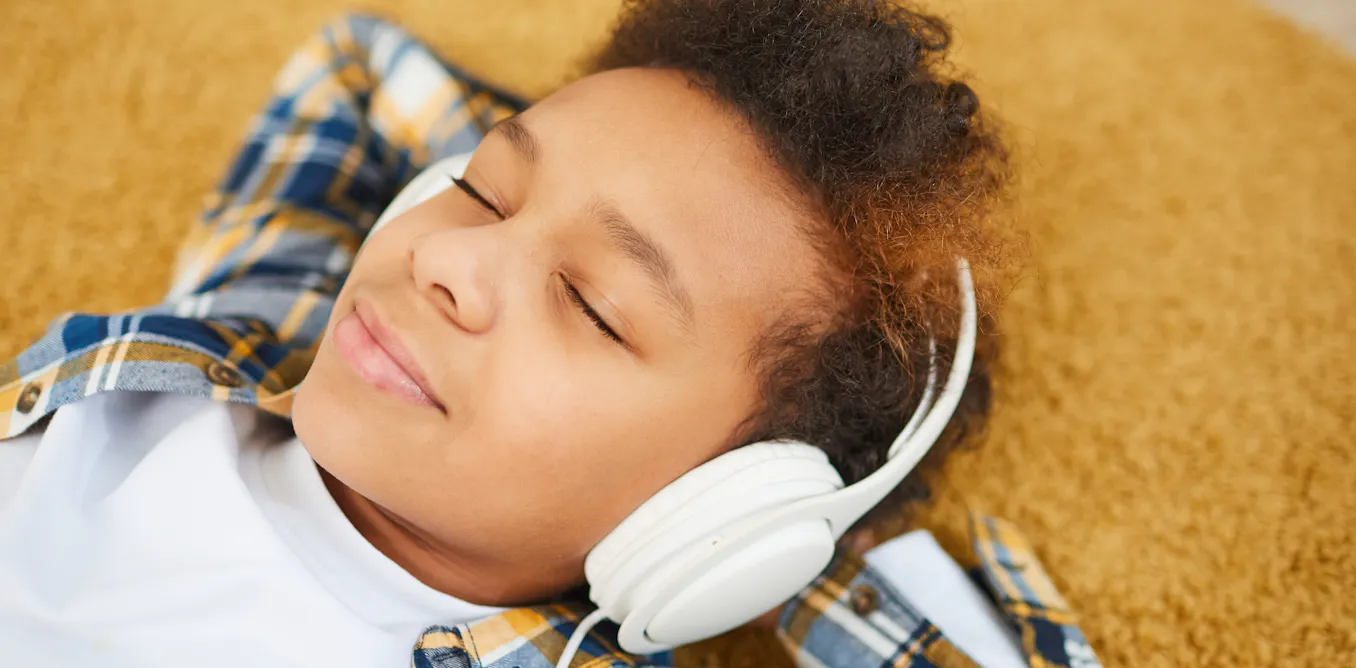
School holidays were important to young people because they provided an opportunity for them to direct their own time. “You need to have a break, this is what…the holiday’s about,” a 15-year-old said.
Maria Moroz/Shutterstock
They chose a broad range of activities beyond the sedentary screen time stereotype. These choices, often supported by trusted adults, was hugely valued, and allowed young people to experience enjoyment “being” in their present leisure choices rather than focusing on “becoming” for the future. “During holidays I’ll learn a lot more about stuff that I enjoy and I find interesting or stuff and that’s even helpful compared to in school, and it’s not like a stressful thing,” one said.
Local organisations were identified as an important asset in supporting young people too. In these spaces young people had the opportunity to participate in enjoyable activities. They also discussed being treated with respect, being involved in organisational decision making and developing their leadership skills.
These findings reinforce the point that while school holidays may see core curricular subjects like literacy and numeracy take a back seat for a few weeks, they provide opportunities for children and young people to flourish in other areas of their lives. This is just as important for their long-term wellbeing.
We are still learning about the impact of school holidays on families, particularly families from a diverse range of backgrounds. Very little is known about disabled children and young people’s experiences of these time periods, as well as children facing various socioeconomic challenges and care-experienced young people. Children, young people and their families from a variety of backgrounds must be at the centre of future research and policy decisions on school holiday experiences.
The post “Are summer holidays good for children? It’s time researchers asked them” by Stephanie Chambers, Senior Lecturer in Urban Studies and Social Policy, University of Glasgow was published on 08/04/2026 by theconversation.com